Fix a Humidor Not Holding Humidity: Fast Checklist
If your humidor is not holding humidity, start with the hygrometer, not the humidifier. Calibrate it with a salt test, run a seal check, and confirm your wood is properly seasoned before you spend a dollar on new equipment. In most cases, one of those three things, not a broken humidifier, is the actual problem.
Here’s the 60-second version. Grab your humidor and run through this list before you do anything else:
- Salt-test the hygrometer. A cheap analog unit reading anything other than close to 75% RH in a sealed bag with a salt slurry at 75°F is lying to you, according to the calibration method recommended by Blackbox Atlas.
- Run the dollar-bill test. Close a dollar bill in the lid and pull it out. If it slides free without resistance, your seal is leaking.
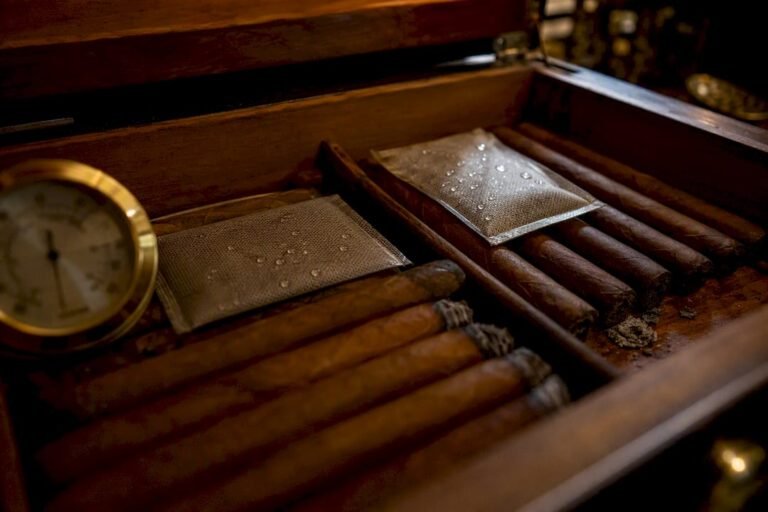
- Check the humidifier media. Beads should feel slightly moist, not bone-dry or dripping. A Boveda pack should still have some give when squeezed, not feel like a hard, brittle wafer.
- Inspect the cigars themselves. Wrappers that crackle or feel papery are pulling moisture out of the air faster than your device can replace it.
- Move the humidor. Anything sitting near a heat vent, a window, or a radiator is fighting a losing battle against the room itself.
Cigars store best between 65% and 72% relative humidity, with most enthusiasts targeting 70%, a range widely cited as the ideal indoor RH benchmark that also happens to suit tobacco storage. Do the calibration and seal checks today. Seasoning and humidifier upgrades can wait a day or two if needed, but skipping the diagnosis and jumping straight to buying new gear is how people spend money solving the wrong problem.
Key Takeaways
Most humidors that won’t hold humidity are fixed by calibrating the hygrometer and sealing the lid, not by replacing the humidifier.
| Point | Details |
|---|---|
| Calibrate first | Run a salt test on your hygrometer before assuming your humidifier or seal has failed. |
| Check the seal | Use the dollar-bill test around the entire lid perimeter, not just the front edge. |
| Season before loading | Give a new or empty humidor 1 to 2 weeks with distilled water or Boveda packs before adding cigars. |
| Watch the room, not just the box | Keep the humidor away from vents and windows, since ambient RH swings outside the 30% to 55% range strain any humidifier. |
| Upgrade with Thor’s Cigar Vault | Shop calibratable hygrometers, Boveda packs, and solid-cedar humidors built to hold a tight seal from day one. |
Table of Contents
- Why Is My Humidor Not Holding Humidity? Start With the Hygrometer
- How Do You Season a Dry or New Humidor?
- How Do You Test and Fix a Leaking Humidor Seal?
- Which Humidification Device Should You Use, and How Do You Maintain It?
- Does Cigar Quantity Affect Humidor Humidity?
- How Does Room Humidity Affect Humidor Performance?
- What Maintenance Keeps a Humidor Stable Long-Term?
- Should You Repair or Replace a Failing Humidor?
- What Should You Fix First on a Humidor That Won’t Hold Humidity?
- Need a New Humidor or Better Accessories?
- Sources
- FAQ
Why Is My Humidor Not Holding Humidity? Start With the Hygrometer
A bad hygrometer is the single most common false alarm in cigar storage. Cheap analog hygrometers, the round dial kind bundled with entry-level humidors, can be off by 5 to 10 percentage points out of the box.
The fix is a salt test, and it takes about six hours.
- Fill a bottle cap or small container with table salt and add a few drops of water until it forms a wet, sludgy paste (not standing water).
- Place the cap and your hygrometer inside a sealable plastic bag, close it most of the way, and squeeze out excess air.
- Set the bag somewhere at a stable room temperature, ideally close to 75°F, and leave it for at least six hours, though overnight is safer.
- Read the hygrometer without opening the bag. The salt slurry creates a controlled environment that should read close to 75% RH, a method Blackbox Atlas uses as the standard calibration check.
- Note the difference between the reading and 75%. That’s your offset.
A cheaper but faster comparison method: place your hygrometer next to a known-accurate digital unit in the same enclosed space for a few hours and compare readings directly. If the offset is more than 5 points and there’s no adjustment screw on the back, replace the unit. Digital, calibratable hygrometers hold their accuracy far longer than analog dials and are worth the small upgrade cost for anyone who’s tired of guessing.
Pro Tip: Place the hygrometer near the middle of the humidor, away from the lid and walls, where airflow is most representative of the whole box. A unit mounted right against the lid will often read differently from the air surrounding your cigars.
How Do You Season a Dry or New Humidor?
Unseasoned or dried-out Spanish cedar is thirsty wood. Leaving a humidor empty for weeks has the same effect. According to Blackbox Atlas, wood in an underfilled or empty box keeps absorbing ambient moisture, which is why seasoning has to happen before you load it with cigars you care about.
You have two reliable options:
- Damp cloth method. Wipe down all interior wood surfaces with a soft cloth dampened in distilled water, being careful not to soak the wood. Repeat once or twice a day.
- Bowl method. Place a small, shallow bowl of distilled water inside the closed humidor and let it sit, checking daily and refilling as needed.
- Humidity-pack-assisted seasoning. Add one or two Boveda packs at 84% or 85% RH inside the empty humidor to accelerate the process, then swap to your normal target-RH packs once seasoning is complete.
Materials are simple: distilled water, a soft lint-free cloth, your hygrometer, a small bowl if you’re using that method, and Boveda packs if you want a faster or lower-effort route.
Expect the process to take around a week or more:
- Days 1 to 3: Wood is actively absorbing moisture. Expect readings to bounce and stay lower than target.
- Days 4 to 7: Absorption slows. The interior starts holding humidity for longer stretches between wipe-downs or refills.
- Days 8 to 14: RH should stabilize near your target range without constant intervention.
Never use tap water. Minerals in tap water leave deposits on wood and inside humidifier elements, and that same scale buildup is a leading reason humidifiers lose output over time, according to Carrier’s humidifier repair guidance. Avoid over-saturating the wood, too. Standing water or a soaked cloth can warp thin veneers or cause the wood to swell and crack the seal over time. Seasoning is done when the hygrometer holds steady near your target RH for 24 to 48 hours without you adding water.
How Do You Test and Fix a Leaking Humidor Seal?
A leaking seal is the most common physical reason a humidor can’t hold humidity, and it’s also the easiest to test. Close the lid on a dollar bill so it’s pinned between the lid and the base, then pull the bill straight out.
- Slide the bill in at several points around the lid perimeter, not just the front.
- Pull gently and note the resistance at each point.
- A properly sealed humidor should offer consistent, firm resistance all the way around.
- Any spot where the bill slides out easily marks a gap in the seal.
- Repeat with the lid closed under normal, unforced pressure. Don’t press down on the lid while testing, since that masks a real problem.
Common culprits behind a failed seal include:
- A warped lid, often from a humidor stored somewhere too dry or too hot for extended periods.
- Loose or misaligned hinges that no longer pull the lid flush against the base.
- A missing, dried-out, or peeling foam gasket along the lid edge.
- Sawdust, finish residue, or manufacturing debris trapped in the seal channel.
Simple fixes you can try at home: tighten loose hinge screws, clean out debris along the seal line with a soft brush, and replace a foam gasket if one is fitted (most hardware and cigar accessory shops carry replacement gasket tape). For a warped lid, some owners have success adding thin cork or felt shims at pressure points to close small gaps.
If the gap is wide enough to see daylight through, or the lid rocks visibly on the hinges, you’re past the point where a home fix will hold. A warped lid that won’t seal flat, a cracked seam in the box itself, or hinges that have pulled loose from the wood are red flags that call for either a specialty repair shop or, more realistically, a replacement.
Which Humidification Device Should You Use, and How Do You Maintain It?
Four device types dominate the market, and each has a different maintenance rhythm.
Two-way humidification packs (Boveda) use a salt solution sealed in a permeable membrane to both add and pull moisture, holding a fixed RH automatically without any adjustment from you. Gel jars and foam/wick units rely on a reservoir soaking into a sponge or gel medium that releases moisture passively. Beads or crystals absorb and release water based on humidity swings and typically need manual water top-offs. Electronic humidifiers use a small fan or ultrasonic element to actively push moisture into larger cabinets and coolers.
Sizing depends on your humidor’s volume, not just the cigar count. A rough rule of thumb: one 60-gram Boveda pack per roughly 25 cigars or per small desktop humidor, scaling up to multiple packs or an electronic unit for cabinet-sized humidors holding hundreds of sticks.
- Two-way packs: replace when the pack feels hard, crunchy, or has visibly crystallized, generally every two to six months depending on humidor tightness.
- Beads: refill with distilled water when they shrink or feel dry to the touch, typically every few weeks.
- Foam/wick units: rinse and refill regularly, and replace the foam if it develops a musty smell or visible mold.
- Electronic units: check reservoirs weekly and descale monthly if you notice reduced output.
Mineral scale buildup, clogged pads, and blocked reservoirs are the most common reasons humidifiers stop performing, which is why the maintenance guidance from Carrier consistently points back to distilled water and regular cleaning as the fix. Propylene glycol solution is another option for refillable humidification units and helps prevent the mold growth that plain water alone can invite in a sealed box.
Pro Tip: Never let a humidifier or Boveda pack sit in direct contact with cigar wrappers. Space it in a divider or tray so moisture disperses evenly instead of over-saturating whatever cigar happens to be closest.
Does Cigar Quantity Affect Humidor Humidity?
An empty or lightly loaded humidor is genuinely harder to stabilize than a full one, and this trips up more new owners than almost anything else on this list. Wood keeps absorbing and releasing moisture in response to whatever’s around it, and cigars themselves act as a humidity buffer once they’re properly humidified. Take the cigars out, and the wood has nothing to buffer against, so it swings harder with every lid opening, a dynamic Blackbox Atlas points to as a reason freshly seasoned humidors need a real cigar load to hold steady.
A few practical rules of thumb:
- A humidor filled to roughly 60 to 80% of its rated capacity holds RH more consistently than one that’s nearly empty.
- Leave enough space between cigars for air to move. Packing a box wall-to-wall with sticks blocks circulation and creates uneven pockets of humidity.
- Never let a humidifier or Boveda pack sit directly against a wrapper. Sustained contact can cause spotting or uneven absorption.
Rehabilitate them gradually:
- Start them in a separate small container at 65% RH for the first week.
- Move to your main humidor once they’ve regained some flexibility and the wrapper stops crackling.
- Monitor them for another week alongside your regular hygrometer checks, watching for any signs of mold, which means you moved too fast.
How Does Room Humidity Affect Humidor Performance?
Every humidor is in constant conversation with the air around it. Wood is porous, seals aren’t perfect, and every lid opening exchanges air with the room. That means a humidor sitting in a room at 25% ambient RH during a dry winter is fighting an uphill battle no matter how good your humidifier is, while one in a humid summer room barely needs any humidification at all.
The EPA notes that indoor humidity comes from both outdoor air infiltration and everyday indoor activity, and controlling that ambient level with ventilation or dehumidification is part of managing moisture in a home generally, not just for cigar storage. Most experts recommend keeping whole-home indoor RH between roughly 30% and 50%, adjusted seasonally, according to guidance highlighted by Martha Stewart, and a similarly practical band of 40% to 55% shows up in broader indoor air quality guidance, with anything above 60% flagged as a mold risk by Iaq.
That range matters for your humidor even though cigars want a higher RH than a living room.
Practical fixes for a room that’s working against you:
- Relocate the humidor away from heating vents, exterior windows, and direct sunlight.
- Run a small room humidifier nearby during winter heating season if the room regularly drops below 30% RH.
- Use a dehumidifier or improve ventilation if the room sits consistently above 60% RH.
- Compare a standalone room hygrometer reading against your humidor’s reading over a few days. If they track closely, ambient conditions are your real problem, not the humidor itself.
What Maintenance Keeps a Humidor Stable Long-Term?
A humidor that holds humidity today won’t necessarily hold it in six months without upkeep. The fix isn’t complicated, but it does need to be a habit, not a one-time project.
| Frequency | Tasks |
|---|---|
| Weekly | Check the hygrometer reading, feel the humidifier media for moisture, glance for any visible mold, dampness, or lid gaps. |
| Monthly | Run a spot-check or full salt test on the hygrometer, refill or swap humidifier media, wipe interior surfaces with a barely damp distilled-water cloth if needed. |
| Seasonal | Re-season if the humidor was left empty for weeks, adjust humidifier strength for winter dryness or summer humidity, inspect hinges and the seal for wear. |
Some signs mean you need to act immediately rather than wait for the next scheduled check:
- RH drops more than 5 points in a single day with no obvious cause.
- A musty or sour smell when you open the lid, a strong sign of mold.
- Visible daylight or a noticeably loose lid that wasn’t there before.
- White, powdery spots on cigars or wood, which can indicate early mold rather than harmless plume.
Should You Repair or Replace a Failing Humidor?
Most humidity problems are fixable with the steps above, but a few situations genuinely call for a replacement instead of another round of troubleshooting.
Try these repair steps first if problems persist after calibration, seasoning, and a seal check:
- Tighten or realign hinges so the lid closes flush under its own weight.
- Replace a foam gasket or add gasket tape along the seal channel.
- Take the humidor to a specialty cigar shop or woodworker for a professional seal repair if the DIY fixes don’t hold.
Replacement makes more sense than repair when:
- The lid is visibly warped and won’t seal flat no matter what you shim or adjust.
- The box has a cracked seam or split wood panel.
- You’ve calibrated the hygrometer, seasoned the wood, checked the seal, and sized the humidifier correctly, and RH still won’t stabilize after several weeks.
If you’re shopping for a replacement, prioritize solid Spanish cedar lining (not veneer over particleboard), a lid that seats flush without needing to be forced, compatibility with a digital calibratable hygrometer, and a capacity that matches how many cigars you actually keep on hand rather than an aspirational number. Entry-level desktop humidors run modestly, while cabinet-style units with tighter seals and better cedar cost considerably more, but a well-built humidor that holds RH reliably from day one saves you the repair headache this whole article is about.
What Should You Fix First on a Humidor That Won’t Hold Humidity?
Most people troubleshoot backward. They see a low RH reading and immediately assume the humidifier failed, buy a new one, and get frustrated when nothing changes. The actual fastest fix, based on how often each cause turns out to be the real culprit, is almost always the hygrometer or the seal, not the humidification device itself.
That’s because a miscalibrated hygrometer or a leaking lid produces the exact same symptom as a genuinely dead humidifier: a reading that won’t climb no matter what you do. Calibration takes six hours and costs nothing. A seal check takes thirty seconds with a dollar bill. Compare that to buying a new electronic humidifier before you’ve ruled out either one, and you can see why so many owners spend money solving a problem that was never about moisture output at all.
If I were troubleshooting a humidor today, here’s the order I’d work in:
- Salt-test the hygrometer and note any offset.
- Run the dollar-bill seal test at multiple points around the lid.
- Check whether the humidor has been properly seasoned, especially if it’s new or was recently empty.
- Inspect and, if needed, replace the humidifier media.
- Look at where the humidor physically sits in the room.
Contact a specialty retailer or repair shop only after you’ve worked through that full list and the humidor still won’t hold RH, since at that point the issue is almost certainly mechanical rather than something you can fix with water and patience.
Need a New Humidor or Better Accessories?
If your current humidor has a warped lid, a cracked seam, or has failed every fix above, replacing it beats another round of shimming hinges and hoping. Thor’s Cigar Vault gives you a curated shortcut past the trial-and-error of guessing which humidor actually holds a tight seal, since every unit in the collection is chosen for solid cedar construction and lids that seat flush without forcing.

Beyond the humidors themselves, the accessory selection covers the exact tools this article walks through: Boveda packs sized for different box capacities, distilled-water-compatible humidifiers, and calibratable hygrometers that skip the salt-test guesswork entirely. Thor’s Cigar Vault’s knowledgeable staff can help you match a humidifier setup to your specific humidor size rather than leaving you to eyeball it. Browse the full humidor and accessory shop to find a replacement built to actually hold 70% RH, or start at the Thor’s Cigar Vault home page to see current collections and promotions.
Sources
- Fix a cigar humidor that will not hold humidity | Blackbox Atlas
- What are the main ways to control moisture in your home? | EPA
- The Ideal Humidity Level for Your Home, According to Experts | Martha Stewart
- Iaq
- Humidifier repair | Carrier
Whatever fix you attempt, do it with a properly calibrated hygrometer and distilled water on hand. Guessing at readings or reaching for tap water undoes half the progress you’ll make with everything else on this list.
FAQ
Is 60% Humidity Too Low for a Humidor?
It’s not immediately damaging, but it’s not the sweet spot most cigar owners aim for either.
Why Can’t I Get My Humidor to 70% Humidity?
The most common reasons are a miscalibrated hygrometer giving a false low reading, a leaking seal letting humidity escape, or unseasoned wood still absorbing moisture instead of releasing it to the air inside the box.