One Lighter Per Passenger: Flying with Cigar Lighters in the U.S.
Yes, you can fly with a cigar lighter, but only certain types make it through security. TSA permits one soft-flame lighter (think Bic, Zippo, or standard disposable) in your carry-on or pocket, while torch, jet, and other refillable butane lighters are banned from both carry-on and checked bags under FAA and TSA rules. Loose butane fuel is prohibited outright, and TSA officers make the final call at the checkpoint regardless of what the rulebook says. Thor’s Cigar Vault stocks compliant backup lighters if you’d rather not gamble with a favorite torch.
TL;DR:
- Only standard disposable or Zippo-style soft-flame lighters are allowed in carry-on or on your person, with a limit of one per passenger, while torch and jet lighters are strictly prohibited.
- Refillable butane lighters with high heat flames and loose fuel canisters are banned from both carry-on and checked baggage because of their higher risk profile.
- Packing a lighter properly involves emptying fuel, carrying a compliant backup, or shipping a torch separately, since most torch lighters are prohibited outright in transit.
- TSA officers have full discretion, so carrying a receipt or keeping a lighter accessible can speed up clearance and reduce confiscation risk.
- For hassle-free travel, buy a low-cost disposable or soft-flame lighter locally or ship an empty torch ahead of time instead of risking confiscation at the checkpoint.
Table of Contents
- Which Cigar Lighters Are Allowed and Which Are Prohibited
- Carry-On vs Checked Baggage: The Practical Rules
- Fuel, Refills, and Torch Lighters: Why the Ban Exists
- How to Pack, Ship, or Buy Your Cigar Lighter Safely
- What Happens at Security and How to Protect Your Lighter
- How Thor’s Cigar Vault Thinks About Travel-Ready Gear
- Grab a Travel-Ready Lighter Before You Head to the Airport
- Sources
- FAQ
Which Cigar Lighters Are Allowed and Which Are Prohibited
The line between “fine” and “confiscated” comes down to flame type and fuel design, not brand or price.
Generally allowed, one per passenger, in carry-on or on your person:
- Standard disposable lighters (Bic-style)
- Zippo-type lighters with absorbed lighter fluid
- Soft-flame butane lighters that use a traditional, single yellow flame
Prohibited in both carry-on and checked baggage:
- Torch lighters, jet lighters, and blue-flame lighters
- Any refillable butane lighter designed for high-heat, wind-resistant flames
- Loose or spare butane fuel canisters
Torch lighters get singled out because of how they burn. According to TSA guidance, these devices produce a thin, needle-like flame that is hotter and more intense than a common lighter and hold steady even in wind, which is exactly what makes them useful for lighting a robusto and exactly why regulators treat them as a bigger hazard than a standard flame.
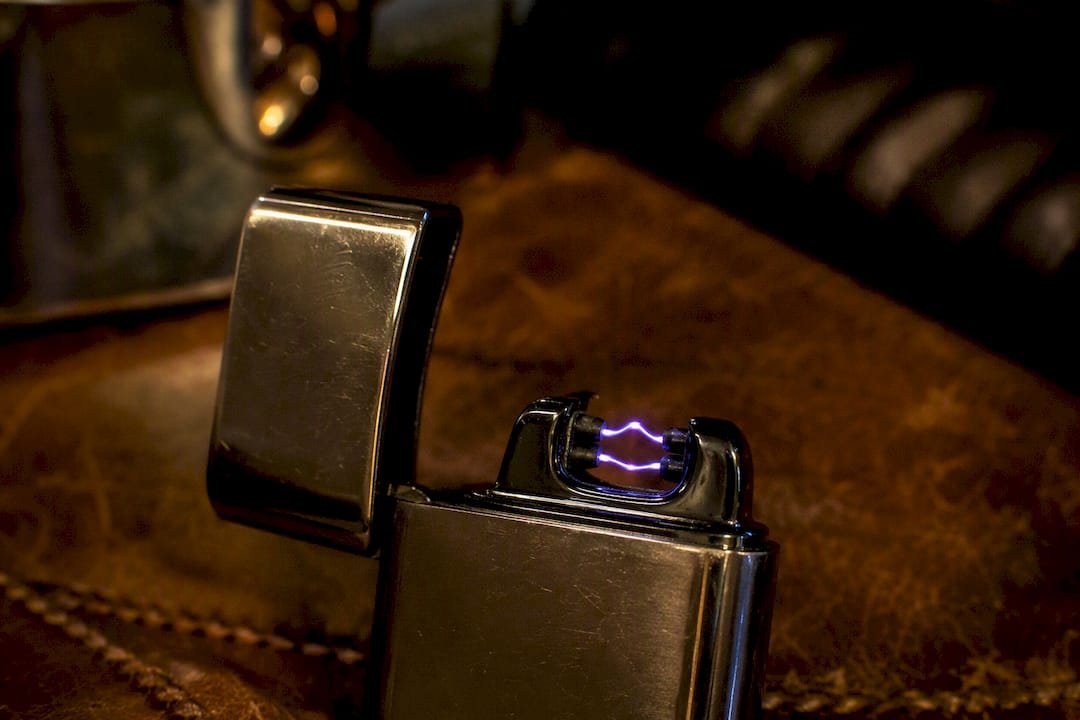
Electric, arc, and plasma lighters occupy a gray zone worth knowing about. They typically carry no fuel at all, using a small battery to create a heated coil or electric arc instead, and TSA generally allows them in carry-on luggage. They won’t replicate a torch’s wind resistance, but they’re a legitimate way to light up without breaking any rules.
Quick identification tip: if your lighter has a visible refill valve, adjustable flame intensity dial, or multiple jet nozzles, assume it’s getting flagged.
Carry-On vs Checked Baggage: The Practical Rules
Where you pack your lighter matters as much as what kind it is. Here’s how the rules break down in practice:
- Carry-on and on-person: you get one compliant soft-flame or absorbed-fuel lighter per passenger, per FAA PackSafe guidance. Keep it in your pocket or your bag; both count.
- Checked baggage: almost all lighters are forbidden here, including the disposable Bic that would sail through carry-on screening. The one narrow exception is a lighter stored inside a DOT-approved travel case designed specifically to secure the ignition mechanism during transit.
- Gate-checked bags: if your carry-on gets tagged and checked planeside because the overhead bins filled up, you need to pull any lighter out first and carry it into the cabin yourself, per the same FAA guidance.
Enforcement isn’t perfectly uniform from one airport to the next, so treat these as the baseline, not a guarantee. Checking the TSA’s official site a few days before your trip takes two minutes and saves you from an awkward conversation at the checkpoint.
Fuel, Refills, and Torch Lighters: Why the Ban Exists
Loose butane, refill canisters, and any standalone fuel container are banned from carry-on and checked baggage without exception. This isn’t TSA being cautious for the sake of it. Compressed, flammable gas in an unsealed container is precisely the kind of item the Hazardous Materials Regulations under 49 CFR exist to keep off pressurized aircraft.
What’s banned outright:
- Butane refill cartridges and cans
- Loose or unpackaged lighter fluid
- Any fuel container not sealed inside the lighter itself
The technical reason torch lighters draw extra scrutiny comes down to heat and refillability. A torch flame burns hotter and more consistently than a soft flame, and most torch models are built to be refilled repeatedly with pressurized butane, which is a very different risk profile than a disposable Bic that runs dry and gets tossed. TSA’s own screening guidance treats torch lighters as a distinct, higher-risk category for exactly that reason, separate from ordinary disposable or Zippo-style lighters.
How to Pack, Ship, or Buy Your Cigar Lighter Safely
You have four realistic options, and which one fits depends on how attached you are to your gear.
- Carry a compliant backup. A cheap disposable or Zippo-style lighter on your person clears security without drama.
- Empty and ship your torch ahead of time. Drain the fuel completely, then ship it separately to your destination rather than risking confiscation.
- Buy locally. Most destinations with a decent cigar scene have a shop selling torches on-site, so you’re not stuck without a flame.
- Pack an electric lighter as insurance. No fuel, no ban, and it works fine as a backup even if it’s not your primary tool.
When you do pack a lighter, empty any residual fuel first, make sure the ignition mechanism can’t accidentally trigger inside your bag, and if you’re shipping a torch, label the package clearly and check your carrier’s hazmat shipping rules since some couriers restrict lighters entirely.
Pro Tip: Don’t bring your $200 torch lighter to the airport and hope for the best. Ship it empty to your hotel or destination address, or leave it home and pick up a reliable replacement locally instead. A confiscated lighter is gone for good, and no amount of arguing at the checkpoint gets it back.
What Happens at Security and How to Protect Your Lighter
TSA officers have the final word on what stays and what gets tossed, and that discretion means two travelers with the same exact lighter can have completely different experiences at two different checkpoints. There’s no appeals process at the gate.
A few things reduce your risk:
- Keep your lighter somewhere easy to remove, not buried at the bottom of a bag.
- Take it out and place it in the bin separately if a screener asks.
- If it’s a novelty or unusual-looking lighter, carrying a receipt or product description can speed up a manual inspection.
- Arrive with extra time if you’re carrying anything borderline, so a confiscation doesn’t cost you your flight.
Build in a backup plan regardless: a cheap disposable in your bag, a note about where to buy one at your destination, or a torch already shipped ahead means a bad screening outcome costs you nothing more than an inconvenience.
How Thor’s Cigar Vault Thinks About Travel-Ready Gear
Cigar smokers who travel a lot eventually learn the same lesson: the lighter you love isn’t always the lighter you fly with. Thor’s Cigar Vault curates travel-ready backups, including carbon fiber travel cases built to protect gear in transit, precisely because so many customers have lost a good torch at a checkpoint. If a lighter does get confiscated mid-trip, having a trusted source for a quick, quality replacement matters more than most travelers realize until it happens to them.
— Kevin
Grab a Travel-Ready Lighter Before You Head to the Airport
Skip the gamble on your good torch lighter and let Thor’s Cigar Vault handle your travel backup instead. Our shop carries compliant disposable and soft-flame options alongside cutters and cases built for cigar travelers, so you’re not scrambling for a local shop the moment you land.

A $10 disposable lighter tucked in your carry-on costs a lot less than losing your favorite torch at security, and it means you’re never stuck cigar in hand with no way to light it. Browse the full collection at Thor’s Cigar Vault before your next trip and pack smart instead of hoping for the best at the checkpoint.
Sources
Rules around lighters don’t change often, but wording and enforcement details do, so it’s worth a direct check close to your travel date rather than relying on secondhand advice.
- Lighters (Torch) | Transportation Security Administration – TSA
- PackSafe – Lighters | Federal Aviation Administration
- 49 CFR § 175.10 — Applicability of this subpart
Bookmark these pages rather than a summary article (this one included) if you’re flying within the next few weeks, since official guidance is the version that actually gets enforced at the checkpoint.
FAQ
Can I take a cigar lighter through TSA?
Yes, one standard soft-flame or Zippo-type lighter is allowed in carry-on or on your person, but torch and jet lighters are prohibited under TSA guidance.
Can I take a cigar lighter on a flight?
You can bring a compliant disposable or soft-flame lighter, but refillable torch lighters and any loose butane fuel are banned from both carry-on and checked baggage.
Can you fly with a Bic lighter in your carry-on?
Yes, a standard Bic-style disposable lighter is one of the clearest examples of an allowed item under FAA PackSafe rules, limited to one per passenger.
Will TSA stop me for cigars?
Cigars themselves aren’t restricted and travel fine in carry-on or checked bags, but the lighter you pack alongside them is what draws scrutiny, so make sure it’s a compliant soft-flame model.
What if my torch lighter gets confiscated at security?
TSA officers have final authority and won’t return a prohibited item, so plan ahead by shipping a valuable torch empty to your destination or picking up a compliant backup lighter before you fly.