Flying with Cigars: TSA Rules, Packing Tips, and Customs Guide
Yes, you can fly with cigars. TSA allows cigars in both carry-on and checked bags, though the final call at the checkpoint belongs to the screening officer. For international travel, U.S. Customs and Border Protection (CBP) rules apply on return.
Three things every traveler needs to know before heading to the airport:
- Smoking any cigar on a commercial flight is illegal, full stop.
- Torch lighters are prohibited in carry-on bags; one disposable or Zippo-style lighter is generally allowed.
- Declare cigars to CBP when returning from abroad if you exceed personal duty-free allowances.
Key Takeaways
Flying with cigars is straightforward when you follow TSA and CBP rules: carry-on is the safest option for premium sticks, torch lighters stay home, and international purchases must be declared on return.
| Point | Details |
|---|---|
| TSA allows cigars | Cigars are permitted in carry-on and checked bags; the screening officer has final discretion. |
| Carry-on for premium cigars | Cargo holds expose cigars to temperature swings and rough handling; carry-on keeps conditions stable. |
| Lighter rules matter | One disposable or Zippo-style lighter in carry-on is generally allowed; torch lighters are prohibited. |
| Declare internationally | CBP commonly references ~100 cigars as a personal allowance after 48 hours abroad; duties apply above that. |
| Thor’s Cigar Vault | Carries travel-ready cases, protective accessories, and premium cigar packs sized for air travel. |
Table of Contents
- Can you fly with cigars? What TSA actually allows
- How to pack and protect cigars for a flight
- What are the rules for lighters and cutters?
- Smoking on board: what the rules actually say
- Flying internationally with cigars: customs and declaration rules
- How to prevent damage from pressure, heat, and humidity
- What to do if your cigars or accessories are confiscated
- Your preflight checklist for traveling with cigars
- What the retailer perspective actually tells you
- Travel-ready cigars and accessories from Thor’s Cigar Vault
- Sources
- FAQ
Can you fly with cigars? What TSA actually allows
TSA’s guidance is clear: cigars are permitted in carry-on and checked luggage. What that doesn’t mean is a guaranteed pass through every checkpoint. The screening officer has final discretion, and if something in your bag looks unusual on the X-ray, expect to open it.
In practice, that discretion rarely affects cigars themselves. The friction usually comes from accessories: a cutter that looks like a blade, a torch lighter tucked next to a humidor, or a butane canister that has no business being in a carry-on. Keep those items separated and accessible.
A few things worth knowing about airline-level rules:
- Most domestic carriers follow TSA guidance on tobacco, but some have stricter checked-bag policies around flammable items.
- International carriers may apply their home country’s aviation rules, which can differ from TSA’s.
- Always check your specific airline’s website before travel, especially for long-haul or codeshare flights.
Pro Tip: Pack your travel humidor near the top of your carry-on so a screening officer can open and inspect it quickly without disrupting the rest of your bag. A humidor buried under clothes invites a longer secondary check.
For domestic flights, there is no federal quantity limit on cigars in carry-on or checked bags. Bring as many as you like, as long as they fit.
How to pack and protect cigars for a flight
Carry-on is the right choice for premium cigars. The cargo hold swings between temperature extremes, handles are rough, and pressure changes accelerate drying. Your carry-on stays in a climate-controlled cabin, and you control how it’s handled.
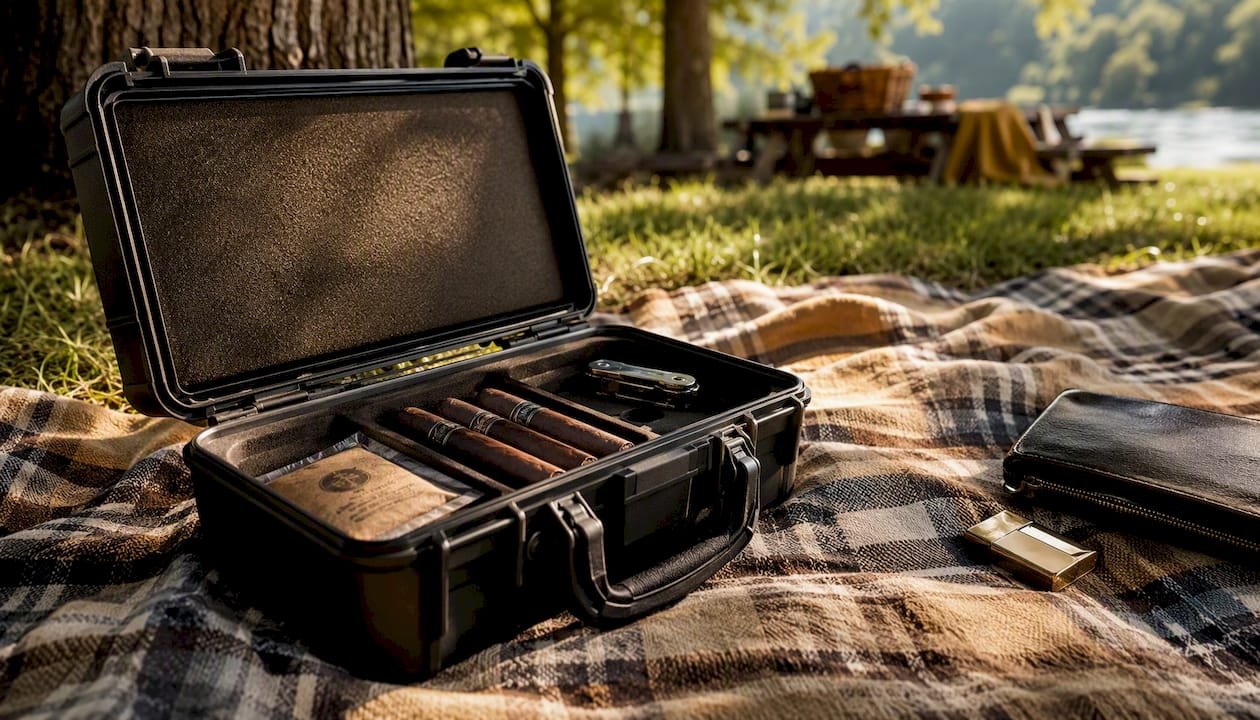
Experienced travelers consistently recommend a hard-shell travel humidor with a Boveda two-way humidity pack inside. A Boveda pack maintains stable relative humidity without any liquid, which means no TSA concerns and no soggy wrappers. The hard shell handles the crushing risk.
Options by situation:
- Travel humidor (carry-on): Best for 5–20 loose cigars; foam interior prevents movement, Boveda pack maintains humidity.
- Individual tubes: Good for 1–5 premium sticks; tubes protect against crushing and are easy to slip into a jacket pocket.
- Sealed factory boxes (checked): Acceptable for larger quantities, but wrap the box in clothing and expect some humidity loss on longer flights.
- Loose in a soft case: Fine for inexpensive cigars on short trips; not worth the risk for anything you paid real money for.
| Method | Carry-on | Checked |
|---|---|---|
| Travel humidor | Best option; stable humidity, hard protection | Acceptable; add padding around it |
| Individual tubes | Convenient, very protective | Works, but overkill for checked |
| Sealed factory box | Bulky but allowed | Reasonable for large quantities |
| Soft pouch | Risky; no crush protection | Not recommended |
Pro Tip: Leave your $300 cutter at home or pack it in checked luggage. For carry-on, bring a cutter you wouldn’t mind losing — officer discretion can pull sharp or unusual cutters at any checkpoint.
What are the rules for lighters and cutters?
The short version: one disposable or Zippo-style lighter in your carry-on is generally fine. Torch lighters are a different story.
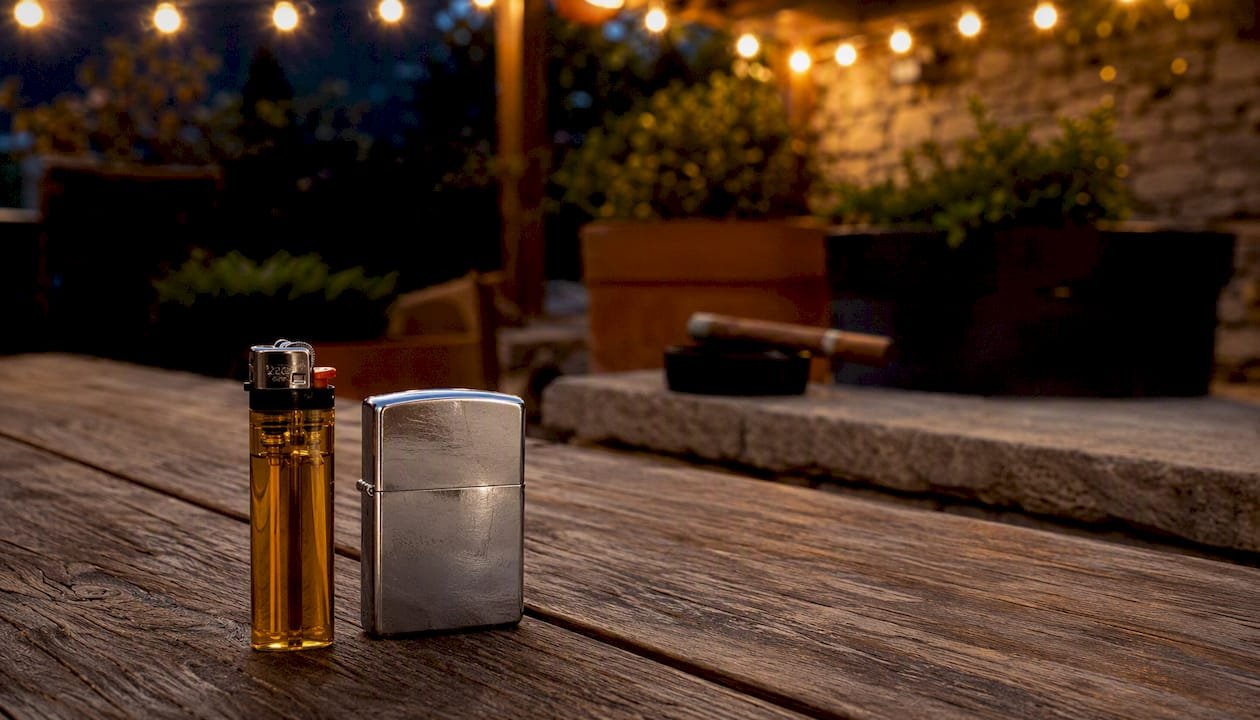
Torch lighters are typically prohibited in carry-on luggage, and fuel-containing lighters face heavy restrictions in checked bags too. Butane canisters are the main problem: even partially empty, they can be flagged or confiscated.
Accessory rules at a glance:
- Disposable lighters (BIC-style): One allowed in carry-on; not in checked bags.
- Zippo-style lighters: One allowed in carry-on when empty of fuel, or with a DOT-approved case.
- Torch lighters: Generally prohibited in carry-on; check your airline before assuming checked is safe.
- Butane canisters: Not worth attempting; leave them home.
- Cigar cutters: Most are allowed in carry-on, but officer discretion applies to sharp or unusual designs.
Don’t try to hide a torch lighter in checked luggage. Aviation security screens checked bags too, and a confiscated torch lighter at the destination airport is a worse outcome than leaving it at home. Torch- and fuel-based accessories cause the majority of cigar-related confiscation problems at security.
For cutters, the practical advice from experienced travelers is to pack an inexpensive guillotine cutter in carry-on and stow anything sharp or sentimental in checked baggage.
Smoking on board: what the rules actually say
Smoking on any commercial flight is prohibited. That covers cigars, cigarettes, e-cigarettes, and anything else that produces smoke or vapor. The ban applies on every U.S. carrier and most international ones. Smoking of any kind is strictly prohibited on all commercial airlines worldwide, and lavatory smoke detectors are tamper-resistant for exactly this reason.
Getting caught smoking in an aircraft lavatory can result in fines from the FAA and potential federal charges. It’s not worth it.
At airports, options are limited:
- Some airports have outdoor designated smoking areas past security, though these are becoming rarer.
- A handful of international airports retain indoor cigar lounges, but they are genuinely rare and shrinking.
- Check your departure airport’s website before assuming any smoking area exists airside.
Flying internationally with cigars: customs and declaration rules
When you return to the U.S. with cigars purchased abroad, CBP rules govern what you owe and what you must declare. The commonly referenced personal duty-free allowance is around 100 cigars after being abroad for at least 48 hours, but that figure is an example, not a guarantee. Limits and duties vary based on your destination, how long you were abroad, and whether the cigars came from a restricted country.
Cuban cigars are a specific case. U.S. travelers can bring Cuban cigars back for personal use, but the rules around quantity and commercial intent have shifted over time. Confirm current CBP guidance directly before travel.
Example duty-free limits by destination (always verify before you go):
| Destination | Example duty-free cigar allowance | Notes |
|---|---|---|
| Returning to U.S. (CBP) | ~100 cigars (after 48 hrs abroad) | Duties apply above allowance |
| Canada | 5–20 cigars | Provincial rules may vary |
| Mexico | 5–20 cigars | Strict enforcement at some ports |
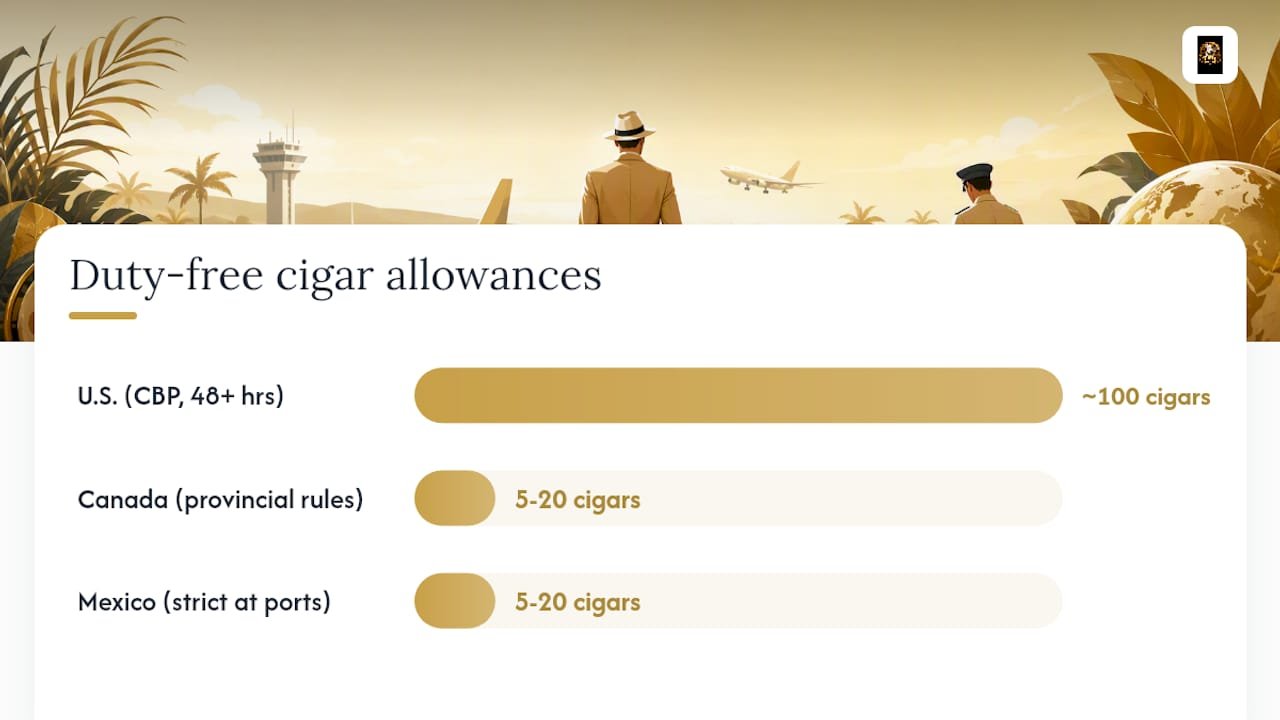
These are illustrative examples. Customs allowances change, and the only authoritative source is the official customs agency for each country.
Pro Tip: Keep purchase receipts for every cigar you buy abroad. If CBP questions the quantity or value, a receipt showing the price and country of purchase is your clearest documentation. It also supports any duties dispute.
How to prevent damage from pressure, heat, and humidity
Humidity control and physical protection prevent most travel damage. Cabin pressure during flight lowers the effective humidity around your cigars, and the temperature in the cargo hold can swing dramatically. Carry-on eliminates the hold problem entirely.
Steps that actually make a difference:
- Use a Boveda 69% or 72% pack inside a hard-shell travel humidor for flights under 12 hours.
- Pack cigars in individual tubes if you’re only bringing a few; tubes prevent wrapper cracking from contact pressure.
- Don’t overpack the humidor. Cigars pressed against each other crack wrappers on rough landings.
- Let cigars rest for at least 24 hours after arrival before smoking. Travel stresses the tobacco, and a day of acclimation in a proper humidor restores draw and flavor.
Pro Tip: If you’re checking a sealed factory box, wrap it in a layer of bubble wrap before placing it in your luggage. The box itself protects against humidity loss, but checked bags take real abuse on the ramp.
What to do if your cigars or accessories are confiscated
Stay calm and ask for the reason. TSA, CBP, and airline staff are different agencies with different authority, and knowing which one is acting on your items matters for any follow-up.
Steps to take immediately:
- Ask the officer to identify the agency and the specific rule being applied.
- Request a written notice or receipt for confiscated items when possible.
- Note the officer’s name, badge number, and checkpoint location.
- Photograph your items and packaging before handing them over if time allows.
- Retain all purchase receipts for high-value cigars; these support insurance claims or duties disputes.
For follow-up: TSA has a customer service line and an online complaint process. CBP disputes over duties or declaration issues have a formal appeals process. Airlines handle lost or delayed checked items through their own baggage claim departments. High-value cigar collections are worth listing on a homeowner’s or traveler’s insurance policy before you leave.
Your preflight checklist for traveling with cigars
Cigars are allowed on flights, but a few minutes of preparation prevents most problems. Run through this before you leave for the airport:
- Pack premium cigars in a hard-shell travel humidor with a Boveda pack inside.
- Place your cutter in carry-on (inexpensive) or checked luggage (valuable/sharp).
- Confirm your lighter type: one disposable or Zippo-style in carry-on only; torch lighters stay home.
- Print or save purchase receipts for any cigars bought abroad.
- Check your airline’s specific tobacco and flammable-item policies.
- For international travel, review CBP declaration requirements and your destination country’s import limits.
- Declare cigars to CBP on return if you exceed personal allowances.
- Carry-on is always the safer choice for premium sticks.
- Keep accessories separated and accessible in your bag.
- Never attempt to smoke on board or in non-designated airport areas.
Pro Tip: Screenshot this checklist before your next trip. It takes 30 seconds at packing time and can save a confiscation at the checkpoint.
What the retailer perspective actually tells you
At Thor’s Cigar Vault, the most common question from traveling customers is whether their cigars will survive the flight. The honest answer: they will, if you pack them right. The cigars that don’t make it are almost always the ones that went into a checked bag loose, without humidity control, and next to a torch lighter that got flagged.
Three things worth taking from retail experience:
- Premium sticks belong in carry-on, always. The hold is not your friend.
- A travel humidor is not optional for anything you paid serious money for. It’s the single most effective piece of gear for cigar travel.
- Keep your receipts. Travelers who document their purchases have a much easier time at customs and with any insurance claim.
Thor’s Cigar Vault’s blog covers humidor selection and packing guidance in more depth for travelers who want to go further.
Travel-ready cigars and accessories from Thor’s Cigar Vault
Packing right starts with having the right gear before you leave. Thor’s Cigar Vault carries travel-ready options that make the process straightforward: hard-shell protective cases, curated cigar packs sized for short trips, and the accessories that actually survive airport security.

The Arturo Fuente Opus X 20th Anniversary Carbon Fiber Cigar Case is one of the best carry-on-ready cases available, built to protect premium sticks from crushing and temperature swings. For the cigars themselves, the Arturo Fuente FFOX Opus X Perfecxion 4 5 pack is a compact, travel-friendly quantity that fits neatly in a hard case without overpacking. Browse the full selection of travel accessories and premium cigars at the Thor’s Cigar Vault shop, and use your first-order discount to stock up before your next departure.
Sources
Official rules change, so always verify before you fly:
- Cigars | Transportation Security Administration
- Can you bring cigars on a plane? The best way to travel – The Manual
- Can You Travel with Cigars on a Plane? Rules, Packing Tips, and International Advice – Through Strange Lenses
- Can You Bring Cigars on a Plane? Complete TSA Guide for US Travelers – Vdg-cigars
Check your airline’s website and your destination country’s customs agency directly before every international trip. Rules shift, and a 10-minute check before departure is worth more than any guide written before your travel date.
FAQ
Are cigars allowed in carry-on bags on U.S. flights?
Yes. TSA permits cigars in both carry-on and checked luggage, though the screening officer has final discretion at the checkpoint.
Can you bring a torch lighter on a plane?
Torch lighters are generally prohibited in carry-on bags. One disposable or Zippo-style lighter is typically allowed in carry-on; check your airline’s specific policy before travel.
Do you have to declare cigars at U.S. customs?
Yes, if you purchased cigars abroad and exceed your personal duty-free allowance. CBP commonly references around 100 cigars as the personal allowance after 48 hours abroad, with duties applying to quantities above that limit.
What is the best way to pack cigars for a flight?
Use a hard-shell travel humidor with a Boveda humidity pack inside and carry it on board. This protects against crushing, temperature changes, and humidity loss better than any checked-bag option.
Can you smoke a cigar at the airport?
Smoking is prohibited inside most U.S. airports. Some airports have outdoor designated smoking areas, and a small number of international airports retain indoor cigar lounges, but these are rare. Check your specific airport’s policy before assuming any airside smoking area exists.