How to Cut a Cigar the Right Way, Step by Step
Cut the cap just above where it meets the shoulder, remove only the rounded dome, and use a double-blade guillotine if you’re not sure where to start. That’s the whole job in one sentence. Everything else is refinement.
Here’s what to do right now, before you worry about anything else:
- What to cut: Just the cap, the small dome-shaped piece at the head of the cigar. Nothing more.
- Where to cut: Roughly 1/16 inch above the shoulder, the point where the round cap widens into the cigar’s body. Picture a dime laid flat against the head. That’s your margin.
- Best tool for beginners: A double-blade guillotine. Two blades close from both sides at once, which spreads the pressure evenly and cuts down on torn wrappers.
Cut once, don’t saw, and always test the draw on the unlit cigar before you reach for a lighter. If it’s tight, trim a hair more. You can’t undo a cut that takes off too much.
Key Takeaways
A clean cigar cut removes only the cap, lands roughly 1/16 inch above the shoulder, and comes from one confident motion rather than a slow saw.
| Point | Details |
|---|---|
| Cut location | Cut just above the shoulder, the point where the cap flares into the body, never below it. |
| Amount to remove | Take off about a dime’s width, roughly 1/16 inch, and test before cutting more. |
| Beginner tool | A double-blade guillotine reduces wrapper tearing and works on most ring gauges. |
| Figurado handling | Trim tapered heads (torpedo, belicoso) in tiny increments starting at the very tip. |
| Where to find reliable gear | Thor’s Cigar Vault stocks double-blade guillotines and accessories sized for a range of ring gauges. |
Table of Contents
- How to Cut a Cigar: Choosing the Right Tool First
- What Is the Step-by-Step Cigar Cutting Technique?
- How Much Should You Cut Off a Cigar?
- How Do You Cut a Torpedo or Belicoso Cigar?
- What Are the Most Common Cigar Cutting Mistakes?
- What If You Don’t Have a Cigar Cutter?
- What Do Experienced Cigar Smokers Know That Beginners Don’t?
- Why I Trust the Simple Method Over the Fancy One
- Which Cutter Should You Buy First?
- Sources
- FAQ
How to Cut a Cigar: Choosing the Right Tool First
Before you touch a blade to a wrapper, know what each tool actually does to the smoke. The common options, straight cut, V-cut, punch, and scissors, all open the same seam but change the draw in different ways.
The straight cut, made with a guillotine, slices straight across the cap and opens the widest possible airway. It’s the most forgiving option because it doesn’t rely on precision aim, just clean placement. Double-bladed guillotines close from both sides at once, which means less drag on the wrapper and a lower chance of tearing than you’d get from a single-blade version.
The V-cut (sometimes called a cat’s-eye) carves a wedge into the cap instead of slicing straight through. It concentrates the draw and can bring out a fuller mouthful of smoke, but it’s a riskier cut on thin ring gauges, where the wedge can collapse the cap if you bite down or grip too hard.
A punch bores a small circular hole and leaves most of the cap intact. It works best on rounded heads with a ring gauge over 40, and it tends to concentrate flavor since the smoke funnels through a tighter opening. Bore too deep, though, and the cigar can run hot and bitter.
Scissors are the traditionalist’s choice, precise, clean, but they demand a steady hand and decent light. They’re also your best backup when a mechanical cutter isn’t available.
- Straight/guillotine: widest draw, most forgiving, buy this first.
- V-cut: fuller flavor, avoid on delicate or thin wrappers.
- Punch: concentrated draw, rounded heads only, never on tapered cigars.
- Scissors: precise but slower, great as a backup tool.
When you’re shopping, check the throat width, the gap the blades close against. A cutter with a narrow throat forces you to crush a thick ring gauge cigar into it, which flattens the wrapper before you even cut.
Pro Tip: Wipe your blades after every smoke. Tar and oils build up fast, and a sticky blade drags instead of slicing, which is how clean cuts turn into ragged ones.
What Is the Step-by-Step Cigar Cutting Technique?
Good technique comes down to four moves, and none of them are complicated once you’ve done it a couple of times.
- Find the cap and the shoulder. The cap is the small, rounded piece glued to the head. The shoulder is where that dome flares out into the cigar’s main body, the widest point before the taper. This landmark is everything. Misidentifying the shoulder and cutting too low is the single most common way people ruin an otherwise good cigar.
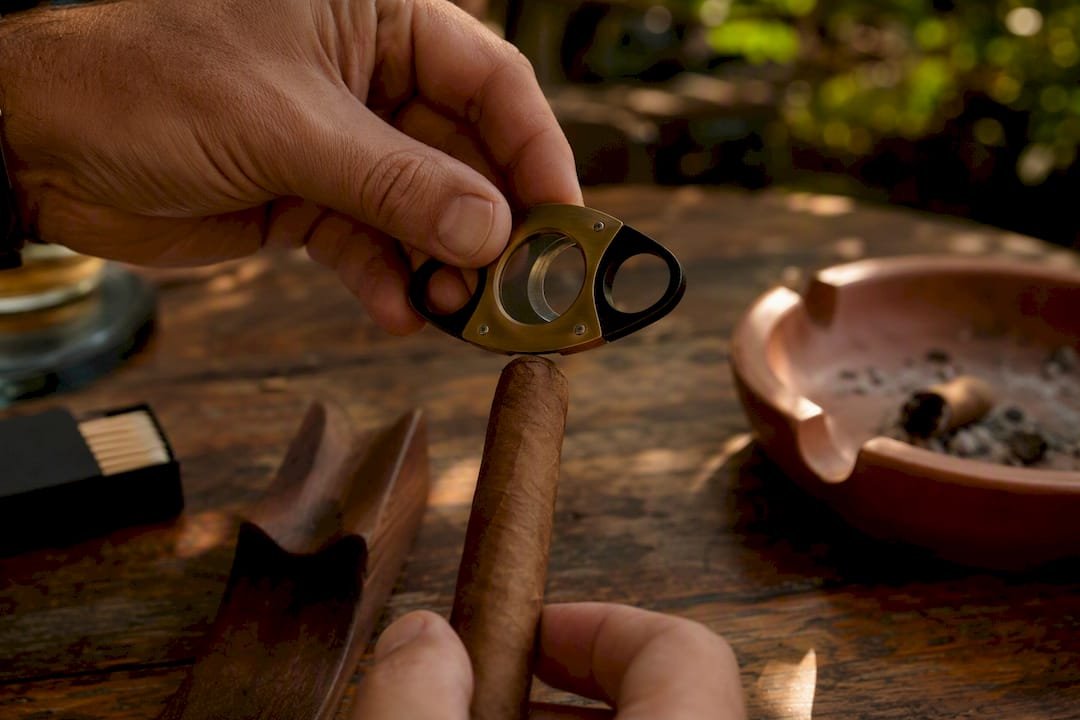
- Seat the cigar in the cutter. Rest the head against the far side of the blades so they sit right against the wrapper, just above the shoulder line. Don’t jam it in. You want light contact, not force.
- Cut once, with a swift, deliberate motion. Close the blades in one continuous squeeze. Hesitating partway through, or sawing back and forth, is what causes the wrapper to tear instead of slice clean. A single, confident motion beats a slow, careful one every time.
- Test the draw before you light anything. Put the foot in your mouth (unlit) and draw air through it. You’re checking for resistance, not flavor. Too tight, and the smoke will fight you all the way through.
The target amount to remove is small: about 1/16 inch, or roughly the width of a dime held against the cap. That’s enough to open a full draw without cutting into the shoulder itself.
Pro Tip: Hold the cutter, not the cigar, when you make the cut. Bracing the cigar with your other hand and squeezing the cutter toward it gives you far more control than trying to push the cigar into a stationary blade.
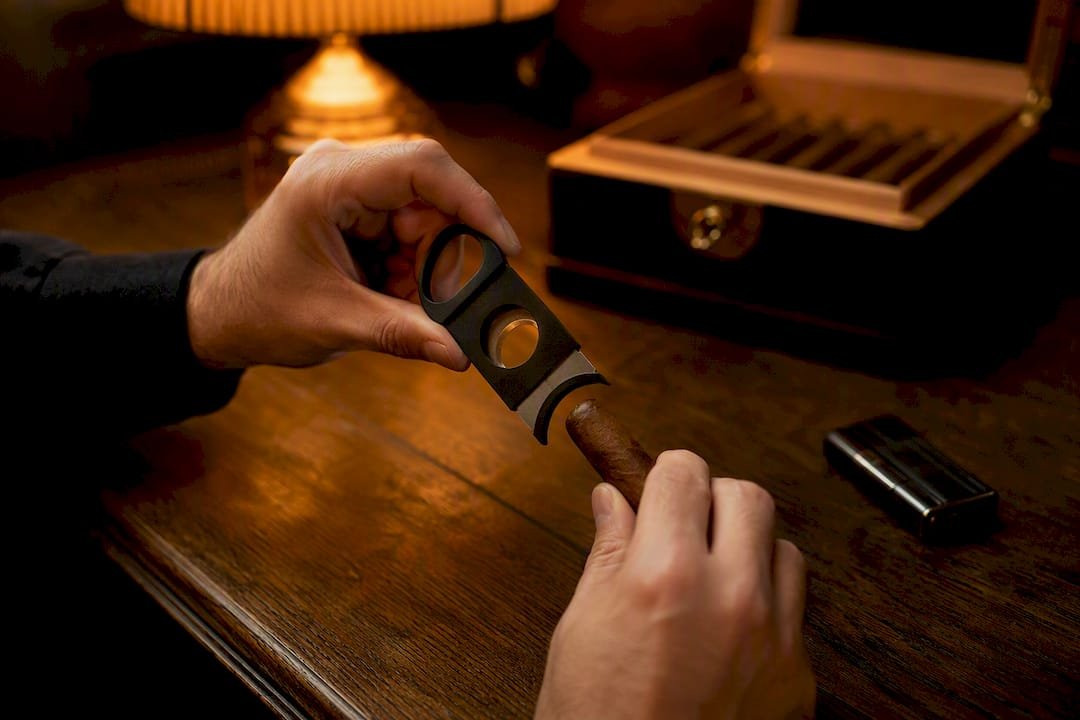
One safety note worth repeating: guillotine blades are sharp enough to nick a finger if you’re careless about where your other hand sits. Keep your fingers behind the blade line, not in front of it, especially with pocket cutters that don’t have a full housing.
How Much Should You Cut Off a Cigar?
Less than you think. The rule of thumb across most cutting guides is consistent: remove about a dime’s width, roughly 1/16 inch, and no more. That’s enough to open the draw on the vast majority of cigars without touching the shoulder.
Run this quick checklist before you light up:
- Draw air through the unlit cigar and note the resistance. It should feel like sipping through a straw, not chewing through a coffee stirrer.
- Look at the cut edge. It should be clean and round, not frayed or torn.
- Check for even resistance across the opening; a lopsided cut can create uneven airflow.
If the draw feels tight, trim a small amount more and test again. Never take a second full cut without measuring first; you can always remove more material, but you can’t put the cap back once it’s gone.
Pro Tip: Think of cutting like sharpening a pencil; small, incremental passes beat one aggressive slice every time.
How Do You Cut a Torpedo or Belicoso Cigar?
Tapered heads, torpedos, belicosos, piramides, need a different mindset than a standard parejo. The pointed tip is engineered to funnel smoke, and an aggressive cut destroys that shape permanently. There’s no rebuilding a lost taper.
- Start at the very tip, the narrowest point, not partway down the taper. A straight cutter or sharp scissors works; a punch cannot follow a curved surface and will crush the tip instead of cutting it.
- Take the smallest possible first cut. Just enough to open a sliver of airway.
- Test the draw immediately. If it’s still tight, trim a fraction more, staying as close to the original tip as you can.
- Repeat only if needed, moving down the taper in tiny increments rather than committing to one deep cut.
Tapered heads reward patience because their engineered shape is doing real work on your draw; cut too far down and you lose the concentration effect that makes a torpedo different from a robusto in the first place. If you’re working with something like a piramide-shaped stick, treat every cut as a test, not a commitment.
Pro Tip: When in doubt, cut less than feels right, then test. You can always go back for more; you can never put the tip back on.
What Are the Most Common Cigar Cutting Mistakes?
Most ruined cigars share the same handful of causes, and nearly all of them are avoidable once you know what to watch for.
- Cutting below the shoulder. This is the big one. Go too low and you risk the wrapper leaf unraveling entirely, sometimes taking binder and filler with it.
- Hesitating mid-cut. A pause during the squeeze turns a clean slice into a jagged, torn edge.
- Using a dull cutter. Dull blades crush instead of cutting, which stresses the wrapper right at the point where it’s most fragile.
- Taking off too much in one pass. Cutting below the shoulder, using a dull blade, and removing too much material in one go are the three most common ways a cigar gets ruined before it’s even lit.
- Boring a punch too deep. This opens the draw too wide, and the cigar can run hot and harsh instead of smooth.
When the cut goes wrong, the fix depends on how wrong. A slightly ragged edge can often be neatened with a quick snip from small scissors. A wrapper that’s actively unraveling past the shoulder, though, is usually beyond saving. At that point you’re managing damage, not fixing a cut.
Some problems aren’t about the cut at all. A loose roll or a soft spot from tunneling (uneven burning inside the filler) are construction issues that show up regardless of how carefully you cut. If the cigar feels spongy or lopsided in your hand before you even reach for a cutter, that’s a construction flaw, not something a better technique will solve.
What If You Don’t Have a Cigar Cutter?
Emergencies happen. You’re at a barbecue, someone hands you a cigar, and there’s no cutter within reach. Here’s the ranked order of what actually works, from cleanest to last resort.
- A sharp small pocketknife. A clean, sharp blade can produce a surprisingly tidy cut if you take your time and cut above the shoulder, just like you would with a proper cutter. Skip this if the only knife around has been coated in food oils; contamination changes the flavor.
- Small, sharp scissors. Nail scissors or a compact pair from a travel kit work fine. Dull kitchen shears will crush the cap rather than cut it, so sharpness matters more than size.
- A thumbnail with a matchstick or toothpick. Pinch a small opening at the very tip and use the matchstick to widen it slightly. Crude, but functional in a pinch.
- Biting. The true last resort. It’s messy, hard to control, and almost always removes more wrapper than you intend.
Whatever method you use, the rule doesn’t change: cut above the shoulder and take the smallest amount that opens a draw. If the head starts tearing raggedly or the wrapper loosens further down, stop. You’re better off smoking it slightly tight than tearing it apart trying to fix an emergency cut.
What Do Experienced Cigar Smokers Know That Beginners Don’t?
Veteran smokers tend to obsess over two things beginners skip: blade quality and cutter fit. A cheap cutter with soft steel dulls within a few uses, and a dull blade is the single fastest way to turn a clean cut into a ragged one.
Fit matters just as much. If you regularly smoke fat ring gauges, gordos, and the like, make sure the cutter’s throat width can actually accommodate them without crushing the wrapper on entry.
A short maintenance routine keeps any cutter performing like new:
- Wipe blades after every use to clear tar and oil buildup.
- Store the cutter closed, in a dry pocket or case, never loose in a humid environment.
- Sharpen or replace blades once you notice crushing instead of slicing, that’s the first sign of wear.
- Check the hinge or spring action periodically; a sluggish mechanism often means grit has worked its way inside.
Pro Tip: A double-blade guillotine with a stainless steel edge and a wide throat covers almost every cigar you’re likely to smoke, from a slim corona to a thick gordo, without needing a second tool.
Why I Trust the Simple Method Over the Fancy One
Cigar forums love to argue about cutting technique, but the fundamentals haven’t changed in decades because they work. My goal here wasn’t to give you an opinion on which cut looks most impressive at a lounge. It’s to give you a technique you can repeat every single time without guessing.
Every recommendation in this guide favors preserving construction and flavor over cutting flair. That’s also why the accessories Thor’s Cigar Vault carries lean toward the same practical standard: tools built to work, not just look good in a case.
Which Cutter Should You Buy First?
If you’ve made it this far, you already know the double-blade guillotine is the safest bet for nearly every cigar you’ll pick up, from a slim corona to a wide gordo. The real difference between a good cutter and a frustrating one comes down to blade steel and throat width, and that’s exactly where a lot of budget cutters fall short.

Thor’s Cigar Vault stocks cutters selected for blade sharpness and throat sizing wide enough to handle thicker ring gauges without crushing the wrapper on entry, along with the humidors and lighters that round out a proper setup. If you’re building a kit from scratch, or just replacing a cutter that’s gone dull, browse the cutter and accessory selection and pick one sized for the cigars you actually smoke. Pair it with something worth cutting carefully, like the AG Alejandro Robaina Cubana #2, a shaped cigar where a clean cut actually matters.
Sources
For a deeper look at technique and tool comparisons, these guides cover the details:
- How To Cut A Cigar | Cigar Aficionado
- How to Cut a Cigar: Straight Cut, V-Cut & Punch · Cigarista
- How to Cut a Cigar: Straight, V and Punch | Cigarro
- How To Properly Cut a Cigar | Boveda
FAQ
How do you properly cut a cigar?
Find the shoulder, seat the cigar in a guillotine cutter just above that point, and make one swift cut removing only the cap, then test the draw before lighting.
Do you cut both ends of a cigar?
No. You only cut the capped end (the head); the foot, the end you light, comes pre-cut from the factory and needs no trimming.
What can I use to cut my cigar if I don’t have a cutter?
A sharp pocketknife or small, sharp scissors work best in an emergency, followed by a thumbnail pinch with a matchstick, with biting as the last resort.
What are common mistakes when cutting cigars?
The most frequent errors are cutting below the shoulder, hesitating mid-cut, using a dull blade, and removing too much cap material in one pass.
What’s the best cutter for beginners?
A double-blade guillotine is the most forgiving option because both blades close evenly, cutting the risk of tearing the wrapper compared to single-blade designs.