How to Light a Cigar: A Beginner’s Quick Guide
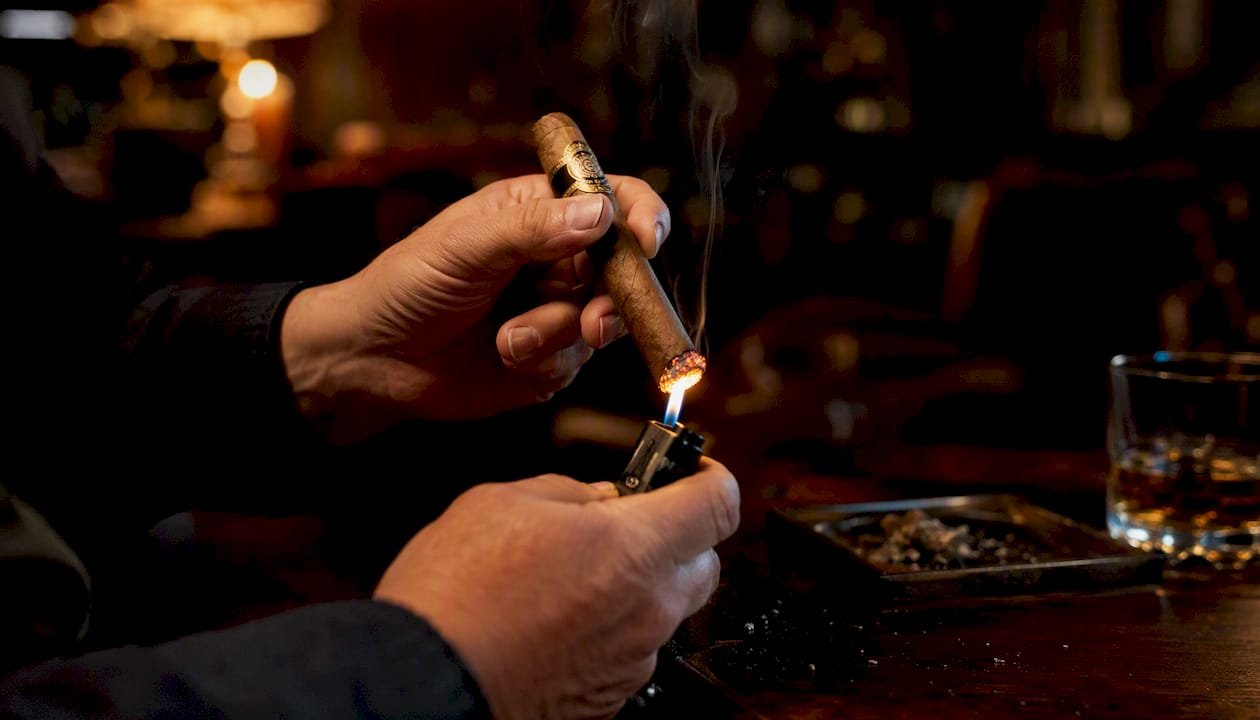
To light a cigar correctly, toast the foot with a clean fuel source (a butane torch or long wooden match) without letting the flame touch the tobacco, then draw slowly until the entire foot glows evenly. Cigar Aficionado recommends this toast-then-light approach as the standard for an even burn and clean first puffs.
Here’s the process at a glance:
- Cut the cap cleanly before anything else
- Toast the foot by holding the flame 1/2–1 inch away and rotating slowly
- Draw gently while finishing the light until a full glowing ring appears
- Check the foot — if the ember is even, you’re ready to smoke
Light the foot (the open end). The capped end, called the head, goes in your mouth. Never use a Zippo, candle, or sulfur match — fuel residues and soot will taint the flavor of even a great cigar.
Key Takeaways
Lighting a cigar correctly comes down to three things: a clean cut, a patient toast, and the right fuel for your environment.
| Point | Details |
|---|---|
| Always cut before lighting | A clean cut opens the draw; a ragged one restricts airflow from the start. |
| Toast first, draw second | Hold the flame 1/2–1 inch from the foot and rotate for 10–20 seconds before drawing. |
| The full light takes 30–60 seconds | Expect 10–20 seconds toasting and 20–40 seconds drawing to finish an even ember. |
| Match fuel to conditions | Use a torch outdoors or for large gauges; use soft flame or matches indoors for delicate wrappers. |
| Thor’s Cigar Vault starter gear | The shop carries lighters, cutters, and samplers suited for beginners learning proper technique. |
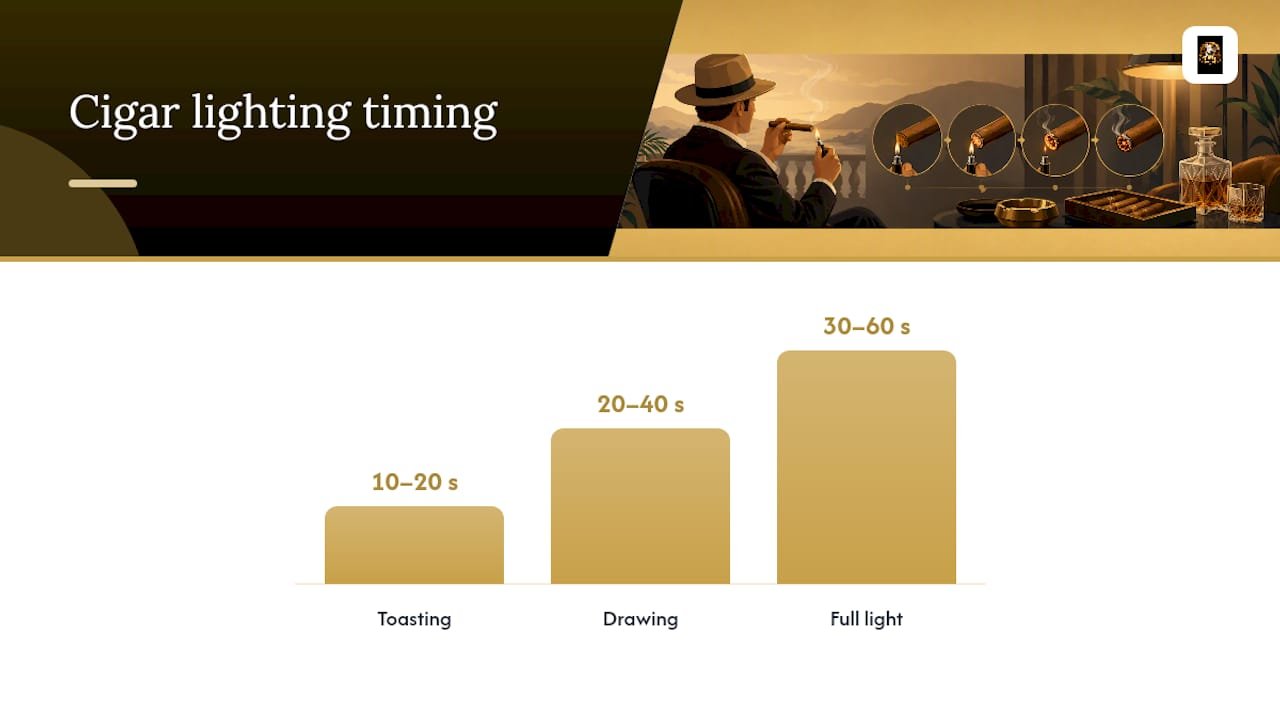
Table of Contents
- What tools should you use to light a cigar?
- How do you light a cigar step by step?
- How do you relight a cigar and fix an uneven burn?
- Flame safety and cigar etiquette
- Why slow toasting and clean fuel actually matter
- A note from Thor’s Cigar Vault on getting started right
- Ready to pick up the right gear?
- Sources
- FAQ
What tools should you use to light a cigar?
Choosing the right tool matters more than most beginners expect. The fuel you use touches the tobacco directly on those first puffs, so a bad choice can ruin an expensive cigar before you’ve even settled in.
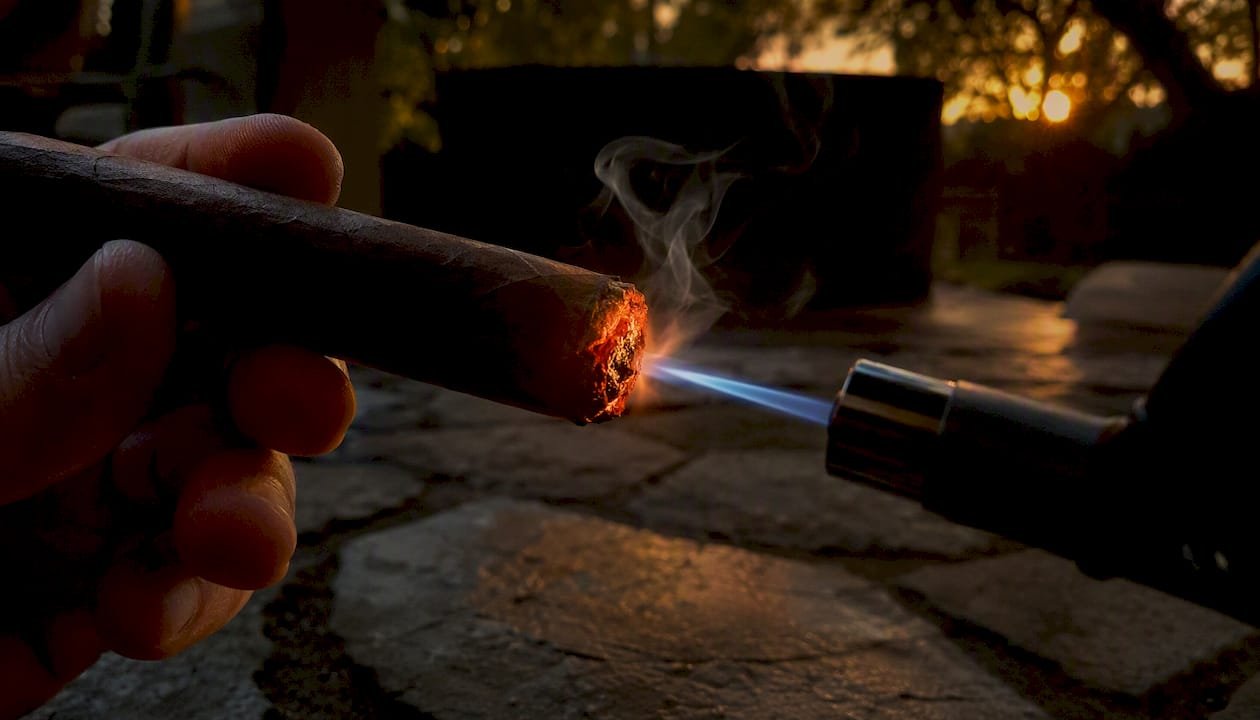
Butane torch (jet flame)
The most practical everyday tool. Wind-resistant, fast, and consistent. LighterPoint notes that torches are especially well-suited for large ring gauges and outdoor settings where a soft flame would struggle. The trade-off is heat intensity — hold it too close and you’ll scorch the wrapper.
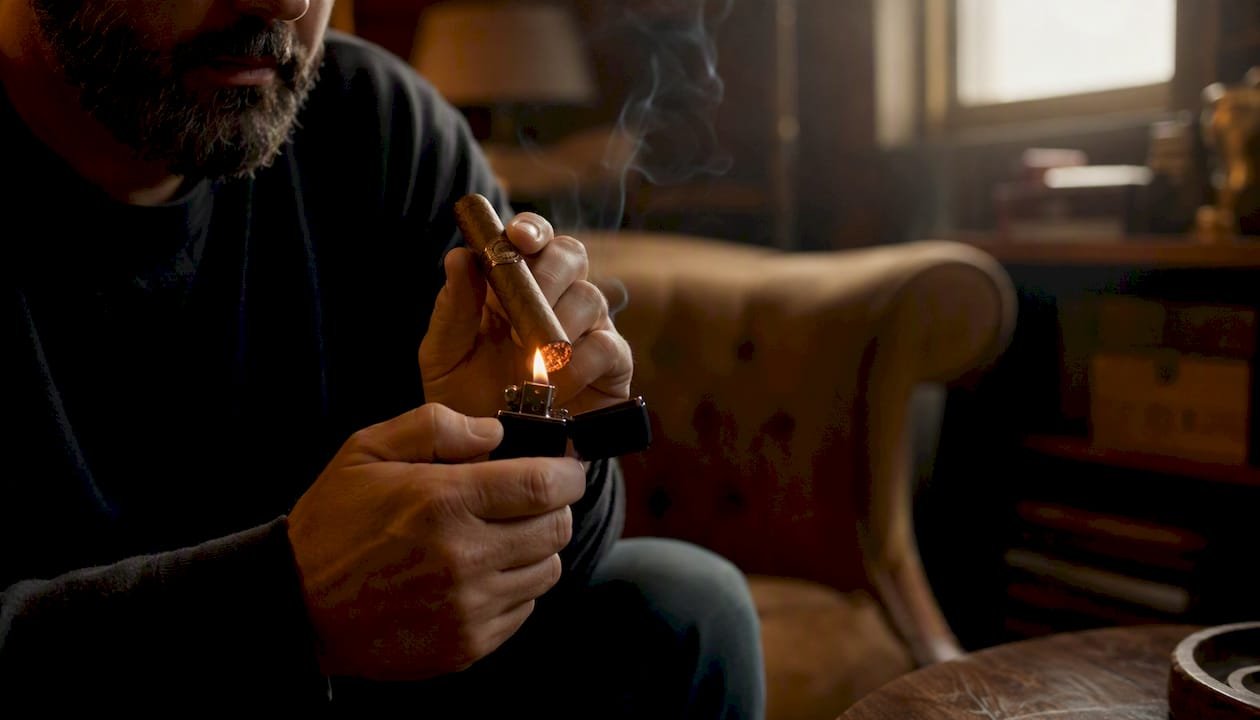
Soft-flame butane lighter
Gentler than a torch and better for delicate wrappers. Soft flames give you more control at close range, which is useful indoors. They lose reliability in any wind, so keep them for calm environments.
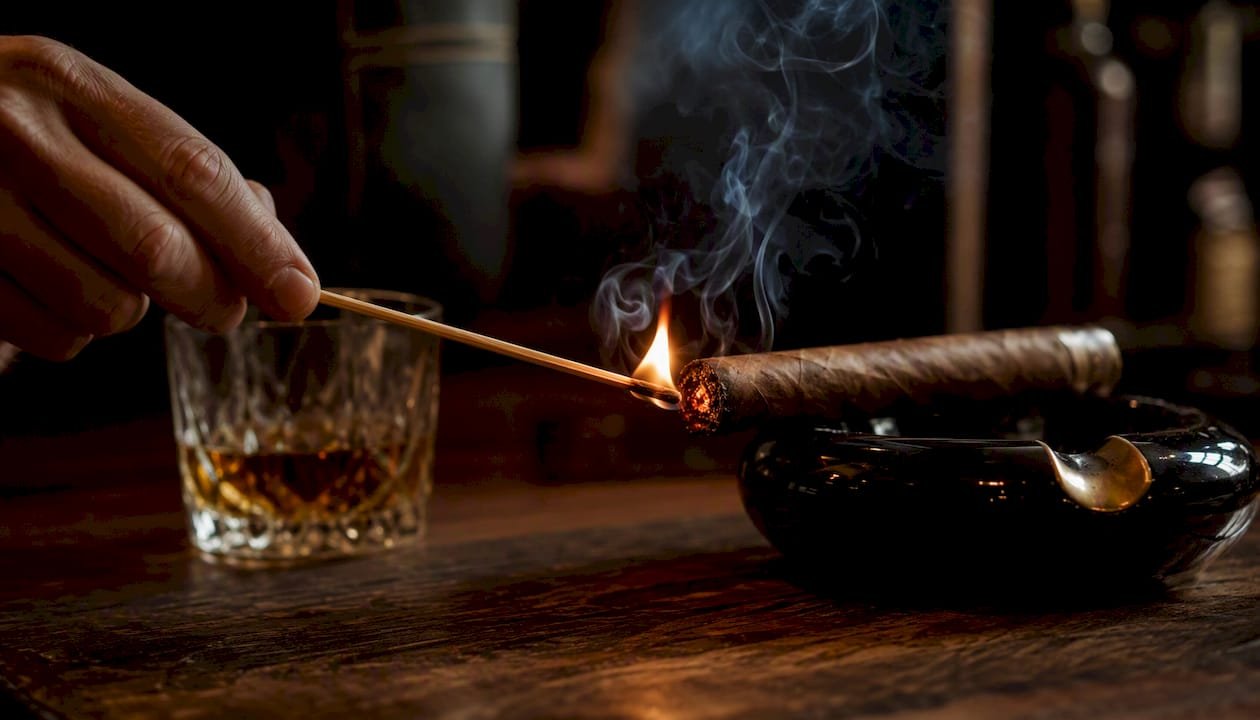
Long wooden matches
A purist favorite. Cigar Aficionado notes that matches and cedar spills are preferred by serious smokers precisely because they introduce no chemical flavor. The downside: they burn fast, so you need long matches (fireplace matches work well) and a steady hand.
Cedar spills
Thin strips of Spanish cedar, often cut from humidor liners or cigar box inserts. They add a faint cedar note to the first puffs, which many smokers consider a bonus rather than a flaw. Impractical outdoors, but a genuine ritual indoors.
What to avoid:
- Zippo and fluid lighters: The naphtha fuel leaves a petroleum taste that lingers on the tobacco.
- Candles: Soot and paraffin residue transfer directly to the foot. wikiHow confirms that candles and oil-fueled lighters taint flavor noticeably.
- Short sulfur matches: The sulfur head burns into the tobacco before the wood catches. If you use matches, wait for the sulfur to burn off completely before bringing the flame near the cigar.
| Tool | Best for | Drawback |
|---|---|---|
| Butane torch | Outdoors, large ring gauges, wind | Can scorch if held too close |
| Soft-flame butane | Indoors, delicate wrappers | Unreliable in wind |
| Long wooden matches | Flavor purity, indoor ritual | Burns fast, needs steady hand |
| Cedar spills | Flavor ritual, indoor use | Impractical outdoors |
Pro Tip: Use triple-refined, odorless butane in any refillable lighter. Lower-grade butane contains impurities that affect flavor the same way a bad fuel source does — the lighter just hides it better.
How do you light a cigar step by step?
The whole process takes a moderate amount of time when done right. Rushing it is the single most common beginner mistake.
Cut the cap. Use a sharp guillotine or punch cutter and remove just enough of the cap to open the draw — roughly 1/16 to 1/8 of an inch. A clean cut prevents the wrapper from unraveling and keeps the draw open. A ragged cut restricts airflow before you even start.
Toast the foot. Hold the cigar at a 45-degree angle and bring the flame to within 1/2–1 inch of the foot without touching it. Rotate the cigar slowly so the heat reaches the entire rim evenly. You’re looking for a faint charring around the edge and a slight glow — this is the pre-light toast, and it’s what sets up an even burn.
Bring it to your lips and draw. Once the foot shows a partial glow, put the cigar in your mouth and draw gently while continuing to rotate over the flame. Keep the puffs slow and steady. Groovy Cigars describes a proper light taking roughly 30–60 seconds total: about 10–20 seconds to toast, then another 20–40 seconds of drawing to finish the light.
Check the ember. Pull the cigar away from your lips and look at the foot. A properly lit cigar shows a full, even glowing ring across the entire foot. If one side is darker or cooler, rotate that side back toward the flame and draw once or twice more.
Hold it correctly. Grip the cigar between your index finger and thumb, away from the foot. Keep your fingers clear of the flame path. If you’re using a torch, angle the cigar so the jet hits the rim at a slight angle rather than blasting straight into the center.
Pro Tip: With a torch, keep the flame tip slightly farther back than feels natural — about an inch and a half. Torches burn hotter than they look, and the invisible heat cone extends well past the visible blue flame.
For a visual walkthrough, search “how to light a cigar” on YouTube. Channels dedicated to cigar reviews typically include short lighting demos that show hand position and rotation speed better than any written description can.
How do you relight a cigar and fix an uneven burn?
Even experienced smokers let a cigar go out occasionally. The key is knowing how to recover without ruining the flavor.
Telling if it’s out: Look at the foot. No glow, no smoke from the foot when you hold it up — it’s out. A cigar that’s just resting will still show a faint ember for a minute or two.
Relighting procedure:
- Tap off any loose ash at the foot before relighting
- Blow gently through the cigar (away from your face) to clear stale smoke from the draw channel — this step matters more than most beginners realize
- Re-toast the foot using the same rotation technique as the original light
- Draw slowly to finish the light and confirm an even ember
Boveda recommends this exact sequence — tap, clear, re-toast, finish — specifically to avoid the bitter puffs that come from drawing stale smoke through a cold cigar.
Fixing canoeing (uneven burn):
- Rotate the cigar so the slower-burning side faces up while you smoke — gravity and airflow often self-correct a mild run
- Touch up the lagging side with a torch, applying brief heat to the cooler edge while taking a gentle draw
- If the canoe is severe, set the cigar in an ashtray and let it rest for 30 seconds before touching up
Weak draw fixes:
- Check the cut first — a too-shallow cut is the most common cause
- Try a draw tool (a thin poker designed for cigars) to gently open the draw channel
- A short re-toast sometimes re-opens a partially blocked airway
Flame safety and cigar etiquette
Basic flame safety:
- Keep a lit cigar pointed away from your face, hair, and clothing at all times
- Always use an ashtray — setting a lit cigar on a table edge is how furniture gets ruined
- To extinguish a cigar, set it in the ashtray and let it go out on its own. Crushing it like a cigarette releases a sharp, acrid smell that clears the room fast.
Traveling with lighters and matches:
Before flying, check TSA guidance on flammables. Rules on lighters, matches, and fuel canisters vary by container type and quantity, and they change. Don’t assume what worked last year still applies.
Group etiquette:
- Wait for others to be ready before lighting, especially if someone is still cutting
- Avoid blowing smoke directly toward another person
- Relight quietly and quickly — repeated failed lights draw attention and disrupt the mood
Why slow toasting and clean fuel actually matter
The toast-then-light method isn’t just ritual. Heating the foot gradually warms the oils and natural sugars in the filler tobacco so ignition happens evenly across the entire surface. When you skip the toast and go straight to drawing through a flame, the center of the foot lights first while the outer ring stays cool. That imbalance is what causes canoeing and uneven burn from the very first puff.
Fuel choice compounds this. Cigar Aficionado points out that purists favor matches and cedar spills specifically because the sensory difference shows up on those first few puffs of a premium cigar — the ones where the flavor profile is freshest and most distinct. Chemical fuel residues from naphtha lighters or candle soot don’t just add an off-note; they can mask the wrapper’s character entirely.
That said, a torch is the right tool when conditions demand it. Wind kills a soft flame or match before the toast is half done, and a large-gauge cigar (a 60-ring Gordo, for example) needs the sustained heat a torch provides to ignite the full foot evenly. Experienced smokers often keep both a torch and a box of long matches on hand, choosing based on where they’re smoking.
Pro Tip: If you’re using a torch indoors on a mild-to-medium cigar, dial back the flame to its lowest setting. A full-blast torch on a 42-ring corona is overkill and scorches the wrapper faster than you can rotate.
A note from Thor’s Cigar Vault on getting started right
The two questions we hear most from beginners are “which lighter should I buy?” and “why does my cigar keep going out?” They’re connected. The cutter matters as much as the lighter — a dull or poorly fitted cutter tears the cap and restricts the draw before the cigar ever meets a flame.
The other thing we see constantly: people rushing the light. A cigar isn’t a cigarette. Give it the full 30–60 seconds, rotate deliberately, and resist the urge to draw hard. Patience during the light sets up every puff that follows.
If you have questions about which gear fits your situation or want a recommendation based on the cigars you’re smoking, reach out through the Thor’s Cigar Vault blog or contact us directly. We’re happy to point you in the right direction.
Ready to pick up the right gear?
The fastest way to avoid beginner lighting mistakes is starting with tools built for the job. At Thor’s Cigar Vault, you’ll find a curated selection of lighters, cutters, and accessories chosen for quality and reliability — not just price point.

A solid starter setup includes a single or double-flame butane torch, a guillotine cutter with a sharp stainless blade, and a travel tube or small humidor to keep your cigars at the right humidity between sessions. Humidity matters because a dry cigar burns hot and fast, which makes an even light nearly impossible regardless of technique.
If you want to pair your new gear with a cigar worth the effort, the Arturo Fuente Black Pink Sampler is a low-commitment way to try several blends and practice your lighting technique across different sizes and wrappers. Browse the full shop and find what fits your setup.
Sources
These sources informed this guide and are worth bookmarking for deeper study:
- How To Light A Cigar | Cigar Aficionado
- Soft flame vs torch | LighterPoint
- TSA — What can I bring? (Flammables)
- How to Light a Cigar and Relight It If It Goes Out | Boveda
- How to Light a Cigar | wikiHow
A short video demo is worth watching before your first light. Search “how to light a cigar” on YouTube and look for channels that show the rotation and hand position in real time.
FAQ
What is the correct way to light a cigar?
Toast the foot with a butane torch or long wooden match, holding the flame 1/2–1 inch away and rotating slowly, then draw gently until a full glowing ring appears across the entire foot. The whole process takes 30–60 seconds.
Can a regular lighter light a cigar?
A fluid-fueled lighter like a Zippo can technically ignite a cigar, but the naphtha fuel leaves a chemical taste that affects the first several puffs. Use a butane lighter or wooden matches instead.
Which end of a cigar do I light?
Always light the foot, which is the open, cut end. The head (the capped end) goes in your mouth and is never exposed to a flame.
How do you relight a cigar correctly?
Tap off loose ash, blow gently through the cigar to clear stale smoke, re-toast the foot with a slow rotation, then draw to finish the light. Clearing stale smoke before re-toasting prevents the bitter taste that makes relights unpleasant.