
10–120+ Minute Cigar Sessions: Match Format and Pace to Your Time
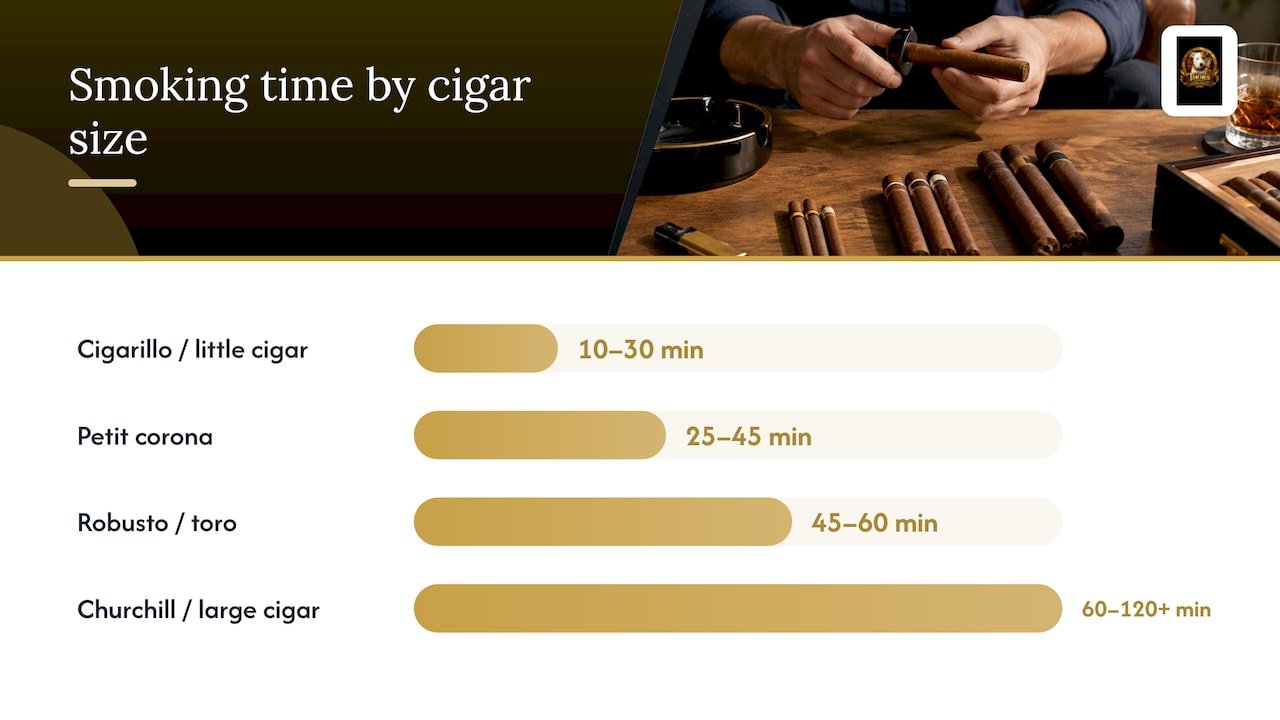
A cigarillo typically burns down in about 10 to 30 minutes, a petit corona lasts around 25 to 45 minutes, a robusto or toro usually takes 45 to 60 minutes, and a Churchill or other large premium cigar can last up to two hours or more. Where a specific cigar lands in its range depends mostly on how fast you puff and how wide its ring gauge is, not just its length. Longer sessions also mean more smoke exposure, which matters if you’re thinking about health as much as flavor.
TL;DR:
- Larger cigars like Churchill and premium formats can last over two hours, especially if you puff slowly and take breaks between draws.
- Burn times vary significantly with ring gauge and filler weight, with wider and heavier cigars burning slower even if their length is similar.
- Fast or frequent puffing shortens session length, increases heat, and can cause bitterness, so paced smoking preserves flavor and longevity.
- Extended smoking sessions result in longer exposure to toxic chemicals, with larger cigars containing up to 20 grams of tobacco and possibly taking two hours to finish.
- Choosing cigars based on your available time helps prevent rushed smoking and minimizes health risks associated with prolonged smoke exposure.
Table of Contents
- Typical smoking times by cigar size and format
- Factors that change how long a cigar lasts
- What the ‘1/3/5’ rule actually means for your smoke
- Health and exposure: what longer sessions mean for risk
- Practical tips to make a cigar last while preserving flavor
- How I think about matching cigars to the time I have
- Find a cigar that fits your schedule
- Primary sources and further reading
- Sources
- FAQ
Typical smoking times by cigar size and format
Size is the first clue to how long a cigar will keep you occupied, but it’s not the whole story. A cigarillo or little cigar, often thin and short, tends to burn out in 10 to 30 minutes. A petit corona runs 25 to 45 minutes. Step up to a robusto or toro and you’re usually looking at 45 to 60 minutes. A Churchill or other large-format cigar can stretch past two hours.
- Cigarillo or little cigar: 10 to 30 minutes, thin profile and lower tobacco mass.
- Petit corona: 25 to 45 minutes, a step up in length and girth.
- Robusto or toro: 45 to 60 minutes, a common middle-ground choice.
- Churchill or large premium cigar: 60 to 120+ minutes, built for a long sit.
The NCI cigar fact sheet notes that large premium cigars typically contain 5 to 20 grams of tobacco and can take one to two hours to smoke, compared with most cigarette sessions, which last under 10 minutes. More tobacco mass simply gives the fire more to work through before it reaches your fingers.
Worth noting: machine-measured smoke times used in laboratory testing rarely match how a real person smokes. A paced, relaxed smoker draws out a cigar well beyond what a mechanical puffing rig would clock, because humans rest the cigar, talk, and let it idle between puffs.
Factors that change how long a cigar lasts
Size sets the baseline, but several other variables push a cigar’s actual burn time up or down.
- Ring gauge and filler mass: a wider cigar packs in more tobacco, so it burns slower even at the same length.
- Length paired with gauge: two cigars of identical length can smoke very differently if one carries a noticeably thicker ring gauge.
- Draw resistance and construction: a tightly rolled cigar slows the burn but can also choke the smoke and flatten the flavor.
- Puff frequency: hobbyists generally aim for roughly one puff per minute; smoking faster shortens the session and overheats the wrapper.
- Humidity and storage: cigars kept at stable humidity burn more evenly than ones that are too dry or too wet, which affects both pace and taste.
- Relighting: stopping and relighting adds real time to a session, though it can also dull the flavor if the cigar sits too long between draws.
Storage deserves its own mention. That’s a storage guideline, not a pacing rule, and it won’t tell you how fast to smoke.
Pro Tip: If a cigar keeps going out, the problem is usually pace, not the cigar. Slow down before you reach for another match.
What the ‘1/3/5’ rule actually means for your smoke
There’s no single, universal “1/3/5” rule in cigar smoking, despite how often the phrase gets repeated. Some smokers use it loosely to describe thirds of a cigar, a pace reminder, or a flavor-change checkpoint, but it isn’t a standardized measurement. It’s also easy to confuse with the 135 humidity guideline for storage, which has nothing to do with how fast you puff.
Three simple pacing templates cover most situations:
- Short session (15 to 30 minutes): pick a cigarillo or small corona, puff steadily, and expect quick, direct flavor.
- Casual session (45 to 60 minutes): a robusto or toro with roughly one puff per minute gives you a relaxed pace without rushing.
- Leisurely session (60 to 90+ minutes): a Churchill or larger format, paired with real rest between puffs, lets the flavor evolve through thirds.
Racing through any of these with fast, frequent puffs overheats the wrapper and turns the smoke bitter well before the cigar is done.
Health and exposure: what longer sessions mean for risk
A longer cigar isn’t just more time with flavor in your mouth, it’s more time with smoke in the room. The CDC’s guidance on cigars states that cigar smoke contains many of the same toxic and carcinogenic chemicals found in cigarette smoke, and that larger cigars, with more tobacco mass, contribute to longer sessions and greater exposure. There is no safe level of cigar smoke exposure.
Large premium cigars can contain 5 to 20 grams of tobacco and take one to two hours to smoke. That extended burn time means more sustained exposure per session than a cigarette offers in a few minutes.
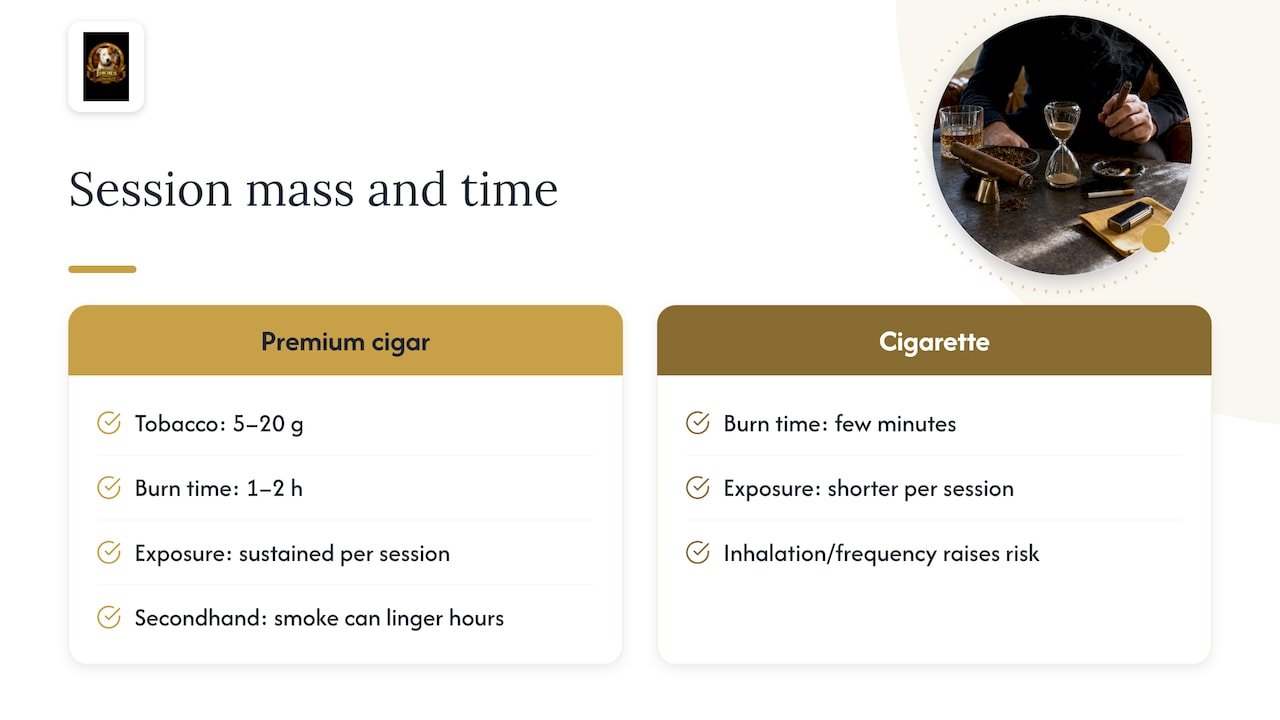
A mortality study tracking cigar smokers found that risk rises with how often someone smokes and how deeply they inhale, meaning occasional, non-inhaling use carries a different risk profile than daily or inhaling use. Secondhand exposure matters too: smoke from a single cigar can linger indoors for hours, raising involuntary exposure for anyone nearby long after the cigar itself is finished.
Practical tips to make a cigar last while preserving flavor
Controlling session length doesn’t have to mean sacrificing taste.
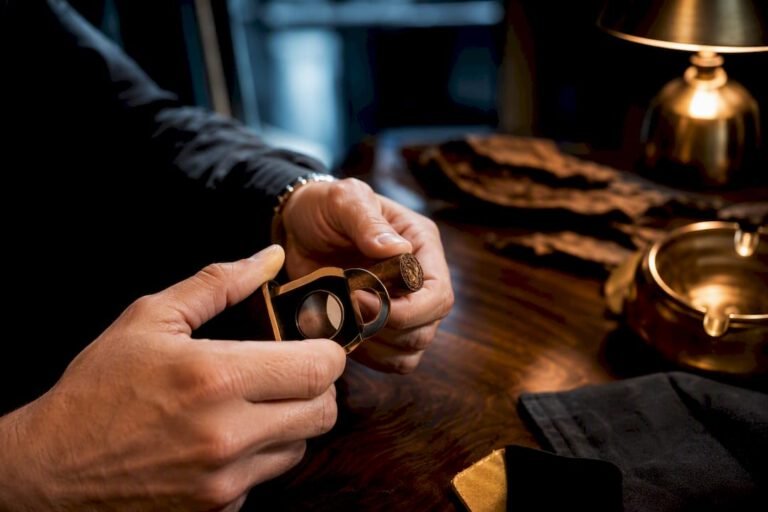
- Cut cleanly with a sharp cutter and toast the foot evenly before the first real draw.
- Puff at a measured pace, resting the cigar between draws so it doesn’t overheat.
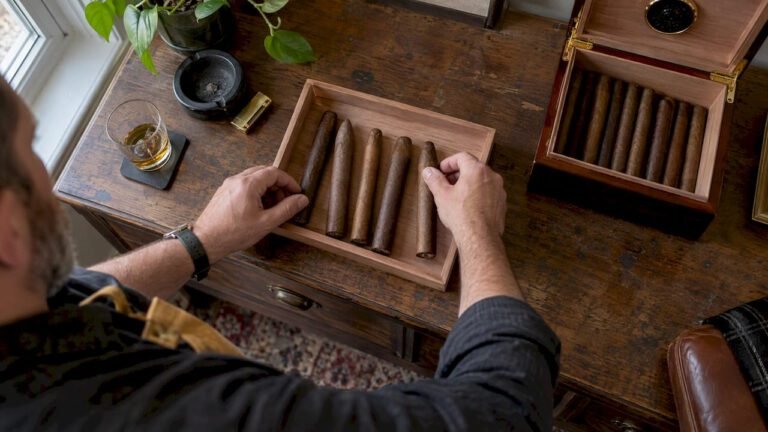
- Store at a stable humidity, following a guideline like the 135 rule, so the cigar burns evenly from start to finish.
- Relight promptly if it goes out rather than waiting, since a cold cigar left too long turns harsh.
- Watch for bitterness or heat near the band; that’s usually the signal the cigar has passed its flavor peak.
Pro Tip: A short rest between puffs does more for flavor than any specific cutter or lighter ever will.
How I think about matching cigars to the time I have
I’ve found the simplest approach is picking the cigar for the time slot, not the other way around. A short break calls for something small, while a free evening is where a Churchill earns its two hours. Curated samplers and clear format listings make that kind of planning easy, since ring gauge and length are often provided on product pages before you commit to a smoke.
— Kevin
Find a cigar that fits your schedule
Matching a cigar to the time you actually have beats guessing and ending up rushed or stuck with half a stick left over. 
- Browse the cigars category and filter by size when you know your time window.
- Try a sampler to test a short, medium, and long format side by side.
- Grab a mystery pack if you’d rather let the surprise set your next session’s length.
- Check out humidors to keep every size burning evenly once it’s home.
Every product page lists ring gauge and length up front, so you can shop by the clock as easily as by brand.
Primary sources and further reading
- CDC: Cigars, Smoking and Tobacco Use
- NCI: Cigar Smoking and Cancer Fact Sheet
- PubMed: Mortality risks among cigar smokers
- CDC Stacks: VOCs in little cigar smoke
This article is general information, not a substitute for advice from a qualified doctor. Consult a qualified healthcare professional about your own circumstances before acting on anything here.
Sources
- Cigars | Smoking and Tobacco Use | CDC
- Cigar smoking and cancer – NCI (National Cancer Institute)
- Mortality risks among cigar smokers linked to national surveys – PubMed (2018)
- Volatile organic compounds in mainstream smoke of sixty domestic little cigar products (CDC stacks)
FAQ
How long should a cigar take to smoke?
Most cigars take anywhere from 10 minutes for a small cigarillo to over two hours for a large premium cigar. The NCI notes large cigars with 5 to 20 grams of tobacco can take one to two hours, while mid-size formats like a robusto typically land closer to 45 to 60 minutes.
Is smoking two cigars a day okay?
Risk scales with how often and how deeply someone smokes, so daily smoking of any amount carries more exposure than occasional use. Mortality research on cigar smokers shows that frequency and inhalation depth drive higher disease risk, so this is a question worth raising with a doctor rather than answering with a fixed number.
What is the 1/3/5 rule for cigars?
There’s no universal, standardized “1/3/5” rule, though some smokers use similar shorthand loosely to describe pacing or flavor checkpoints. It’s often confused with the 135 humidity guideline, which relates to storage temperature and relative humidity, not how fast you puff.
Are cigars worse for your lungs than cigarettes?
Cigars and cigarettes both deliver many of the same toxic and carcinogenic chemicals, according to the CDC, and there is no safe level of exposure to either. Cigars tend to involve more tobacco mass and longer sessions, which can mean greater cumulative exposure per smoke even among people who don’t inhale deeply.