Beginner Cigar Education: 3 Steps to Skills with Thor’s Cigar Vault
Cigar education covers five things: anatomy, preparation, storage, etiquette, and where to get certified. The next step is simple. Learn the core vocabulary, then practice one cut and light on an actual cigar before spending money on formal courses. Programs like IACS Cigar Sommelier can wait until after you know what a wrapper is, and a specialty cigar shop is a reasonable place to buy that first cigar.
TL;DR:
- Most beginners should focus on learning cigar vocabulary and practicing cutting and lighting before pursuing formal certification options.
- A cigar’s flavor and strength can vary widely based on size, shape, and construction, with larger vitolas burning slower and cooler.
- Proper storage at around 70% humidity and careful handling minimizes mold risk and ensures the cigar ages well over time.
- Basic cigar etiquette includes leaving the band on initially, tapping ash lightly, pacing puffs, and avoiding sharing unless you are familiar with the other person.
- Certification programs like IACS or The Cigar Academy offer industry credibility but are not necessary for enjoying cigars as a hobby or amateur smoker.
Table of Contents
- Cigar Anatomy and Key Terms Every Beginner Needs
- How to Prepare and Smoke a Cigar Step by Step
- Storage and Humidor Basics
- Smoking Etiquette and Common Mistakes
- Certification and Structured Course Options
- A Practical Learning Path Using Thor’s Cigar Vault
- Health Considerations and Risks of Cigar Smoking
- What Actually Matters in Cigar Education
- Sources
- FAQ
Cigar Anatomy and Key Terms Every Beginner Needs
A cigar is built from three layers, and each one shapes what you’ll taste. The wrapper is the outermost leaf, and it accounts for a surprising amount of flavor even though it forms only a small portion of the total tobacco by weight. The binder holds the filler leaves together and burns evenly if it’s well aged. The filler is the blend of leaves inside, and it drives strength and complexity. Cigar anatomy is conventionally broken into these three components, and understanding them is the fastest way to decode a tobacco shop’s product descriptions.
Size matters more than most beginners expect. A cigar’s shape and size is called its vitola, and ring gauge measures diameter in 64ths of an inch, so a 50 ring gauge cigar is 50/64 of an inch thick. Bigger rings generally burn cooler and slower, which changes the smoking experience even within the same blend. A short Robusto might run about three quarters of an hour, while a long Churchill can take well over an hour.
You’ll also need to know the parts you physically handle:
- Cap: the rounded end you cut before smoking.
- Foot: the end you light.
- Band: the paper label, usually left on until you’re partway through smoking, or removed after the cigar warms slightly so it doesn’t tear the wrapper.
Two more terms come up constantly: body refers to flavor intensity, while strength refers to nicotine impact, and the two don’t always move together. A full-bodied cigar can be mild in strength, and using a coffee aroma wheel technique helps sharpen your tasting vocabulary to identify such nuanced flavors. Draw is how easily air pulls through the cigar, and burn is how evenly it combusts. Both matter more than most new smokers realize.
How to Prepare and Smoke a Cigar Step by Step
Skip the temptation to ask a shop for “the best cigar.” That question has no useful answer. A stronger approach is telling the staff how much time you have and how experienced you are with nicotine, since beginner guidance from Parisian Gentleman points out that mood and time constraints produce far better recommendations than a vague request for quality.
Once you’ve picked a cigar, the process runs the same way every time:
- Inspect it. Check for a firm, evenly colored wrapper with no soft spots or cracks.
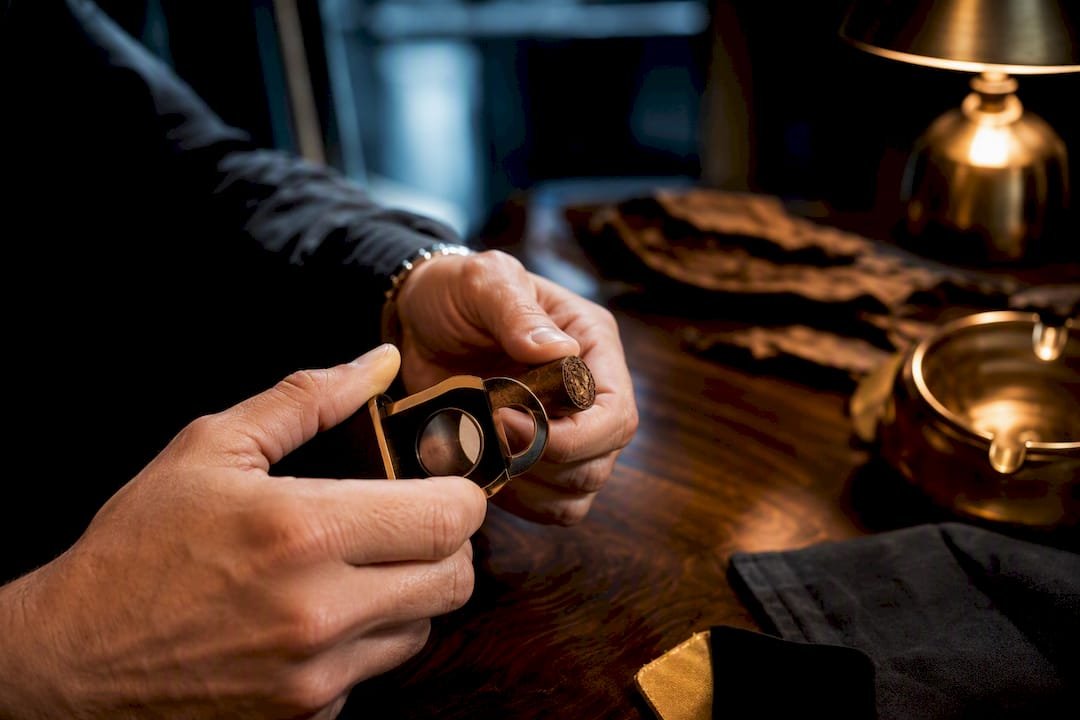
- Cut it. A straight cutter, a punch, or a V cutter all work. A punch is the most forgiving for beginners because it’s nearly impossible to over cut.
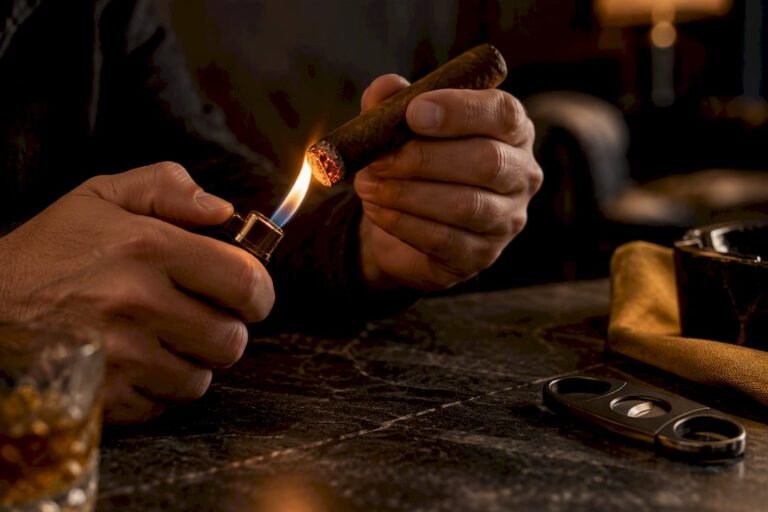
- Toast the foot. Hold the cigar at a 45 degree angle just above the flame, rotating it until the foot glows evenly.
- Light it. Butane lighters or wooden matches burn cleaner than fluid-filled lighters, which can taint the tobacco with a chemical taste.
- Puff, don’t inhale. Draw smoke into your mouth, let it sit, and release it. One puff a minute keeps the cigar from overheating.
If the draw feels tight, a firm roll between your fingers sometimes loosens it. Uneven burning, known as canoeing, usually corrects itself if you rotate the cigar toward the slower-burning side. When smoke tastes stale, a gentle purge, a soft blow through the foot, clears it out and resets the flavor, a fix confirmed by cigar construction guides. To taste more, try retrohaling: exhale a small amount of smoke gently through your nose to catch aromas your tongue misses entirely.
Pro Tip: Keep a one-line note after each cigar: brand, size, and one flavor you noticed. After ten entries, you’ll start spotting patterns in what you actually like.
Storage and Humidor Basics
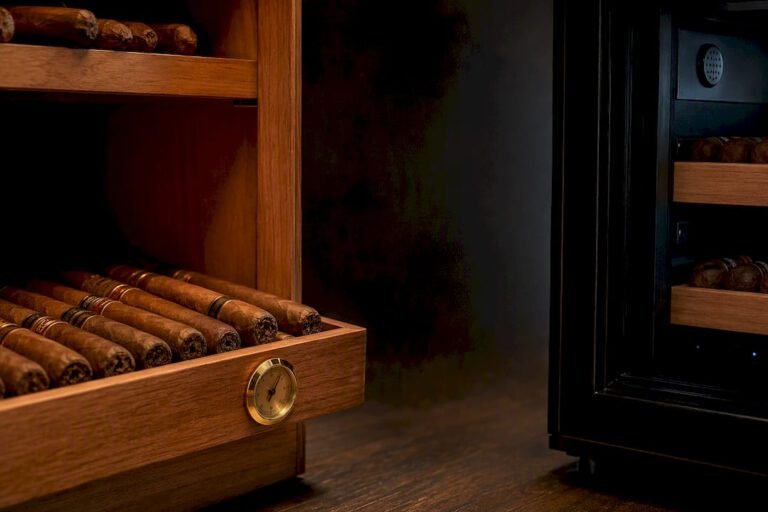
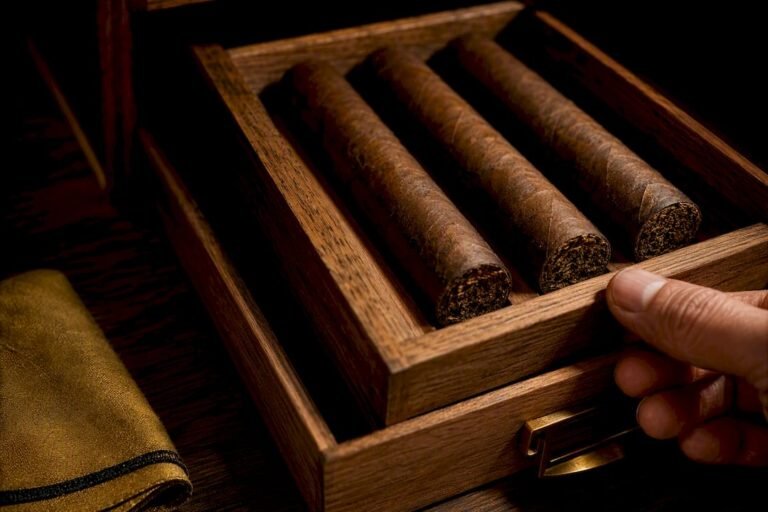
Cigars are living tobacco, and they punish neglect fast. Standard guidance targets around 70% relative humidity and roughly 70°F, conditions widely cited by cigar storage references as the sweet spot for slow, even aging without mold risk.
A few practices keep that balance stable:
- Season a new humidor for 24 to 48 hours with distilled water before storing cigars in it.
- Use reliable humidification like Boveda packs or humidity beads instead of guessing with a sponge.
- Check a digital hygrometer monthly since cheap analog ones drift out of calibration.
- For travel, a small resealable bag with a Boveda pack works as a makeshift travel humidor for short trips.
Watch for plume, a harmless white crystalline dust that brushes off and often signals proper aging, versus mold, which is fuzzy, blue or green, and smells musty. Plume is fine. Mold means the cigar goes in the trash. A well-seasoned humidor removes most of the guesswork here.
Smoking Etiquette and Common Mistakes
Lounge culture runs on small, unwritten rules, and breaking them marks you as new faster than anything else. Never light your own cigar off someone else’s without asking, and never reach for another person’s cigar case without an invitation.
A few habits separate confident smokers from awkward ones:
- Leave the band on until the cigar warms up, then remove it gently rather than tearing at cold wrapper leaf.
- Tap ash lightly rather than jamming the cigar into the tray.
- Pace yourself. One puff a minute avoids the harsh, hot taste that comes from smoking too fast.
- Uneven burn or “canoeing” and a tight draw are both fixable mid-smoke, not reasons to relight from scratch, according to cigar terminology guides.
Sharing a cigar happens, but it’s polite to offer only if you know the person well, and it’s fine to decline. Cigars carry real nicotine content, and pacing yourself protects both your evening and your stomach.
Certification and Structured Course Options
Formal cigar education exists for people who want more than hobbyist knowledge, and three programs dominate the space right now.
- IACS / Cigar Sommelier runs roughly 60 hours total, combining e-learning, a two-day classroom session, tasting-sheet submissions, an online assessment, and a closing oral exam, according to Cigar Sommelier’s program page. It suits hospitality professionals and serious aficionados who want a credential with real assessment weight behind it.
- The Cigar Academy offers a Level 1 award as an entry point, with higher levels planned for continued study, per The Cigar Academy’s course overview. It fits people who want a structured, low-pressure starting point before committing to something more intensive.
- Master of Cigars runs a multi-level path from Essentials through Master level, including country-specific workshops and travel components for advanced students, based on the Master of Cigars course structure. It’s built for people who want the education tied to actual origin-country experience.
Certification is worth pursuing if you want structured feedback, industry credibility, or a path toward retail and hospitality work. It rarely guarantees a job outright. What it reliably delivers is networking access and a sharper palate, which matters more than the certificate itself for most hobbyists.
A Practical Learning Path Using Thor’s Cigar Vault
The fastest path runs three steps: learn the vocabulary, practice hands-on with real cigars, then consider a Level 1 certification if you want to go further. A sampler pack lets you test multiple vitolas without committing to a full box, and pairing it with a decent cutter turns the anatomy lesson above into muscle memory fast.
One reminder: cigar purchase and consumption is legally restricted to adults of legal smoking age in your jurisdiction.
Health Considerations and Risks of Cigar Smoking
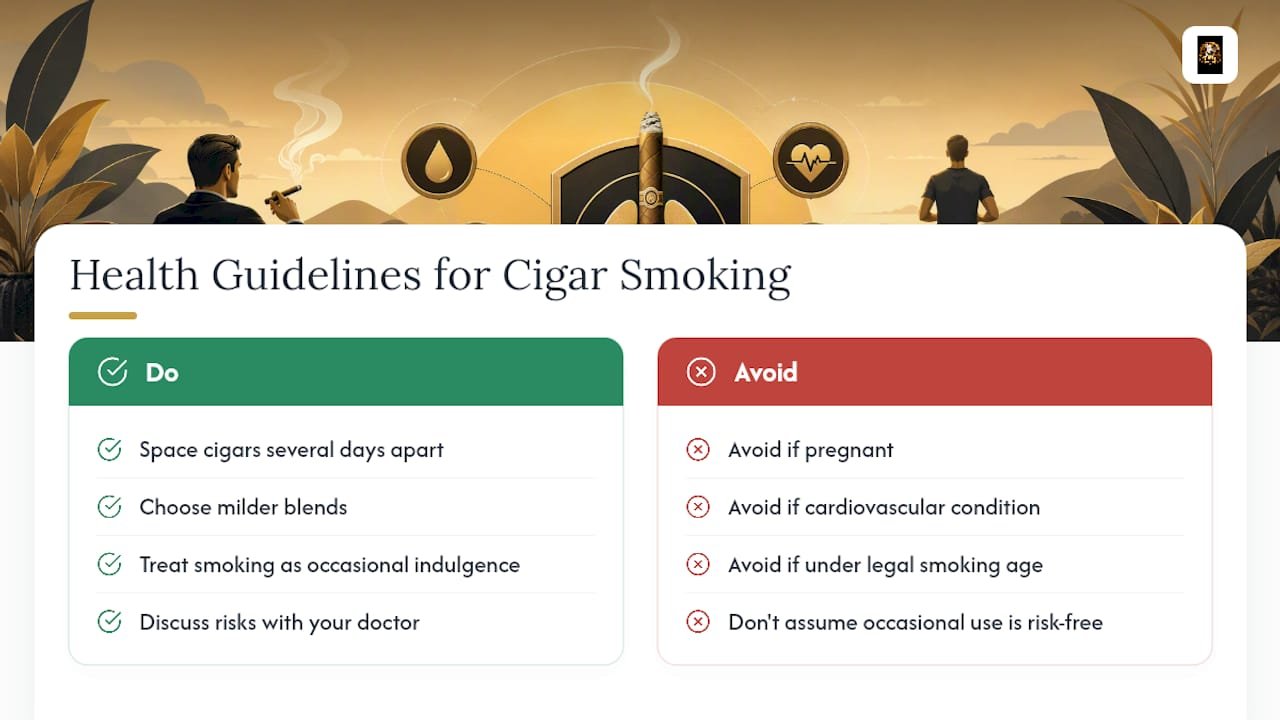
Cigar smoke carries the same core risks as other combusted tobacco products: exposure to carcinogens, nicotine dependence, and elevated risk of oral, throat, and lung cancers with regular use. Even occasional cigar smoking is not risk-free, and larger cigars deliver more tobacco and nicotine per session than a typical cigarette.
Frequency matters. A once-a-week cigar habit carries meaningfully less cumulative risk than daily smoking, but “less risk” is not the same as “no risk.” People with cardiovascular conditions, pregnant individuals, and anyone under legal smoking age should avoid cigars entirely. If you’re managing nicotine tolerance, spacing out cigars and choosing milder blends reduces the intensity of exposure per session, though it doesn’t eliminate long-term risk from cumulative use.
Pairing cigars with drinks is part of the culture, but it’s worth pacing that too. Whiskey and rum are classic pairings because their sweetness and heat complement tobacco oils, coffee works well with milder morning cigars, and full-bodied red wine can stand up to a stronger blend. None of that changes the underlying health calculus. If you smoke, treat it as an occasional indulgence rather than a daily habit, and talk to a doctor about your individual risk factors before making it a regular practice.
What Actually Matters in Cigar Education
Most cigar content online skips straight to brand recommendations and skips the fundamentals entirely. That’s backwards. Knowing how to read a wrapper, judge a draw, or fix a canoeing burn matters more than knowing which brand is trending this year, because those skills transfer to every cigar you’ll ever smoke.
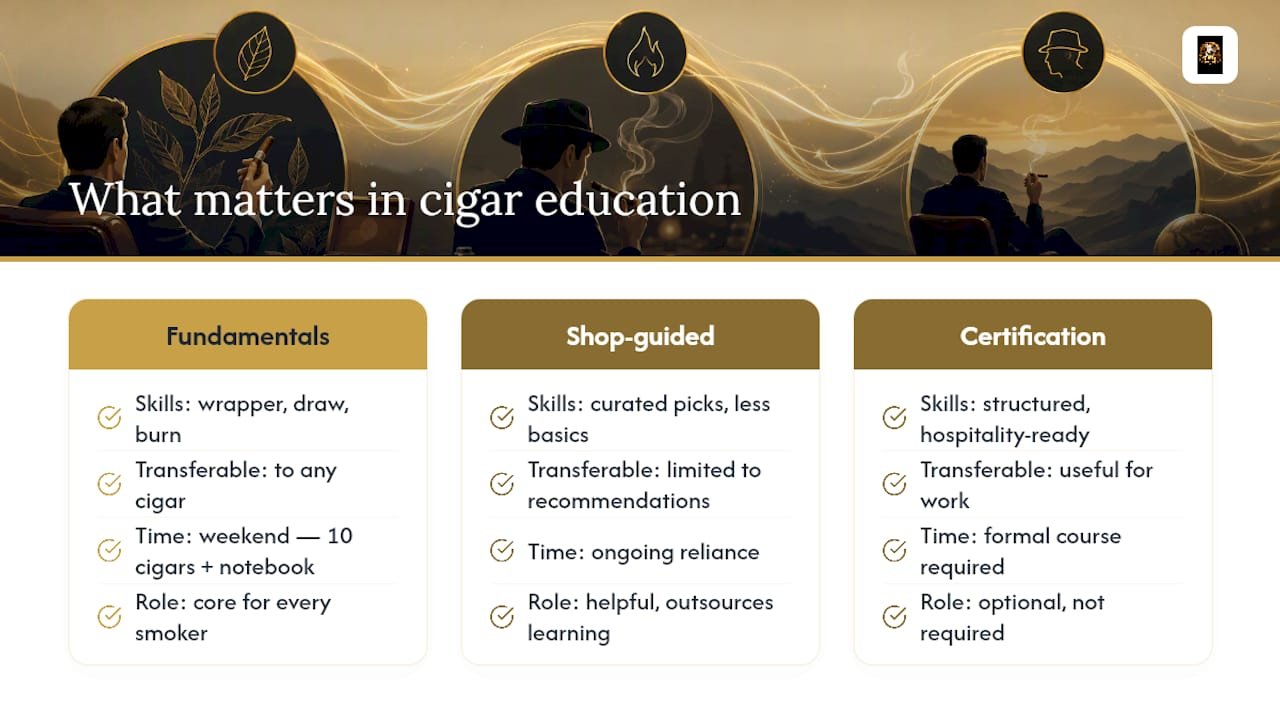
The conventional advice, “just find a shop you trust and let them guide you,” isn’t wrong, but it outsources learning you could own yourself in a weekend. Ten cigars and a notebook will teach you more about your own palate than a year of relying on someone else’s picks.
Certification is where I’d push back hardest against the hype. A Level 1 award or an IACS credential is genuinely useful if you want hospitality work or a structured way to deepen your knowledge. It is not a requirement for becoming a knowledgeable smoker. Plenty of people with decades of hands-on experience have no certificate at all. Learn the vocabulary first, smoke deliberately, keep notes, and treat formal courses as an option for later, not a prerequisite for enjoying cigars properly now.
— Kevin
Sources
For deeper reading beyond this guide, the IACS Cigar Sommelier program page details certification structure, The Cigar Academy outlines its course levels, and Cigarista’s anatomy guide covers terminology in more depth.
FAQ
What Is the 1/3/5 Rule for Cigars?
It’s an informal guideline suggesting cigars need roughly one year of aging to settle, three years to show real improvement, and five years to reach a fuller, more integrated flavor, though this varies by blend and storage conditions.
Is Smoking One or Two Cigars a Week Okay?
One or two cigars a week is generally considered a lower-risk pattern compared to daily smoking, but it still carries health risks tied to nicotine and combusted tobacco, so it’s worth discussing with a doctor if you have underlying health conditions.
Who Was Known for Smoking 40 Cigars a Day?
Winston Churchill was famously associated with heavy cigar consumption, sometimes cited at around that volume daily, though historical accounts of the exact number vary.
Why Do People Put a Toothpick in a Cigar?
A toothpick or matchstick inserted through the cigar is a manual trick some smokers use to help improve airflow when the draw feels tight, though it’s a workaround rather than a fix for a genuinely flawed roll.