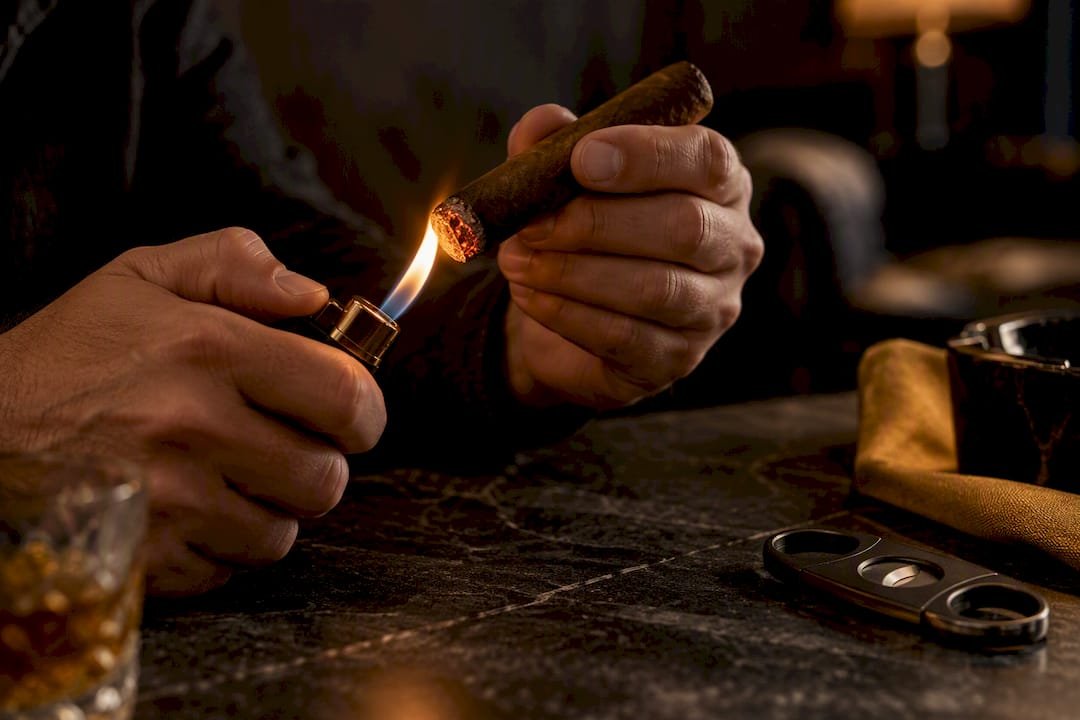
Relight a Cigar Within an Hour Without Ruining Flavor: U.S. Tips
Relighting a cigar is fine, with one condition that matters more than any technique: do it soon after the cigar goes out. Wait too long and the char sitting on the foot turns stale, and that stale combustion residue is what makes a relit cigar taste bitter or acrid. A relight done soon after the cigar goes out usually works well, but leaving it overnight almost never does.
TL;DR:
- Relighting is most successful when done within minutes to an hour after the cigar goes out; beyond that, stale combustion residue causes bitterness.
- Before relighting, gently remove loose ash, toast the foot evenly without torching, and rotate the flame to ensure a uniform ember for better flavor.
- Cutting behind thick char is advisable if the cigar tastes bitter after relighting or if the foot has been sitting cold for a long time.
- Use odorless butane lighters and sharp cutters for a clean burn; avoid oil-based lighters, wax matches, and sulfur matches to prevent off-flavors.
- Proper storage, like using a humidor or humi-pouch during pauses, helps maintain even moisture and reduces the risk of relight failure.
Table of Contents
- When relighting is worth trying
- Step-by-step relighting technique: prepare, toast, light, settle
- Cut-and-restart: how to remove char and reestablish a fresh foot
- What to expect in flavor and aroma after relighting
- Tools and fuels to use or avoid when relighting
- Short-term preservation between puffs and how to reduce relight risk
- Thor’s Cigar Vault perspective and practical accessory suggestions
- An honest read on relighting advice
- Where to find clean fuels and quality accessories
- Sources
- FAQ
When relighting is worth trying
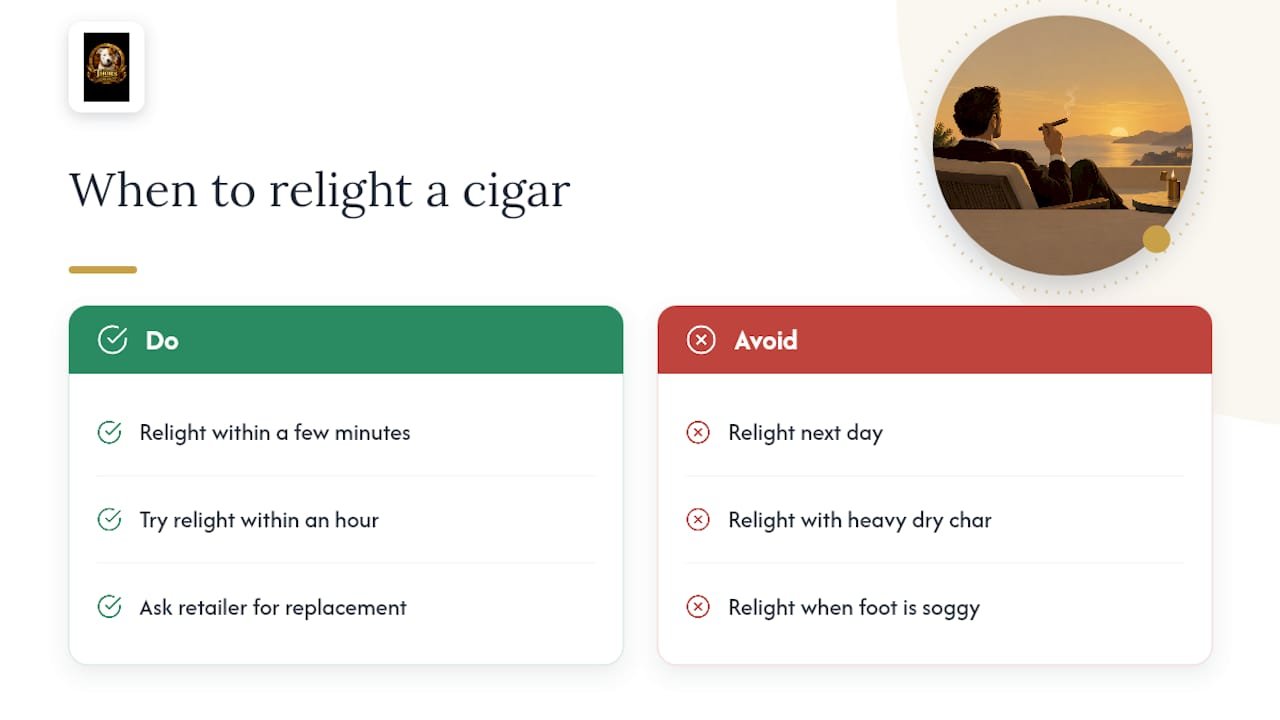
Timing decides most of the outcome before you even strike a flame. A cigar that goes cold in your hand for a few minutes relights almost like new. One that sits for closer to an hour still has a fighting chance, but the flavor will need a little longer to settle. Past that window, and especially by the next day, the tobacco has usually absorbed enough stale combustion residue that a relight tastes worse than starting fresh, a pattern Cigar Aficionado points out when it comes to overnight relights.
Condition matters as much as time. A foot covered in heavy, dry char is a warning sign, and so is a foot that feels damp or soggy, since moisture and old ash together tend to smother a clean relight before it starts. Watch also for a cigar that keeps going out on its own during normal smoking. That is often a construction problem rather than bad luck, and Cigar Aficionado notes that a cigar going out repeatedly can point to poor rolling. If that happens more than once with the same stick, it is worth asking the tobacconist or retailer for a replacement rather than fighting the burn every few puffs.
Step-by-step relighting technique: prepare, toast, light, settle
Once you have decided a relight is worth trying, the sequence matters. Rushing the flame straight onto a charred foot is the fastest way to lock in bitterness.
- Clear the char. Gently tap or roll the foot on an ashtray to knock off loose ash, then rub the tip lightly against a hard surface to shed as much dry char as you can before any flame touches it.
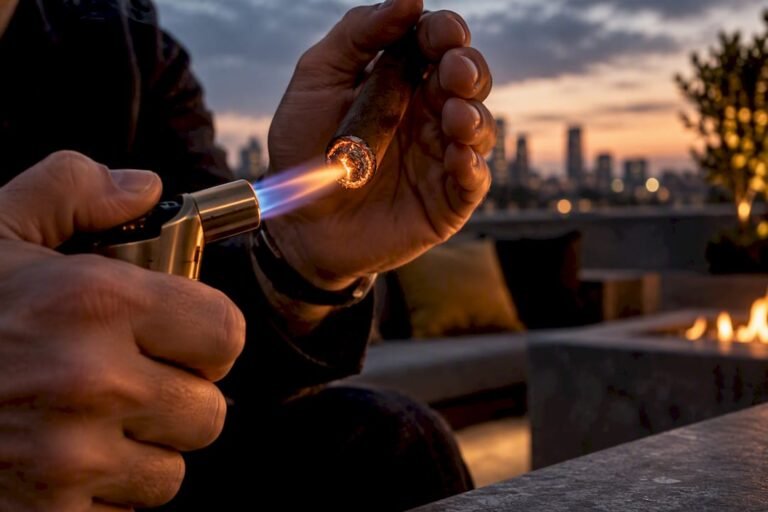
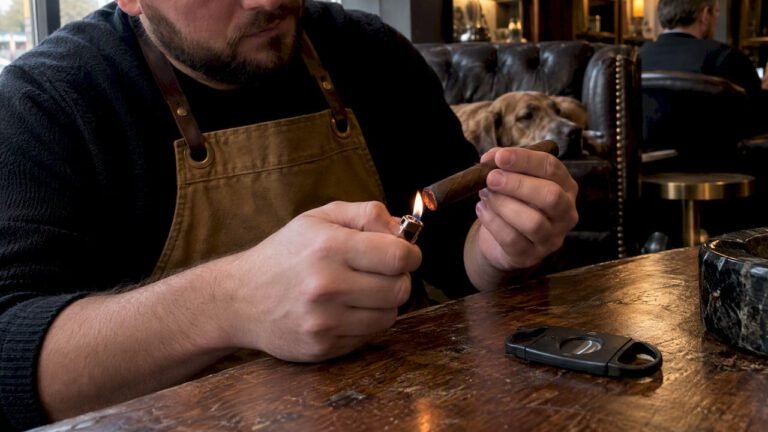
- Toast, don’t torch. Hold the foot just above the flame, not in it, and rotate the cigar slowly so the tobacco warms and dries evenly around the whole circumference.
- Light with rotation. Bring the flame closer and rotate steadily until you see a uniform ember forming across the entire foot, not just one hot spot.
- Purge before you settle in. Take a few gentle test puffs and blow out the first mouthfuls of smoke, since that initial draw carries the staler, harsher air sitting in the cigar.
- Let it stabilize. Give the cigar several soft draws before returning to your normal pace. Aggressive puffing this early just reheats any remaining char and drags the bitterness back.
This sequence follows the core method Tobacconist University outlines for relighting: clear the char, toast the foot evenly, apply flame while rotating, then puff gently so the flavor has room to recover.
Pro Tip: Rotate the cigar in your fingers the entire time it is near the flame, toasting and lighting; an even ember burns cleaner than one lit from a single fixed angle.
Cut-and-restart: how to remove char and reestablish a fresh foot
Sometimes toasting and relighting is not enough. If the char is thick, if the foot has been sitting cold for a long stretch, or if a first relight attempt still tastes bitter after a few settling puffs, cutting behind the damage is the better move. Tobacconist University recommends cutting immediately behind the char when relighting fails or when the char is significant, even though it costs some length.
A clean cut matters here as much as the decision to cut. Consider these points before you commit the blade:
- Choose a cut point just behind the visible char line, in fresh, unburned tobacco, so you are not just moving the same stale foot back an inch.
- Use a sharp guillotine or V-cutter rather than a dull blade, since a clean cut keeps the wrapper from tearing or unraveling as you slice.
- Cut decisively in one motion; sawing back and forth is what causes the wrapper to fray at the edge.
- Accept the tradeoff: you lose length and smoking time, and if the cigar is already short, a second cut may leave too little cigar to enjoy properly.
Once cut, treat the new foot exactly like a fresh cigar: toast it evenly, then light with rotation as described above.
What to expect in flavor and aroma after relighting
The first few puffs after any relight are rarely going to taste like the first puffs of a fresh cigar, and that is normal. The char and the concentrated combustion residue sitting near the foot carry the harshest compounds in the cigar, so those early draws often taste toasted, bitter, or slightly acrid. Tobacconist University is direct about this: the first puffs after a relight may be bitter, but they usually settle as fresh tobacco takes over the burn.
Give it a few gentle puffs, sometimes stretching to a few minutes of slow smoking, before judging the cigar again. If the profile is still harsh well past that point, or if the bitterness comes back in waves rather than fading, the cigar has likely absorbed too much stale residue to recover, and no amount of patient puffing will fix it. At that stage, cutting behind the char or simply setting the cigar aside is the better call than smoking through a flavor that never rights itself.
Tools and fuels to use or avoid when relighting
The fuel you use to relight matters more than it does on a fresh cigar, because the tobacco is already primed to pick up any off-flavor nearby. Cigar Aficionado recommends odorless butane lighters or cedar spills specifically because they burn clean and add nothing to the smoke.
- Stick with odorless butane lighters or a cedar spill for a neutral, clean flame.
- Avoid oil-based lighters such as Zippos, along with candles, since both can leave a fuel taste on the wrapper and foot.
- Skip wax-coated matches and sulfur-head matches, which can transfer their own harsh aroma straight into the smoke.
If matches are your only option, let the sulfur tip burn off fully before it gets near the cigar, and use two matches held together for a wider, steadier flame. After lighting with butane, take one or two purge puffs before smoking normally, which clears any lingering butane smell from the first draw.
Pro Tip: Keep a cedar spill in your pocket case alongside a butane lighter; it is the cleanest option for a relight when you are already worried about bitterness.
Short-term preservation between puffs and how to reduce relight risk
A little care between puffs often means you never need a full relight at all. Short pauses of a few minutes are fine as long as the cigar stays out of strong wind, which cools the foot fast and encourages the kind of heavy char that makes relighting harder later.
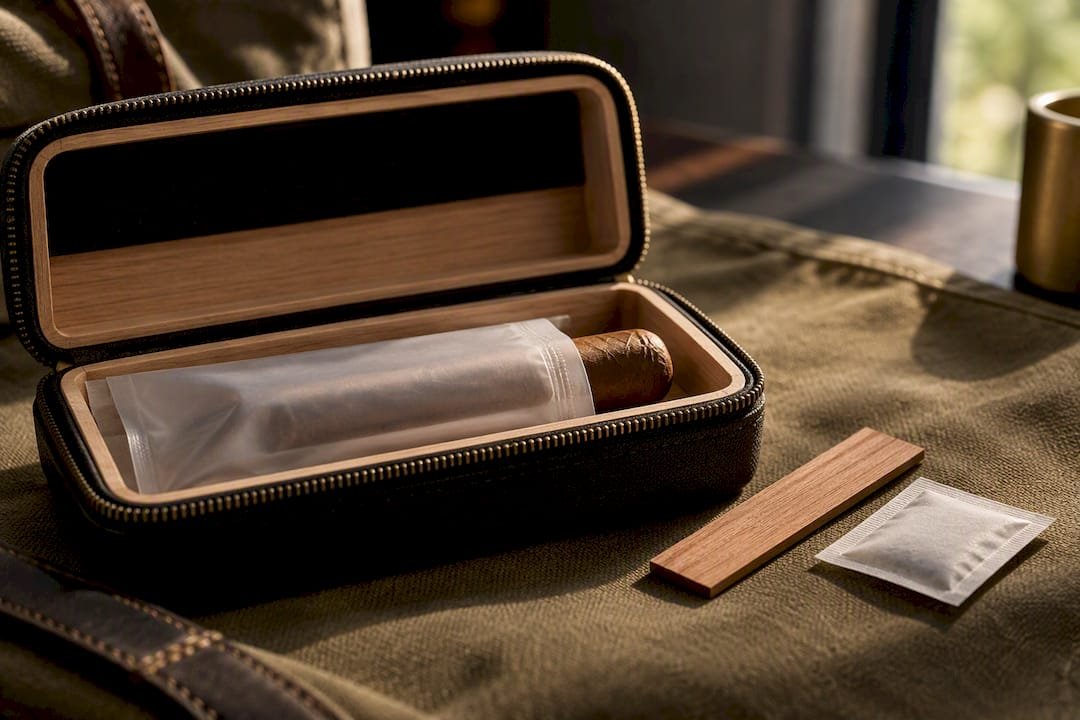
If you know you will be setting the cigar down longer, slip it into a humi-pouch or a small travel humidor rather than leaving it exposed to open air for hours. Open air dries the foot and wrapper, which changes how evenly it relights even if the char itself is minor. Refrigerators, freezers, or other improvised storage tricks tend to do more harm than good and are not a substitute for proper humidity control.
Watch for a cracked or brittle wrapper, a draw that suddenly feels tight or airy, or an off-odor at the foot. Any of those signs suggest the pause already changed the cigar’s condition, and a relight from that point is a gamble rather than a sure thing.
Thor’s Cigar Vault perspective and practical accessory suggestions
Prompt relighting, done within minutes to about an hour, is a normal part of enjoying a cigar rather than something to avoid. What separates a good relight from a disappointing one usually comes down to having the right tools within reach: a clean butane lighter, a sharp cutter for the cut-and-restart method, and a humidor or humi-pouch to keep a cigar from drying out during a pause.
If a cigar keeps going out or tastes off no matter how carefully you relight it, hold onto your receipt and reach out to the retailer or tobacconist who sold it. A cigar that repeatedly fails to hold a burn is often a construction issue, not something you did wrong, and it is worth flagging rather than fighting through.
An honest read on relighting advice
Most relighting advice online treats the flame as the whole story, when timing and preparation do more of the work. A cigar relit within minutes, with the char cleared and the foot toasted evenly, will almost always outperform a cigar relit an hour later with a rushed flame and no purge puff. The technique matters, but it matters less than the clock.
The bigger blind spot in conventional advice is how often people blame their lighter or their technique for a bad relight when the real problem is a cigar that sat too long or dried out during a pause. No amount of careful rotation fixes a foot that absorbed hours of stale combustion residue. If you take one thing from this, prioritize speed over cleverness: relight quickly, clear the char first, and accept that a cigar past its window is better cut short or set aside than smoked through out of stubbornness.
— Kevin
Where to find clean fuels and quality accessories
A good relight starts before you ever pick up a lighter, with the right gear already in your pocket. Accessories that make the difference between a clean relight and a harsh one are best chosen carefully rather than picked off a convenience store shelf.

Look for odorless butane lighters and sharp cutters that give you a clean cut when char forces a cut-and-restart, plus humi-pouches or a compact humidor to keep a cigar from drying out mid-session. A few places to start:
- Browse Accessories for butane lighters, cutters, and humi-pouches built for exactly this kind of moment.
- Check Humidors if you are tired of improvised storage during long pauses between cigars.
- If a cigar keeps giving you trouble, try a Samplers pack to test a few different blends in shorter formats instead of committing to one long cigar.
Curated and limited-edition cigars are available for those ready to move past troubleshooting and just enjoy a well-built smoke.
Sources
For deeper reading, Tobacconist University’s relighting FAQ walks through the step-by-step technique, Cigar Aficionado’s cutting and lighting guide covers timing and construction issues, and its lighting technique piece details fuel choices. For general troubleshooting of combustion and taste issues in smoking devices, this fix guide offers useful background.
- Cutting and Lighting | Cigar Aficionado
- How to Relight a Cigar: Proper Re-Lighting Technique
- How To Light A Cigar | Cigar Aficionado
FAQ
Is it good to relight a cigar?
Relighting a cigar is fine as long as you do it soon after it goes out, ideally within minutes to about an hour. Cigar Aficionado notes that relighting after several hours or the next day tends to produce off-flavors, so speed matters more than the method you use.
What is the 135 rule for cigars?
There is no widely recognized “135 rule” in cigar lighting technique documented by tobacconist or industry sources. If you have seen this term, it is likely a misremembered version of general timing advice rather than an established standard.
Can you light a cigar and save it for later?
You can pause a cigar for a short time by letting it go out and relighting later, but the window matters. A rest of a few minutes to under an hour usually relights cleanly, while Cigar Aficionado warns that waiting until the next day often brings unwanted flavors.
Can an old cigar be revived and rehydrated?
A cigar that has dried out from a long pause or poor storage can sometimes be brought back with gradual rehydration in a humidor, though the process takes patience and does not always fully restore the original construction. If the wrapper is cracked or the draw feels brittle, treat it as a sign the cigar may not smoke evenly even after rehydration.