Science Backed Aging For Beginners: Better Cigar Flavor in 1 Year
Yes, aging improves most premium cigars, and the fix is simpler than the forums make it sound. Keep your sticks stable at mid-60s relative humidity and mid-60s degrees Fahrenheit, then sample on a schedule instead of guessing. Start with a desktop humidor or a sealed plastic tub (a “tupperdor”), two-way humidity packs, and a calibrated hygrometer. Do that consistently for a year and you’ll taste the difference.
TL;DR:
- Full-bodied, oily wrappers like Maduro and Oscuro benefit most from aging due to their higher sugar and oil content.
- Maintaining a storage environment of 64 to 67% humidity at 65 to 68°F significantly reduces mold and beetle risks during long-term aging.
- Proper setup involves seasoning and calibrating the humidor with distilled water and a calibrated hygrometer before loading cigars.
- Aging primarily smooths and marries flavors over one to three years, with notable chemical changes confirmed by metabolomics studies.
- Regular inspection, rotation, and consistent conditions prevent mold, cracking, and uneven aging, ensuring cigars reach their optimal flavor maturity.
Table of Contents
- What Does Aging Cigars Actually Do?
- Which Cigars Are Worth Aging?
- What’s the Ideal Humidity and Temperature for Aging?
- How Do You Set Up and Season a Humidor for Aging?
- How Long Does It Take to Age a Cigar?
- What Mistakes Ruin Cigar Aging (and How Do You Fix Them)?
- What Does the Research Say About Why Cigars Change With Age?
- Do Wood Type and Humidification Materials Change How Cigars Age?
- Does Construction Quality Affect How Well a Cigar Ages?
- How Do You Know When a Cigar Is Done Aging (or Past Its Peak)?
- How Often Should You Rotate and Inspect Aging Cigars?
- A Collector’s Note on Patience and Experimentation
- Ready to Start Your Own Aging Collection?
- Sources
- FAQ
What Does Aging Cigars Actually Do?
Aging does two things: it marries the blend and it mellows the rough edges. Marrying refers to the tobaccos in a cigar, often grown in different soils and fermented on different schedules, settling into one unified flavor instead of tasting like separate components fighting for attention. Mellowing is the fading of harsh, ammonia-like notes that come from residual compounds left over from fermentation.
What you should expect: a smoother draw, better-integrated flavors, and less bite on the back of the throat. What aging won’t do is fix a badly rolled cigar or turn a mild, one-note blend into something complex. It amplifies what’s already there.
The chemistry behind this isn’t guesswork anymore. A 2025 metabolomics study published in Frontiers profiled 1,836 volatile compounds in aging cigars and isolated 21 key aroma-active compounds that shift over time, with terpenoids climbing while roasted, coffee, and hay notes recede. That’s the biological reason a five-year-old cigar smells rounder than the one you bought last week. Industry guidance from Boveda backs the practical side: stable storage, not a magic number, is what lets that chemistry play out.
Which Cigars Are Worth Aging?
Not every cigar rewards patience. The best candidates share a few traits, and picking the wrong ones just wastes shelf space and time.
- Full-bodied blends with oily, dark wrappers (Maduro, Oscuro) tend to have more sugars and oils to break down, giving aging more raw material to work with.
- Cigars with rough edges but real depth, the ones that taste promising but a little harsh or peppery fresh, often smooth out beautifully within a year or two.
- Blends you already like at full strength, since aging mellows intensity rather than adding it.
Skip aging for delicate, mild cigars with light Connecticut wrappers. They can thin out and lose character instead of gaining it. If you’re unsure, run a simple experiment: buy three or four of the same cigar, smoke one now as a baseline, and set the rest aside to sample later. That comparison tells you more than any review ever will.
What’s the Ideal Humidity and Temperature for Aging?
The old “70/70 rule” (70% RH, 70°F) is still repeated everywhere, but most serious collectors have moved off it for long-term storage. A more common modern target is 64 to 67% relative humidity and 65 to 68°F, a range Boveda’s storage guidance and other current cigar aging resources both point to for extended cellaring.
Why drier and cooler works better long-term: 70% RH and 70°F sits close to the conditions tobacco beetle eggs need to hatch and mold spores need to bloom. Dropping into the mid-60s slows both risks substantially while still keeping enough moisture for the slow chemical reactions that drive flavor development.
Here’s what happens at the extremes:
- Above 70% RH: mold risk rises sharply, and dormant beetle eggs (present in trace amounts in most tobacco) are more likely to hatch and tunnel through your cigars.
- Below 62% RH: wrappers can crack, the burn gets uneven, and the aging process slows to a crawl.
- Temperature swings above 72°F: accelerate the same conditions that trigger beetle hatching, even at otherwise safe humidity.
Stability matters more than hitting an exact figure. That’s why airflow and distribution inside your storage matter as much as the target number: don’t overpack trays, leave room for air to move, and use multiple smaller humidification sources spread through the box rather than one large pack in a corner. Uneven distribution creates hot spots and dry pockets even when your hygrometer reads fine at the front.
How Do You Set Up and Season a Humidor for Aging?
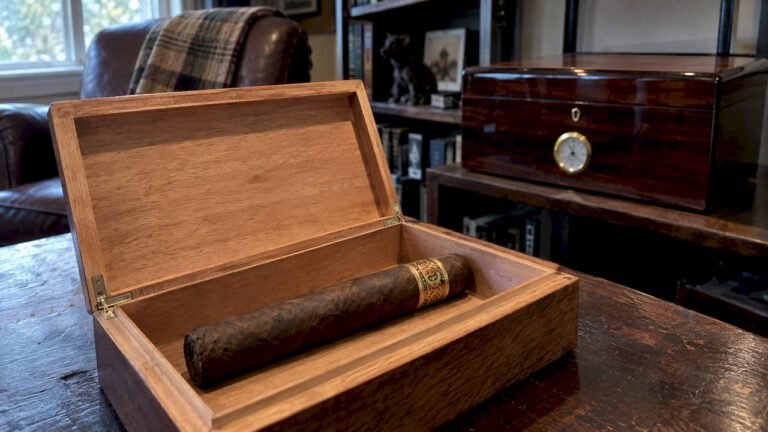
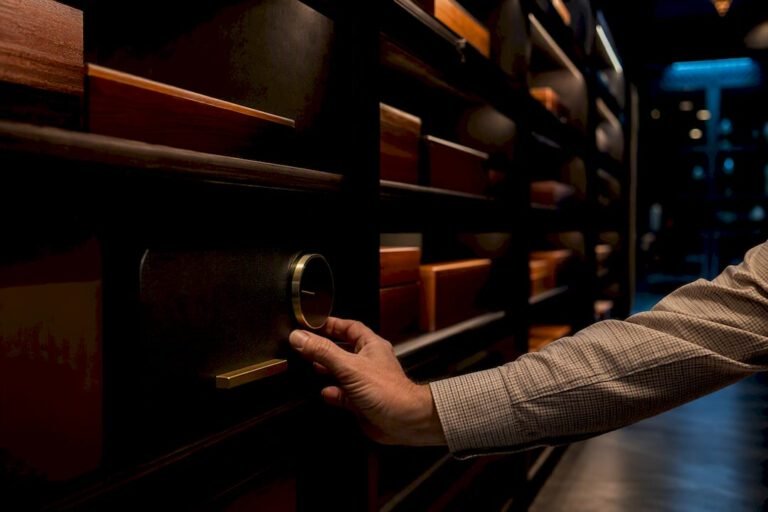
Your storage choice depends on scale. A desktop humidor works for 25 to 100 cigars and looks better on a shelf, but its smaller air volume means it swings faster when you open the lid. A tupperdor, essentially a sealed plastic storage container with humidity packs, holds more, costs less, and its mass resists humidity swings better than most wooden boxes. A cabinet humidor is the serious long-term option: Centient’s aging planner notes that larger cabinets provide better thermal and moisture inertia than small boxes, meaning fewer swings and less maintenance over years of storage.
Whatever you choose, season and calibrate before loading cigars into it:
- Wipe the interior with distilled water (never tap water, which leaves mineral deposits) or use dedicated seasoning packs designed for unfinished Spanish cedar.
- Let it sit sealed for 48 to 72 hours with a humidity source inside but no cigars, allowing the wood to absorb moisture and stabilize.
- Calibrate your hygrometer using the 75% salt test: a small container of table salt and a few drops of water inside a sealed bag with your hygrometer should read 75% after several hours. Note the offset and adjust your readings accordingly.
- Load humidification: two-way packs like Boveda are the simplest option because they both add and pull moisture to hold a set RH, while beads and electronic systems require more active monitoring but offer finer control in large cabinets.
- Distribute humidification sources across the box instead of clustering them in one spot.
Pro Tip: Calibrate every hygrometer you own before you trust it, even brand-new ones straight out of the box. An inaccurately reading hygrometer will quietly wreck a year of careful aging before you notice anything’s wrong.
How Long Does It Take to Age a Cigar?
Aging happens in stages, and knowing which stage you’re in tells you what to expect from a sample.
- Rest (5 to 10 days): cigars recover from shipping and handling stress; flavors haven’t changed yet, just settled.
- Integration (1 to 3 months): individual tobaccos start blending together; harshness softens noticeably.
- Classic aging window (1 to 3 years): this is where most of the meaningful flavor development happens, according to collector-tested guides on long-term aging. Most people who age cigars seriously are chasing this window.
- Long-term aging (3 to 10+ years): gains become more selective and blend-dependent; some cigars keep improving, others plateau.
Document your progress instead of relying on memory. Smoke one as a baseline the day it arrives, then sample again at 3 months, 6 months, and 1 year, jotting quick notes each time. Full-bodied, oilier blends tend to show dramatic change by the 1 year mark; milder blends move slower and sometimes never shift much at all.
What Mistakes Ruin Cigar Aging (and How Do You Fix Them)?
Most aging failures trace back to a handful of avoidable habits.
- Chasing 70/70 instead of stability. As covered above, this range sits closer to mold and beetle territory than the mid-60s does. Drop your target and hold it steady.
- Opening the humidor too often. Every lid-open is a humidity spike followed by a slow recovery. Check weekly, not daily.
- Trusting an uncalibrated hygrometer. This is the single most common silent killer of a collection. Recalibrate every few months.
- Ignoring early mold signs. True mold looks blue-green, fuzzy, and grows in patches, usually smelling musty. It should be removed and the affected cigars isolated or discarded. Plume (sometimes called bloom) looks like fine white or gray crystalline dust and wipes away easily; it’s a harmless sign of oils crystallizing on the wrapper, actually a good sign of proper aging.
- Letting cigars dry out completely. A cigar that’s cracked and brittle can sometimes be slowly reconditioned over two to three weeks by raising RH gradually, five points at a time, rather than dumping it into 70% humidity overnight, which causes the wrapper to split. Severely dried, cracked wrappers often can’t fully recover.
What Does the Research Say About Why Cigars Change With Age?
“Untargeted metabolomics based on HS-SPME-GC-MS” analysis of aging cigars identified 21 key aroma-active compounds shifting over time, with terpenoids increasing while roasted, coffee, and hay-like notes declined, mapped across 1,836 total volatile compounds using rOAV scoring and K-means clustering.
That Frontiers study gives hard chemical backing to what collectors have claimed by taste for decades: aging isn’t just subjective preference, it’s measurable compound turnover.
There’s a second layer to this most smokers never hear about. Separate metagenomic research published in Springer found that microbial communities, including Bacillus and Aspergillus species, actively break down starches and alkaloids inside aging tobacco, and that humidity, temperature, and turning frequency all shape which microbes dominate that process. In other words, aging isn’t purely a chemical reaction sitting quietly in a box. It’s a slow biological process with living participants.
The practical takeaway from both studies lines up with what collectors already recommend: stable, cooler, drier conditions slow these reactions down to a controlled pace, while short bursts of warmer, more humid storage can accelerate change faster, sometimes at the cost of control over the outcome.
Do Wood Type and Humidification Materials Change How Cigars Age?
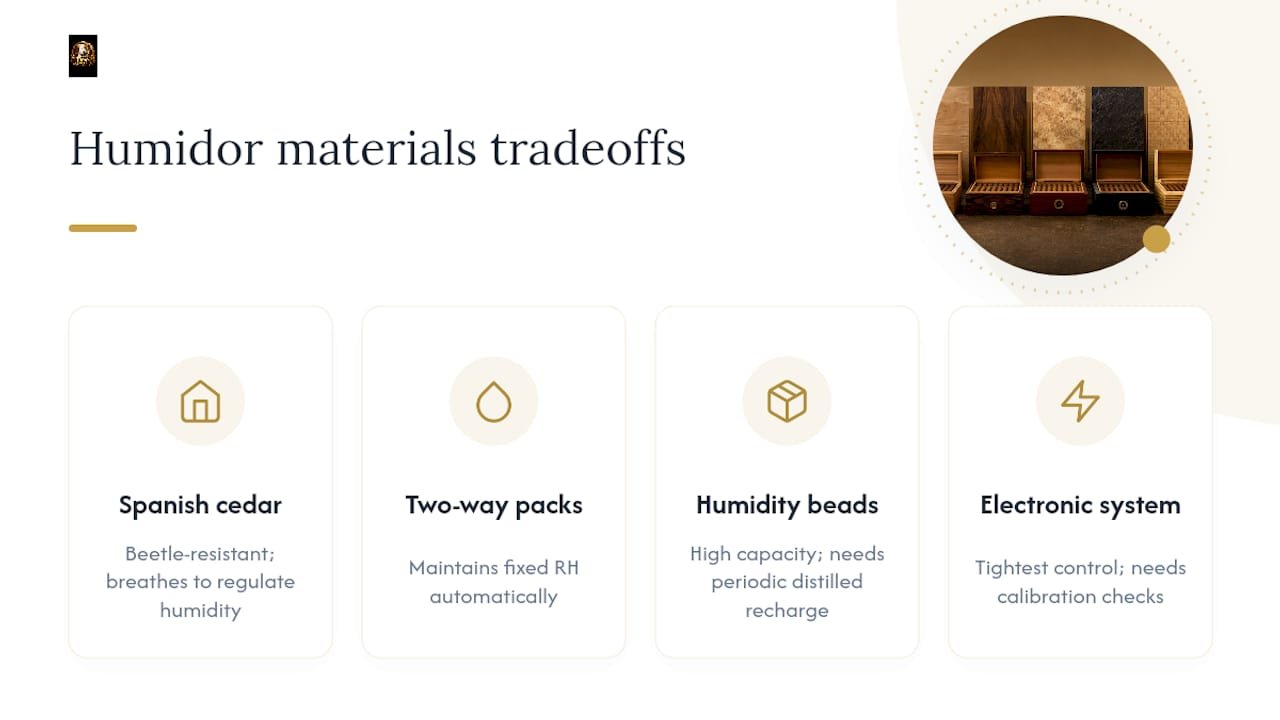
Spanish cedar remains the standard interior lining for a reason. It’s naturally resistant to tobacco beetle activity, and it imparts a subtle cedar note to the wrapper over time that many collectors consider a feature, not a flaw. Unfinished cedar also breathes and helps regulate humidity swings better than sealed or varnished woods, which is why seasoning steps almost always call for raw, untreated cedar trays and dividers.
Some higher-end cabinets use Spanish cedar exclusively down to the drawer bottoms and shelf backing, and that added surface area helps buffer humidity swings across a larger space. Cheaper humidors sometimes substitute other woods with a cedar veneer, which looks similar but doesn’t offer the same aromatic or moisture-regulating benefit.
Humidification material matters just as much as the box itself. Two-way humidity packs like Boveda use a salt solution to both release and absorb moisture, holding a fixed RH automatically rather than requiring you to guess how saturated a foam pad or gel bead system is. Beads offer more capacity for large cabinets but need periodic recharging with distilled water, and getting that recharge wrong (too wet or too dry) creates the exact instability aging depends on avoiding. Electronic humidification systems offer the tightest control for serious collections but represent a bigger upfront investment and require occasional calibration checks against your hygrometer to confirm they’re reading and dispensing accurately.
Does Construction Quality Affect How Well a Cigar Ages?
Construction quality sets the ceiling for how much a cigar can improve. A well-rolled cigar with even filler distribution, a properly applied wrapper, and no soft spots or air pockets ages predictably, because moisture moves through the tobacco evenly and the burn stays consistent as internal chemistry shifts.
A poorly constructed cigar ages unevenly at best. Loose spots inside the bunch dry out faster than dense spots, creating pockets where the burn runs hot while the rest of the cigar lags behind. That uneven moisture distribution can accelerate mold risk in one section while another section stays too dry to change much at all.
Wrapper quality plays its own role. Oily, supple wrappers with good tooth (the slightly textured surface visible on some full-bodied leaves) tend to hold humidity more evenly and show visible plume more readily, one of the signs aging is proceeding well. Cigars with dry, cracked, or patchy wrappers straight out of the box rarely improve much no matter how carefully you store them, because the wrapper’s condition reflects underlying problems in how the leaf was grown or fermented.
This is one reason buying from a reputable source matters more for aging projects than for cigars you plan to smoke within the month. A cigar with hidden construction flaws might smoke fine fresh but fall apart, literally or in flavor, after eighteen months in the humidor.
How Do You Know When a Cigar Is Done Aging (or Past Its Peak)?
The clearest sign a cigar has hit a good aging window is a change in the wrapper’s surface: a light dusting that looks like fine crystalline powder, known as plume, forming evenly across the cigar. That’s oils crystallizing on the surface, generally a sign the cigar has been resting long enough for its compounds to redistribute. Aroma is the second signal. A cigar pulled straight from the box often smells sharp or one-dimensional; an aged cigar tends to smell rounder, sometimes with notes of dried fruit, leather, or cedar that weren’t present before.
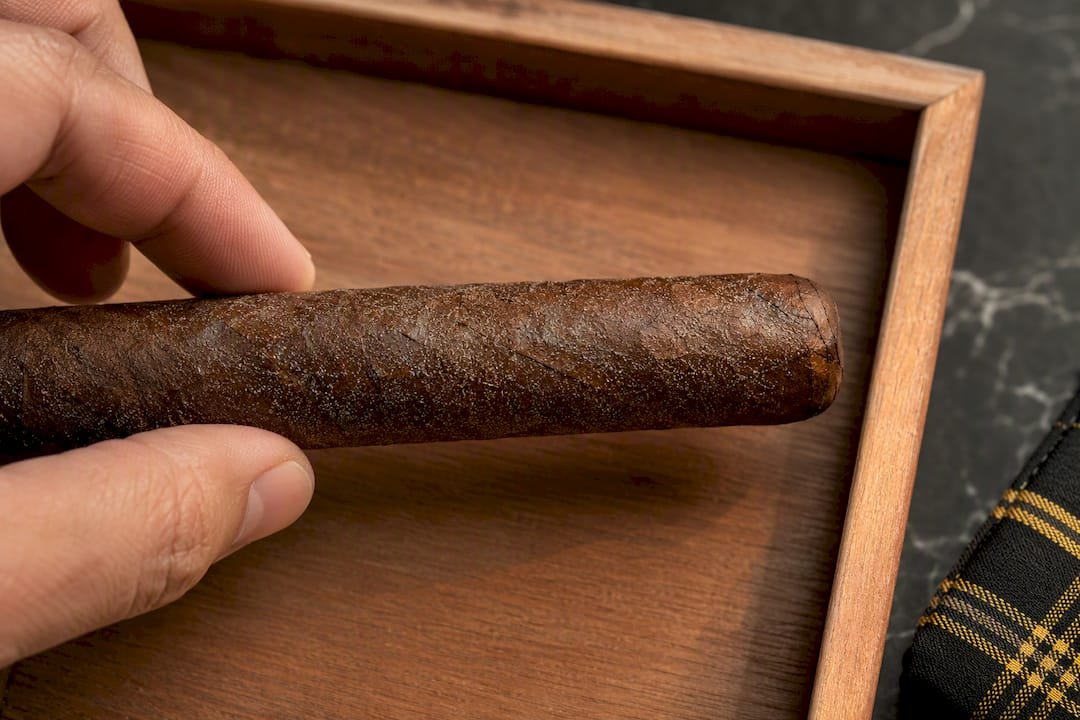
On the smoking side, a well-aged cigar draws more smoothly, burns more evenly, and loses the ammonia-like bite common in younger tobacco. If a sample at the one-year mark tastes noticeably better than your baseline smoke, you’re in the productive window described earlier.
Signs a cigar has gone past its useful aging point are different from signs of damage. A cigar that’s been aged for many years but stored well can taste flatter or less dynamic, having lost some of its original character without gaining enough complexity to compensate; that’s a plateau, not spoilage. Actual damage looks different: a wrapper that’s gone brittle and cracks when handled, a filler that crumbles instead of holding shape, or any off smell resembling ammonia, vinegar, or mustiness signals the cigar has degraded rather than matured. At that point, no amount of additional rest brings it back.
How Often Should You Rotate and Inspect Aging Cigars?
A monthly inspection routine catches problems early without disturbing your humidor enough to disrupt the stability aging depends on. Open the box, scan for any visible mold or unusual spotting, check your hygrometer reading, and rotate cigars from the bottom of a stack to the top or from the back of a tray to the front.
Rotation matters because humidity and airflow aren’t perfectly even throughout any storage container, even a well-seasoned one. Cigars sitting directly against a humidification pack or near the front where the lid opens most often experience slightly different conditions than ones buried in the back or bottom. Rotating every month or two evens out that exposure over the course of a year, rather than letting one section age faster than another.
Handle cigars by the foot and band, not by squeezing the body, when you inspect them. Overhandling, especially with warm or sweaty hands, transfers oils and moisture that can create uneven soft spots on the wrapper over time. A quick visual check and a gentle roll between your fingers tells you what you need to know: does it still feel firm and springy, or has it gone soft and spongy (a sign of excess moisture) or hard and brittle (a sign it’s drying out)?
Keep a simple log alongside your rotation routine: date placed, date checked, and a one-line note on wrapper appearance or aroma. It sounds excessive for a handful of cigars, but once you’re tracking multiple boxes across different timelines, that log becomes the only reliable way to remember what’s ready to smoke and what still needs another six months.
A Collector’s Note on Patience and Experimentation
Aging rewards the people willing to keep notes, not the people with the fanciest cabinet. Buy in threes or fours, smoke one now, log the rest, and let the calendar do the work instead of your impatience. The metabolomics research backs up what patient smokers already knew by taste: the compounds genuinely change, and rushing the process just means you’re smoking chemistry that hasn’t finished happening yet.
[Kevin’s professional bio or credentials related to cigars]
Share your own sampling notes with other collectors when you can. [Case studies or testimonials from customers about Thor’s Cigar Vault] Comparing results across different humidors, climates, and blends teaches you more than any single guide, including this one.
— Kevin
Ready to Start Your Own Aging Collection?
Aging cigars well comes down to gear that holds steady conditions without babysitting, and that’s exactly what Thor’s Cigar Vault stocks. Rather than piecing together a setup from three different retailers, you can outfit a full aging project, humidor, calibrated hygrometer, and humidity packs, in one order.

For a first setup, start small: a quality desktop humidor or a well-sealed cabinet, paired with two-way humidity packs, gives you the stability this guide keeps coming back to without a big upfront investment. Once your storage is dialed in, it’s worth setting aside a few extra sticks specifically for aging rather than smoking through your whole order. Browse the cigars category for full-bodied, oily-wrapper blends that tend to reward the wait, and check the accessories section for hygrometers and humidification supplies to round out the setup.
One note before you order: premium cigars are an age-restricted product. Proof of legal smoking age is required at checkout, and buyers should confirm their local and state laws permit purchase and shipment to their address. Head to Thor’s Cigar Vault to build your starter kit and get your first batch resting on the right schedule.
Sources
- Untargeted metabolomics based on HS-SPME-GC-MS revealing the dynamic evolution of aroma components during cigar aging — Frontiers (2025)
- Storing cigars in a humidor — Boveda (industry guidance)
- Best way to age cigars: targets, timeline & tools — Centient
- Microbial roles and biodegradation during cigar aging — Springer (2023)
FAQ
Is a 20-Year-Old Cigar Still Good?
Often, yes, if it was stored consistently at stable humidity and temperature the entire time; construction quality and blend strength determine whether it’s still improving or has plateaued in flavor.
What Is the 70/70 Rule for Cigars, and Should You Follow It?
The 70/70 rule means storing cigars at 70% relative humidity and 70°F, but most current guidance favors 64 to 67% RH and 65 to 68°F for long-term aging, since the lower range reduces mold and tobacco beetle risk while still allowing flavor development.
Is It Okay to Smoke a 10-Year-Old Cigar?
Yes, a 10-year-old cigar stored properly typically falls within or just past the classic 1 to 3 year aging sweet spot, and many blends continue showing gains at this age, especially fuller-bodied ones.
Are 30-Year-Old Cigars Still Good to Smoke?
They can be, though results vary widely by blend and storage history. A well-constructed, full-bodied cigar kept in stable conditions can still be enjoyable long-term, while a milder or poorly stored cigar may have flattened out or degraded much sooner.