38–54 Ring Gauge Swing: How a Perfecto Cigar Shapes Draw and Flavor
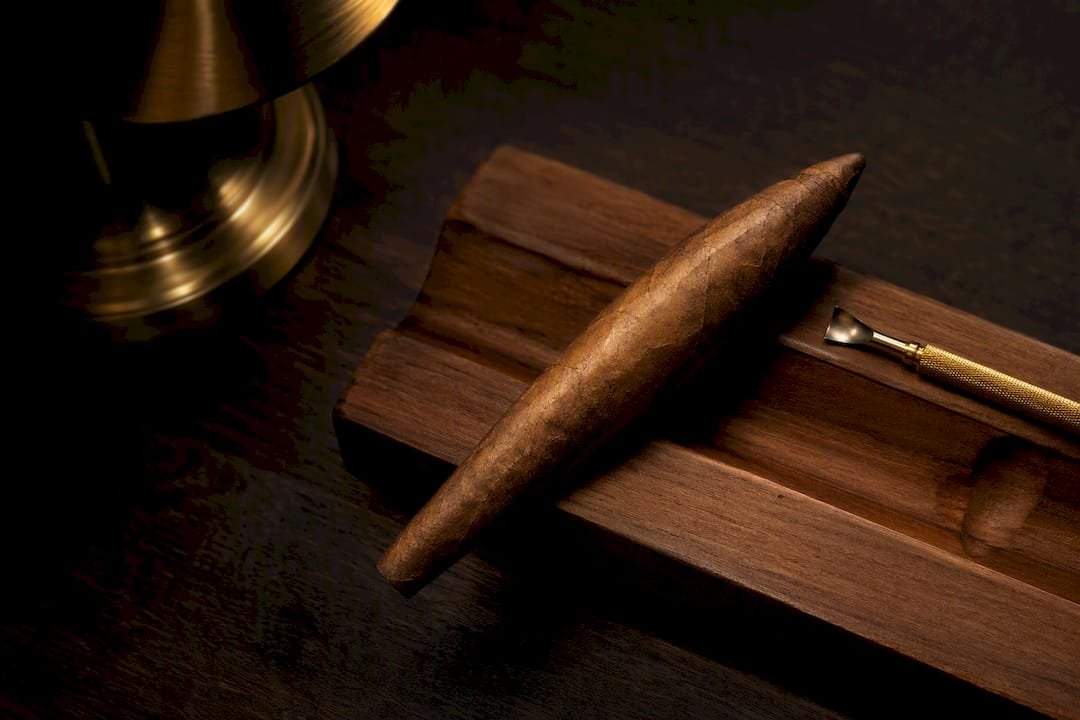
A Perfecto is a figurado, meaning it breaks from the straight cylinder of a standard cigar. Both ends taper to a point, the middle bulges out, and the ring gauge keeps shifting from foot to head. That constantly changing diameter alters draw resistance and pulls different notes forward as the smoke burns down, which is exactly why the shape earns a devoted following among enthusiasts. This guide covers its anatomy, history, smoking technique, and a few examples worth tracking down.
TL;DR:
- Perfectos require more skill to roll than straight-sided cigars, often making them a flagship product for premium manufacturers.
- Their tapered shape concentrates the initial smoke, resulting in a tighter draw, with flavor profiles shifting as the ring gauge widens and narrows.
- Proper cutting, lighting, and storage are crucial, especially avoiding uneven burn and protecting the delicate points with tubes or padded cases.
- Limited-edition Perfectos often come in tubo packaging, indicating their fragile nature and premium craftsmanship.
- Beginners should start with shorter Perfectos or samplers, while collectors are advised to seek out limited releases for the best craftsmanship.
Table of Contents
- What Makes a Perfecto Different From Other Cigar Shapes?
- Where Did the Term “Perfecto” Come From?
- How Does a Perfecto’s Shape Affect Its Smoke?
- How Do You Cut, Light, and Store a Perfecto?
- What Are Some Notable Perfectos to Try?
- Who Should Actually Try a Perfecto?
- Ready to Try a Perfecto?
- Sources
- FAQ
What Makes a Perfecto Different From Other Cigar Shapes?
Every cigar shape falls into one of two families. A parejo has straight sides, like a Robusto or Toro. A figurado does not, and the Perfecto is one of the oldest figurado shapes, tapering at both the foot and the head with a wider midsection between them.
That bulge is not decorative. Ring gauge might start around 38 at the foot, swell to 54 or higher at the middle, then narrow again near the cap. Rollers achieve this by hand-shaping the filler bunch so the binder and wrapper stretch and compress at different points along the cigar, a technique that takes more skill than rolling a straight parejo.
A few terms help when you’re shopping for one:
- Figurado: any non-cylindrical shape, the broad category Perfectos belong to.
- Closed foot: the tapered end is fully wrapped rather than left open, which changes how you cut it.
- Pigtail cap: a curled tip of wrapper leaf at the head, common on smaller Perfectos.
- Short Perfecto vs. long Perfecto: names and exact dimensions vary by manufacturer, so always check the specific size rather than assuming a standard.
Where Did the Term “Perfecto” Come From?
The word comes straight from Spanish, where it simply means “perfect.” Dictionary sources define a Perfecto as a medium-sized cigar that tapers almost to a point at each end, and the Oxford English Dictionary traces its earliest recorded English use to around the 1880s.
That timing lines up with the golden age of Cuban and early Dominican cigar making, when hand rollers were experimenting beyond the standard cylinder to show off technical skill. A shape this labor-intensive was never going to be an everyday smoke. It became, and largely remains, a format associated with premium, handmade cigars rather than mass-produced ones. Several historic manufacturers helped popularize the vitola in the late 1800s and early 1900s, cementing it as a mark of craftsmanship rather than a passing novelty.
How Does a Perfecto’s Shape Affect Its Smoke?
The tapered foot is the first thing you’ll notice. It concentrates smoke into a smaller area, which often means a tighter, more intense draw in the opening minutes than you’d get from a Robusto or Toro. As the ring gauge widens toward the bulge, that draw opens up and the smoke volume increases.
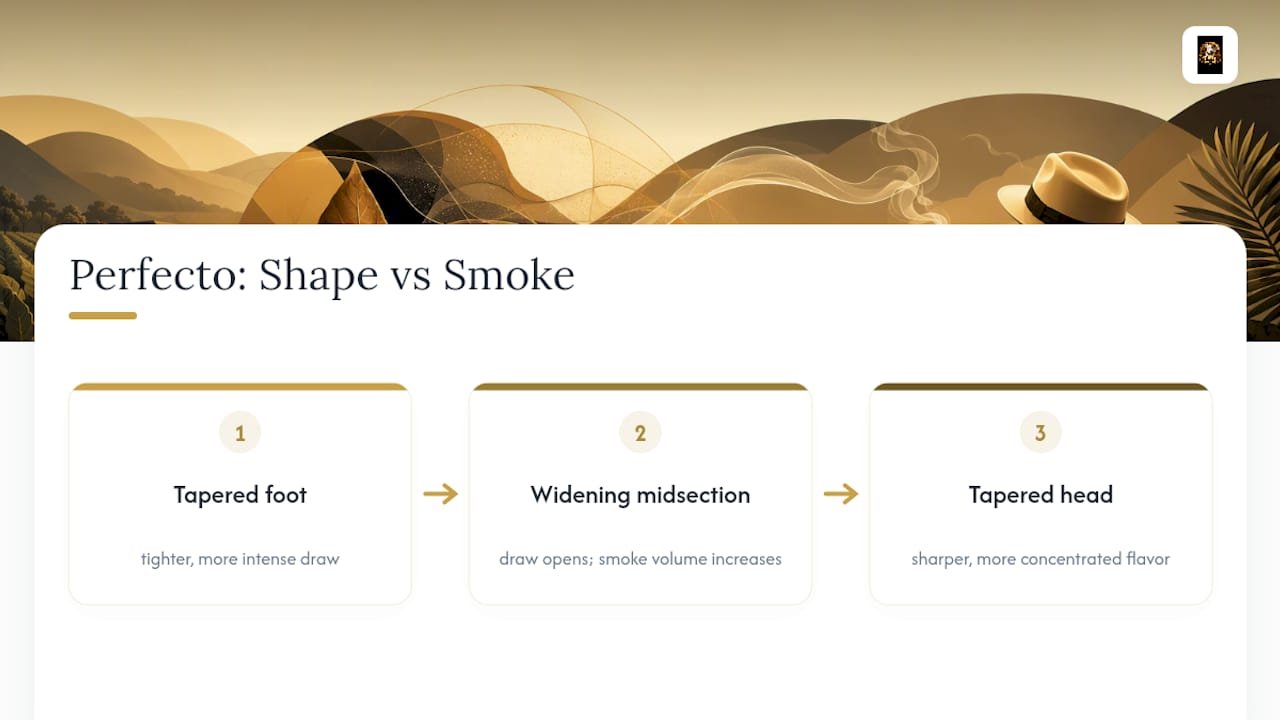
Flavor tends to shift right along with the shape, so you might also explore our editor selected tobacco e liquid picks paired to device and nicotine for a tobacco-flavored alternative experience. The changing diameter affects both airflow and how flavors unfold across the smoke, so the tapered ends often taste sharper and more concentrated while the wide midsection lets the blend breathe and round out. Because the proportions of filler, binder, and wrapper shift as the cigar burns, well-balanced blends tend to perform best in this shape since no single component gets a chance to dominate for too long.
Statistic Callout: Rolling a genuinely well-made Perfecto requires more skill than shaping a straight-sided parejo, which is why limited-production Perfectos often show up as a manufacturer’s flagship release rather than a routine line extension.
The tapered points are also more prone to burn problems. Pinching, where the foot narrows unevenly, and canoeing, where one side burns faster than the other, show up more often here than on a parejo. Rotating the cigar slowly while lighting and taking your time on the first few draws corrects most of these issues before they get out of hand.
How Do You Cut, Light, and Store a Perfecto?
Getting a Perfecto right starts before you even light it.
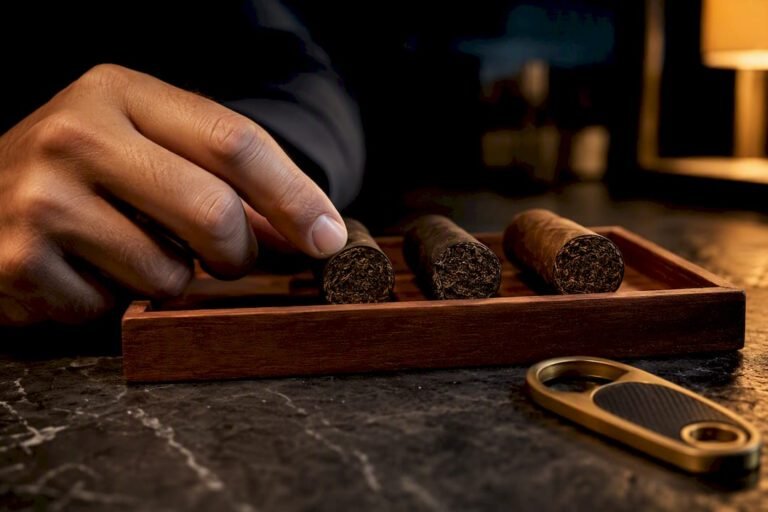
- Cutting: if the foot is closed, a straight cut just above the taper’s widest point works better than a punch cut, which won’t open enough surface area for good airflow. If the foot is already open, skip cutting the foot entirely and just clip the pigtail at the head if there is one.
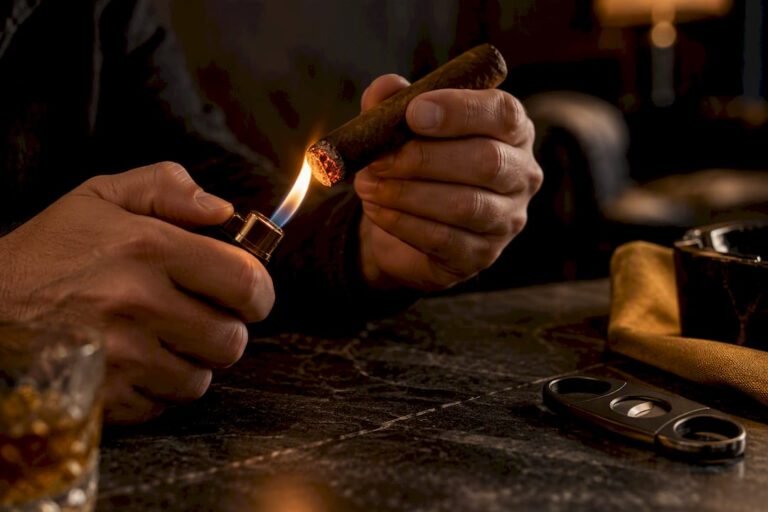
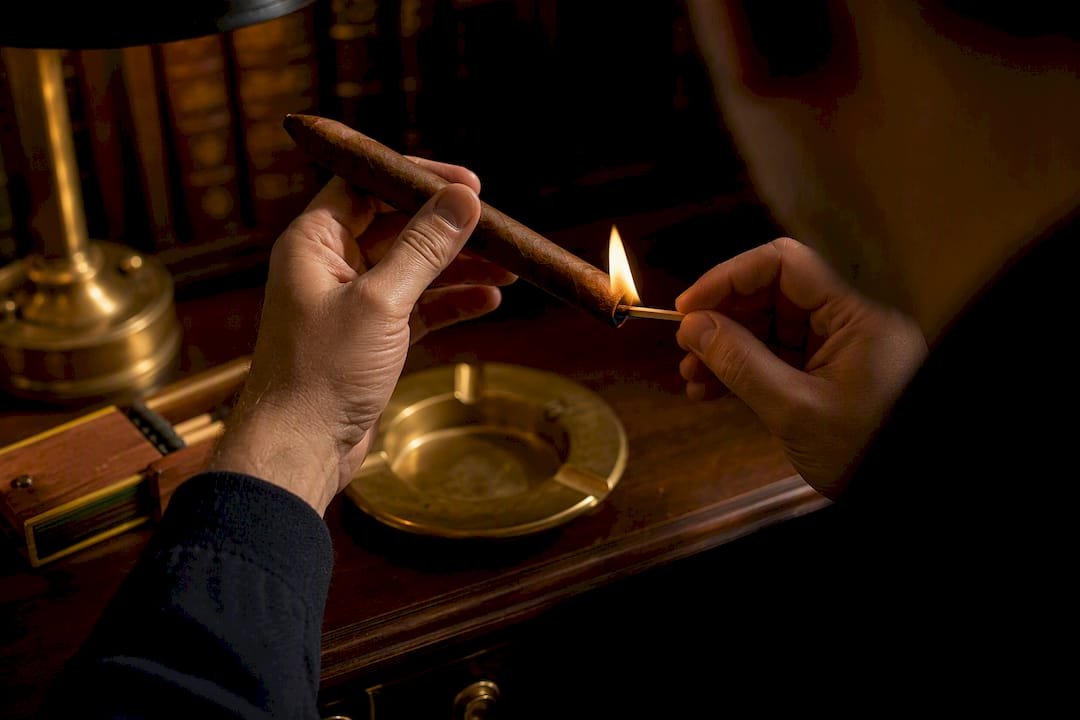
- Lighting: toast the tapered foot slowly and rotate the cigar constantly. The narrow point burns faster than the wider body next to it, so an uneven light here sets up canoeing later.
- Pacing: slow down as the ring gauge widens through the bulge, since a hot, fast draw through the widest point tends to run the burn line ragged. Ease off again as you approach the tapered head.
- Relighting: if it goes out, relight from the center outward rather than just the tip, since the taper reignites unevenly on its own.
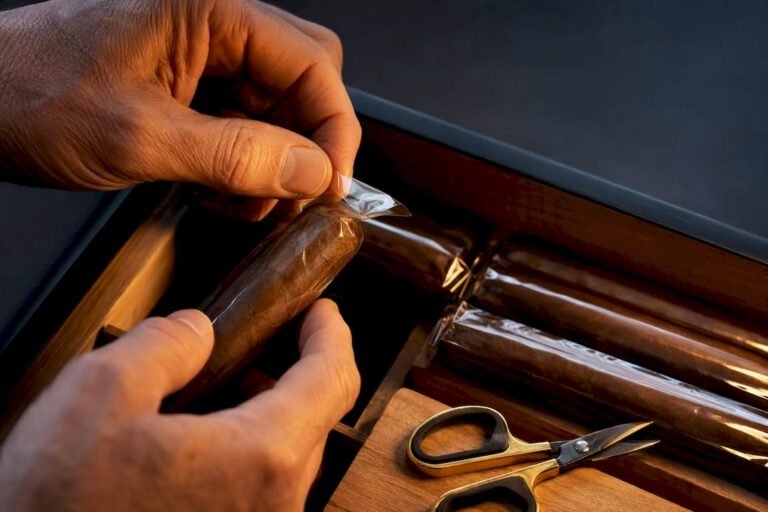
- Storage: figurados are more fragile than parejos, and their delicate points are prone to cracking in transit or in a crowded humidor. Many Perfectos ship in tubos for exactly this reason, and collectors favor them for storage as much as protection.
Pro Tip: Keep a Perfecto in its tubo or a padded travel case whenever you’re not smoking it. The tapered cap is the first thing to chip if it’s rattling around loose in a bag, and a cracked wrapper at the head ruins the draw before you even get the cigar lit.
What Are Some Notable Perfectos to Try?
A handful of Perfectos are worth seeking out if you want to understand what the fuss is about.
- Davidoff Aniversario Short Perfecto: a refined, shorter take on the shape with a smooth, balanced profile that makes a good entry point for first-timers.
- Arturo Fuente Hemingway series: one of the most recognizable Perfecto lines, prized for its consistency and the way its flavor builds from mellow to rich across the smoke.
- La Aurora Preferidos: a Dominican line known for figurado craftsmanship, often cited in curated tasting rundowns as a benchmark for the shape.
- Look for tubo packaging on limited editions. It’s a signal the maker considers the release delicate enough to warrant extra protection, not just a marketing flourish.
Who Should Actually Try a Perfecto?
Perfectos reward patience more than casual habit. They shine at a slow, dedicated tasting session, a celebration, or when a collector wants something that shows off rolling craftsmanship rather than just delivering a quick smoke.
If you’re new to the shape, start with a shorter Perfecto or grab one through a sampler instead of committing to a full box blind. Veterans chasing something distinctive should watch for limited releases, since that’s where manufacturers tend to put their best figurado work. Either way, the shape is worth the extra attention it demands.
— Kevin
Ready to Try a Perfecto?
Thor’s Cigar Vault built its catalog around exactly the kind of hard-to-find, handmade cigars this shape represents. Instead of hunting across a dozen retailers for one specific figurado, you get a curated selection of Perfectos and other premium cigars in one place, backed by staff who provide guidance on how these shapes burn.

If you’re new to the format, the Davidoff Aniversario Short Perfecto is a solid first pick, or start with a curated sampler to compare a few figurado shapes side by side before committing to a full box. Browse the current selection and see what’s in stock this week.
Sources
This vendor curates its catalog around exactly this kind of craftsmanship, including a dedicated listing for the Davidoff Aniversario Short Perfecto. Because figurados are more delicate than straight-sided cigars, proper humidor conditions matter even more before a Perfecto ever reaches a customer’s hands.
- Why Perfecto Cigars Deliver a Unique Smoking Experience
- Dictionary
- perfecto, n. meanings, etymology and more | Oxford English Dictionary
FAQ
What Makes a Cigar a Perfecto?
A cigar qualifies as a Perfecto when both ends taper to a point and the middle bulges outward, giving it a changing ring gauge from foot to head. This puts it in the figurado family rather than the straight-sided parejo family that includes shapes like the Robusto or Toro.
What Does “Perfecto” Mean?
“Perfecto” is the Spanish word for “perfect.” Dictionary sources trace the term’s origin to Spanish, and the name reflects the shape’s status as a technically demanding, premium format rather than a literal claim about quality.
What Is Another Word for “Perfecto”?
The broader category term is figurado, which covers any non-cylindrical cigar shape, including Perfectos, torpedoes, and pyramids. Within that category, some makers use terms like “double Perfecto” or “salomon” for larger, more elaborate variations on the same tapered design.
What Are Perfecto Cigars?
Perfecto cigars are figurados with tapered feet and heads and a bulging midsection, which means the draw and flavor shift noticeably as the cigar burns down. Brands like Arturo Fuente, Davidoff, and La Aurora all produce well-known Perfecto lines, and you can find several examples, including the Davidoff Aniversario Short Perfecto, through Thor’s Cigar Vault’s cigar catalog.