Three Month Test for Collectors: When to Remove Cigar Cellophane
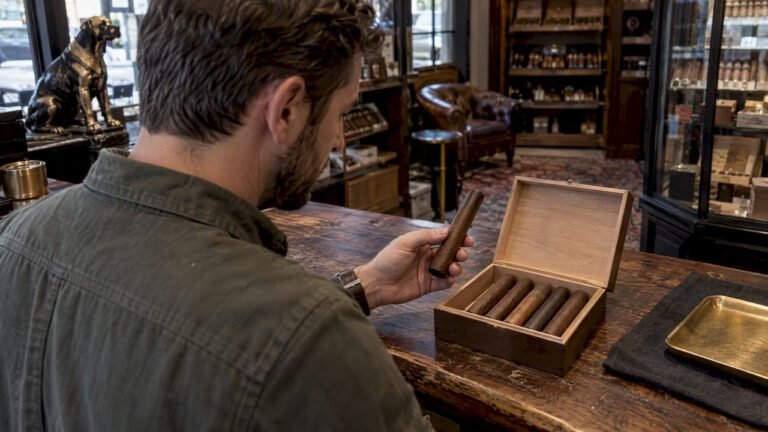
Remove the cellophane when you’re loading a humidor for real aging. Keep it on for anything you’re carrying, gifting, or smoking within a few months. The reasoning is simple: cellophane slows the humidity exchange your cigars need to mature properly, but it also protects wrappers from scuffs, oils, and dry pockets when a stick is on the move.
TL;DR:
- Removing the cellophane accelerates aging by allowing faster humidity exchange and oil redistribution within the cigar.
- Keeping the wrapper on during short-term use protects the cigar from damage and contamination, especially during transportation or gifting.
- Tubes and sealed packaging are less permeable and should be opened before long-term aging, as they can block humidity and slow maturation.
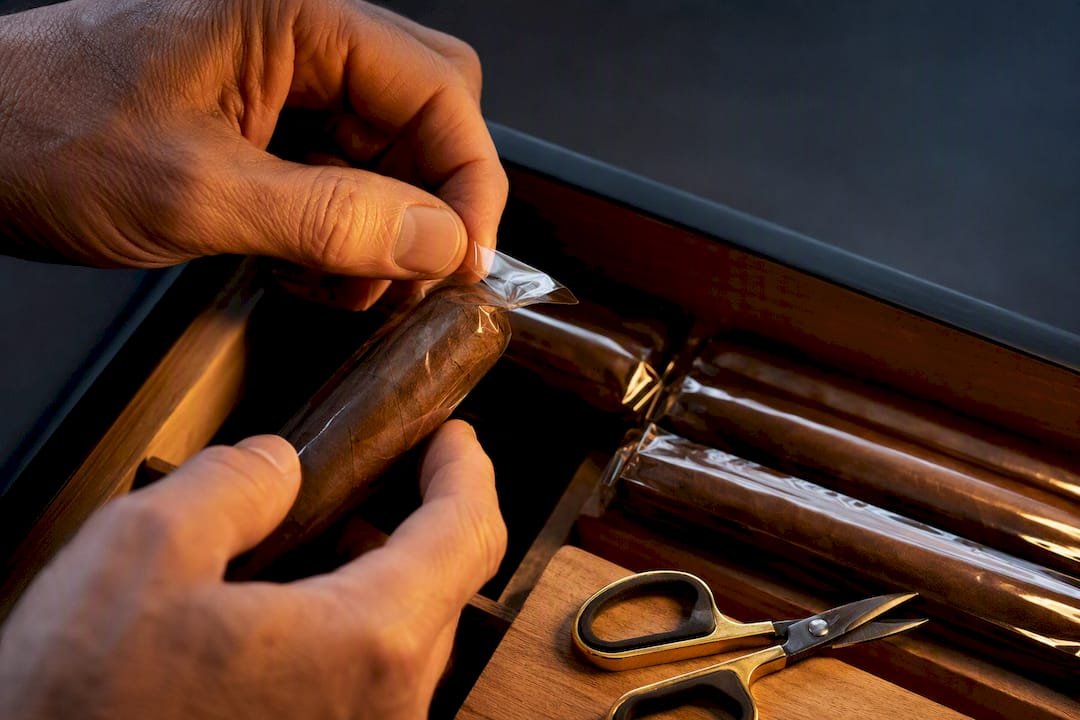
- Gentle removal methods include sliding it out from the foot or peeling along the seam, avoiding force or pulling on the band.
- Partial opening techniques can balance protection and airflow, with long-term storage favoring removal for optimal flavor development.
Table of Contents
- Should You Remove or Keep the Cellophane? Quick Decision Rules
- How to Remove Cigar Cellophane Safely
- Why Cellophane Slows Aging and Changes Humidity Exchange
- When Keeping the Cellophane On Makes More Sense
- Hybrid Techniques and Pro Tips From Tobacconists
- A Collector’s Take on Removal vs. Protection
- Storage Tools That Make This Decision Easier
- Sources
- FAQ
Should You Remove or Keep the Cellophane? Quick Decision Rules
The choice usually comes down to timeline and purpose, not personal ritual. If you’re building a box for long-term cellaring, strip it. If you’re rotating through a sampler this month, don’t bother.
- Aging planned? Remove the cello. Cigar Aficionado notes that cellophane keeps humidity from reaching the tobacco, which stalls the slow moisture exchange aging depends on.
- Short-term rotation or travel? Leave it on. There’s no upside to exposing a wrapper you’re smoking in two weeks.
- Boxed cabinets vs. singles: A full box you’re cellaring for years is a different decision than three singles you picked up for the weekend. Treat inventory strategy, not habit, as the deciding factor.
- Rule of thumb: For short-term rotation, keep the wrapper on. For long-term aging extending beyond many months, remove it. These are general guidelines rather than fixed rules. Your humidor’s stability and the cigar’s construction both shift the math.
Tubos and metal or glass tubes deserve their own note here. They’re far less permeable than cellophane, and retailers warn that a sealed tube can block humidification very effectively. If a cigar came in a tube and you plan to age it, that tube comes off first, cellophane second.
How to Remove Cigar Cellophane Safely
Three methods cover almost every cigar you’ll own. None require force, and none should ever involve pulling on the band.
- Open at the foot and slide it out. Most cellophane sleeves are open or lightly folded at the foot end. Grip the cigar gently by the body, not the band, and push or twist it free of the wrapper rather than yanking the cello off the stick.
- Peel the seam. Cellophane sleeves have a visible seam running down one side, often with a slight overlap. Find it, work a fingernail under the edge, and peel it open lengthwise. This is the gentlest option for delicate maduro wrappers, which scuff more easily than lighter leaf.
- Snip the folded top or seam. For sleeves sealed at both ends, small scissors or cigar snips make quick work of the closure. Famous Smoke’s removal guide walks through this exact approach for cigars that don’t have an easy opening.
Keep your hands dry and clean before you touch anything. Oils and moisture from your fingers transfer straight to the wrapper, and that shows up later as fading or spotting.
When the band sticks: cellophane glue occasionally bonds to the paper band underneath. Don’t tug. Instead, hold a lighter or warm lamp a few inches away for a couple of seconds to soften the adhesive, or gently roll the cello away rather than pulling straight up. When the cello tears mid-peel: stop and switch to snipping the remaining section instead of forcing a rip toward the cap, where a slip can nick the wrapper.
Why Cellophane Slows Aging and Changes Humidity Exchange
Cellophane is semi-permeable. It lets some moisture through, just not much, and far less than a naked cigar sitting on a shelf. A tubo blocks nearly all of it. That spectrum, naked cigar, cellophane, tubo, roughly tracks how fast a cigar equilibrates with its surroundings.
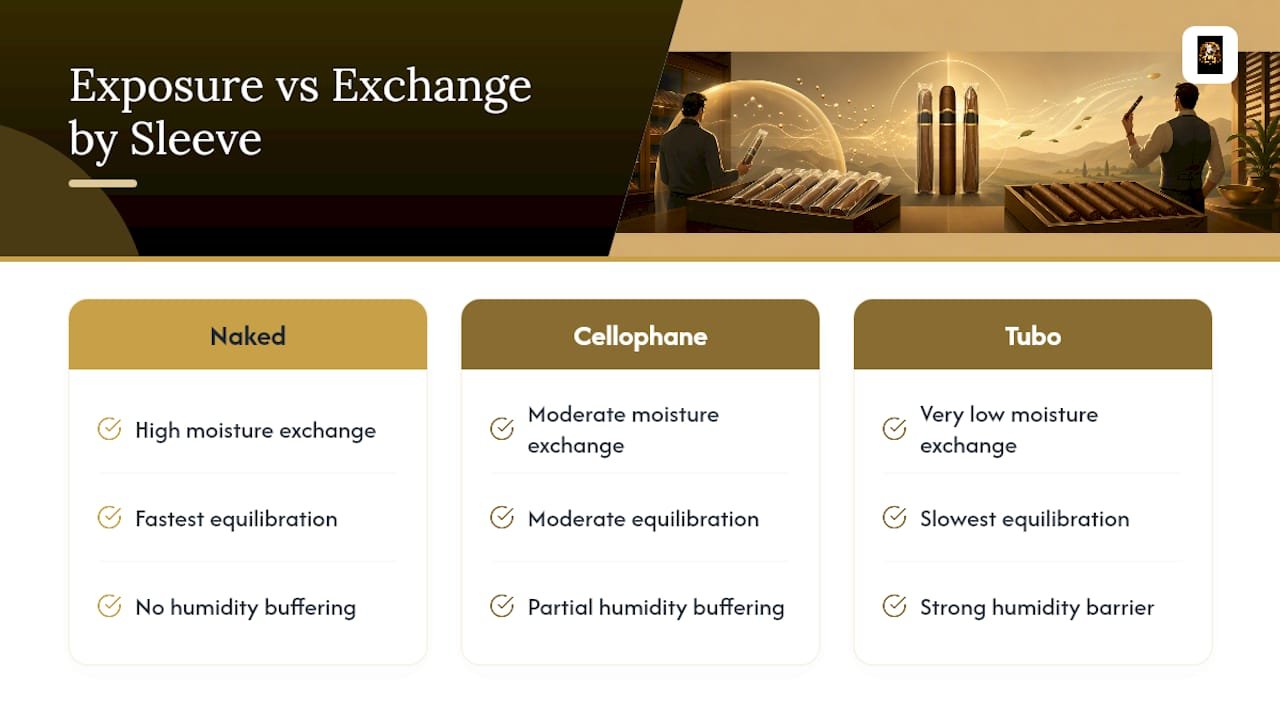
Stripping the wrapper speeds up gas exchange in both directions. Ammonia and other volatile compounds that build up during fermentation escape more readily, and oils in the tobacco migrate and redistribute across the leaf instead of pooling under a plastic barrier. The practical result most collectors notice: a stripped cigar tends to round out its flavor faster than one left sleeved, because the aging process depends on that exchange happening at a reasonable pace.
There’s a flip side worth knowing. Cellophane buffers sudden swings in relative humidity, which can be useful if your humidor’s seasoning is inconsistent or your climate fluctuates hard between seasons. That buffering is also a trap: a cigar can sit in a slightly miscalibrated humidor for months, cellophane masking the problem, while a naked cigar in the same box would show stress from a bad reading within weeks.
A cheap analog unit can drift several points in either direction. Running a salt test calibration before you commit a box to long-term storage tells you whether your humidor’s actual conditions match what the dial claims.
When Keeping the Cellophane On Makes More Sense
Removal isn’t the default move in every situation. Protection sometimes outweighs the aging benefit, and pretending otherwise just gets your wrappers damaged for no real gain.
- Travel and pocket carrying. A loose cigar in a jacket pocket picks up lint, oil, and pressure dents fast. Keep the cello on, or better, drop it into a travel tubo or case.
- Short-term rotation under 3 months. If you’re smoking through a box within a season, there’s no aging window to protect. Cellophane also keeps oils from one wrapper bleeding into a neighbor in a crowded drawer.
- Shipping, gifting, and shop-bought singles. Retail handling is rougher than home storage. A gifted cigar or a single you just bought off a shop shelf has already been through more friction than a box that’s sat untouched in your humidor.
Hybrid Techniques and Pro Tips From Tobacconists
You don’t have to pick an all-or-nothing approach for every cigar you own. A partial-open technique, snipping one end of the sleeve or lifting the tucked flap, lets air move through while the wrapper still gets physical protection. Tobacconist blogs describe this as a middle ground for people who aren’t ready to fully commit a box to open storage.
Batch handling makes this practical at scale. Strip cellophane from anything you’re cellaring past the six-month mark, leave recent purchases sleeved for near-term rotation, and label boxes or drawers so you’re not guessing which pile is which three months from now.
Layout matters too. Cedar dividers keep same-brand or same-blend sticks grouped together, which limits aroma cross-mingling between cigars with very different oil profiles, a Nicaraguan puro sitting next to a heavily perfumed Connecticut wrapper is a classic way to end up with off flavors on both.
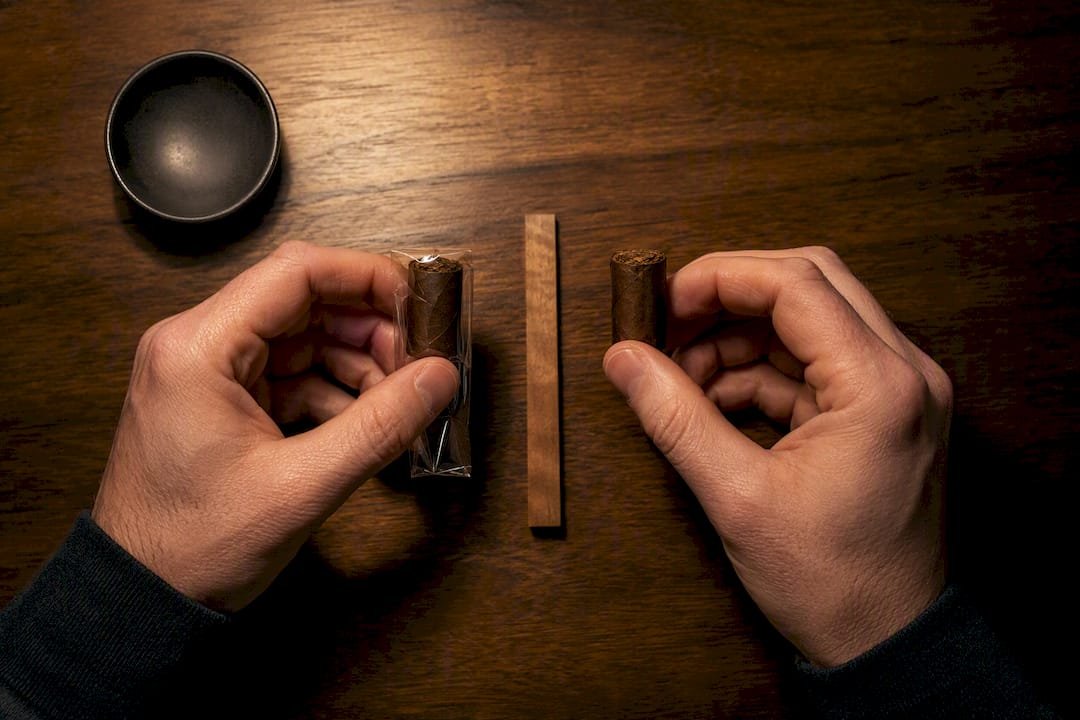
Pro Tip: Strip half a box and leave the other half sleeved, then taste one from each side at the three month and six month marks. The difference in draw and flavor rounding is usually obvious enough that you won’t need to debate the theory again.
A Collector’s Take on Removal vs. Protection
I strip anything going into long-term cellaring and leave singles sleeved until the week I plan to smoke them. If you’re on the fence, don’t just take my word or anyone else’s on faith. Grab a matched pair, sleeve one and strip the other, and compare them side by side in three months.
— Kevin
Storage Tools That Make This Decision Easier
Once you’ve decided which sticks come out of their sleeves, the equipment you store them in matters more than the wrapper ever did. A humidor with inconsistent seasoning will undo good aging decisions no matter how carefully you handled the cellophane, and a hygrometer reading a few points off can mask a real humidity problem for months. Thor’s Cigar Vault carries humidors built for the kind of long-term aging this article is about, along with dividers and calibration tools that pair naturally with a stripped, actively aging box.

For sticks you’re keeping sleeved, travel tubos and cases from the accessories collection solve the transport side of the equation without leaving a bare cigar exposed in a pocket or bag. Browse the humidor lineup, grab the exclusive discount on your first order, or reach out to Thor’s Cigar Vault’s staff if you want a second opinion on setting up your storage plan before you commit a full box to aging.
Sources
- Cellophane | Cigar Aficionado
- Cigar Cellophane: On or Off in the Humidor? (Refined Traditions Humidors)
FAQ
Should I Remove the Cellophane From My Cigars?
Remove it if you’re aging the cigar in a humidor for more than a few months. Keep it on for travel, gifting, or anything you plan to smoke soon.
Is It Okay to Keep Cellophane on Cigars in a Humidor?
Yes, for short-term storage. The wrapper still gets some humidity exchange, just slower, which makes it fine for cigars in active rotation but a poor choice for long-term aging.
What Is the 135 Rule for Cigars?
Treat it as a starting point, not a fixed standard, and confirm your actual readings with a calibrated hygrometer rather than trusting the dial blindly.
Should You Take the Wrapper Off a Cigar Before Smoking It?
Yes. Always remove the cellophane before lighting up. The only debate is when to remove it relative to storage, not whether to remove it before you smoke.