Fix Bitter Cigar Flavor in One Session: Slow Puffs, Purge, 65–68% RH
Slow your puff cadence, purge after a harsh relight, and confirm your humidor sits at roughly 65 to 68% relative humidity. Those three moves fix most bitterness within a single session. The usual culprits are overheating from fast puffing, humidity that’s too high or too low, a young cigar that hasn’t rested, or a botched relight loaded with stale ash. If none of that helps, the stick is probably past saving, and forcing more smoke out of it just wastes your evening.
TL;DR:
- Maintaining humidity between 65 and 68 percent and resting new cigars for at least a week reduces risks of bitterness caused by humidity and immature tobacco.
- Puff no faster than once every 30 to 45 seconds to prevent overheating from excessive draw speed, which is the main cause of harsh flavors.
- Properly calibrated hygrometers and small humidity adjustments are crucial to avoid storage-related flavor distortions that lead to bitterness.
- Using clean, precise cuts, gentle lighting, and a slow, consistent puffing pace minimizes heat buildup and prevents chemical breakdown that causes harshness.
- Addressing common issues like uneven burn, tight draw, and tar buildup during the last third prevents bitterness concentration and enhances overall flavor.
Table of Contents
- What Causes Bitterness When Smoking a Cigar?
- How Do You Prevent Cigar Bitterness Through Storage?
- What’s the Right Way to Cut, Light, and Puff a Cigar?
- Why Does the Final Third of a Cigar Taste Bitter?
- Which Tools Actually Help You Avoid a Bitter Cigar?
- How Thor’s Cigar Vault Keeps Bitterness Out of Your Humidor
- An Editorial Take on Fixing Cigar Bitterness
- Build a Setup That Prevents Bitterness From the Start
- Sources
- FAQ
What Causes Bitterness When Smoking a Cigar?
Bitterness almost always traces back to heat. Puff too fast or hold a torch flame too close and you cook the tobacco instead of drawing smoke through it, breaking down oils into sharper, harsher compounds. Excessive heat from rapid puffing, a too-hot flame, or uneven burn is one of the most common drivers of harsh cigar flavor, and it’s the first thing to rule out before blaming the cigar itself.
Humidity works against you at both extremes. A cigar stored too wet burns unevenly and tastes flat or muddy, while one that’s too dry burns hot and fast, pushing bitter notes to the front almost immediately.
Construction matters more than most smokers realize. A tunnel down the center, a canoe-shaped uneven burn, or a draw so tight you’re straining just to pull smoke through, all of these force you to puff harder than you should, which reintroduces the heat problem from a different angle.
Here’s what to check, roughly in order of how often each one is the real cause:
- Puffing pace: if you’re drawing more than once every 30 to 45 seconds, you’re likely overheating the burn.
- Humidor RH: anything outside the 65 to 72% range starts to distort flavor, according to Boveda’s storage guidance.
- Cigar age: a stick rolled and shipped within the last few weeks often carries green, papery bitterness from unfinished fermentation.
- Burn line: a jagged, uneven burn means the wrapper and filler are heating at different rates.
- Session context: heavy coffee, a full stomach, or three cigars in one afternoon will flatten your palate regardless of the cigar’s quality.
Young, unrested cigars deserve special mention. Tobacco needs weeks or months in a stable environment after rolling to let ammonia compounds from fermentation dissipate. Smoke one too soon and you’ll taste it as a sharp, hay-like bitterness that has nothing to do with the blend itself.
How Do You Prevent Cigar Bitterness Through Storage?
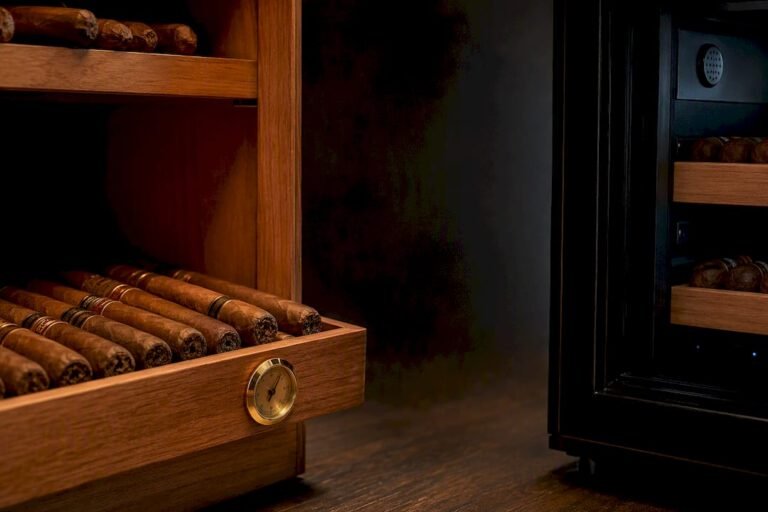
Prevention starts before you ever cut a cigar, and it starts with a number: 65% to 68% relative humidity. That range keeps the leaf’s natural oils intact without oversaturating the wrapper, and it’s tight enough to avoid the burn problems that show up at the extremes. Boveda recommends staying inside the broader 65 to 72% window for consistent ash formation and smoother draws; 65 to 68% is the sweet spot within that range for most premium blends, paired with a temperature around 68 to 70 degrees Fahrenheit.
- Rest new arrivals for at least a week. Cigars shipped across climate zones need time to stabilize; give them 5 to 10 days in your humidor before smoking one.
- Calibrate your hygrometer before you trust it. A cheap analog hygrometer can be off by 5 percentage points or more, and there’s no fixing bitterness problems if your baseline reading is wrong.
- Move RH in small steps. Adjust no more than 1 to 2% at a time, then wait about 48 hours before judging the result, a pace Centient Luxury Humidors recommends avoiding overcorrecting.
- Keep the spread between top and bottom shelf under 2%. A wide spread means poor air circulation, and cigars on one shelf will smoke completely differently than the others.
- Use travel humidors or sealed tubes for transport. Rapid RH swings during travel do more damage than steady storage at a slightly imperfect number ever will.
Boveda packs are the simplest fix for most home humidors: two-way packs hold RH steady with no dials to babysit, and swapping them every two to four months (faster in dry climates) keeps things predictable. Active systems with digital controllers cost more and need occasional maintenance, but they recover faster after you open the lid on a hot day.
What’s the Right Way to Cut, Light, and Puff a Cigar?
Technique fixes bitterness faster than any storage adjustment, because you feel the results in the same session.
Start with the cut. A ragged or off-center cut restricts airflow, and a restricted draw makes you puff harder to compensate, which overheats the burn. A double guillotine cutter works well on most ring gauges up to 54, a V-cutter suits smaller ring gauges where you want to preserve more wrapper structure, and a punch cutter is worth it if you tend to over-cut and want a smaller, more controlled opening.
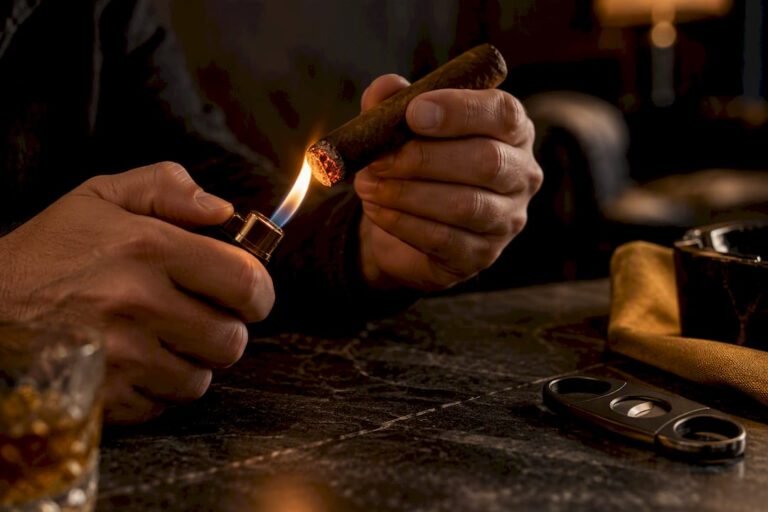
Lighting matters just as much. Toast the foot first, holding the cigar at an angle over the flame without letting the wrapper touch it directly, then bring it to your mouth and draw while rotating the foot into full, even ignition. A quality butane torch burns cleaner than a standard lighter and won’t leave a fuel taste on the tobacco, but keep the flame a half inch away rather than jamming the cigar into it. Scorching the wrapper at this stage locks in bitterness before you’ve taken a single real puff.
Pace comes next, and it’s the single biggest lever you control. A consistent, slower cadence between draws cools the burn and prevents the chemical breakdown that produces bitter compounds in the first place. Aim for one puff every 45 to 60 seconds rather than a faster pace that a nervous smoker tends to default to.
When a cigar starts tasting hot or acrid mid session, purge it. Cover the head lightly, blow through the foot to clear trapped smoke and gas, then draw again. Purging works as a mid-session troubleshooting tool for many smokers, but do it gently. Blowing too hard can reignite concentrated oils and make things worse.
- Relight sparingly, and only after knocking off dead ash first.
- Frequent relights and long, dirty ash both raise bitterness by charring tobacco that’s already partially burned.
- If you retrohale, do it every few draws rather than every single one, since overuse intensifies harsh notes rather than revealing new flavor.
- Water between draws resets your palate faster than anything else on the table.
Why Does the Final Third of a Cigar Taste Bitter?
The last third concentrates everything the first two thirds filtered out. As you smoke down, the remaining tobacco acts like a filter for tars and oils rising from below, and that buildup is what makes final-third bitterness so predictable even on a well-made cigar.
- Slow down further. Stretch your puff interval to a full 60 to 90 seconds as you approach the band; the extra cooling time matters more here than earlier in the smoke.
- Purge once, gently, when you first notice the shift. One clean purge often resets the flavor for another 10 to 15 minutes of enjoyable smoking.
- Watch for tar buildup on your tongue. A gritty, ashtray-like aftertaste that a purge doesn’t clear is your signal the cigar is done.
- Stop at two inches, not out of obligation. Nobody owes a cigar its last inch, and forcing it past the point of enjoyment doesn’t honor the blend, it just wastes the good two thirds you already had.
Which Tools Actually Help You Avoid a Bitter Cigar?
Good technique only gets you so far without the right gear backing it up.
A hygrometer is the one tool that turns guesswork into a number, and it’s worthless if it’s not calibrated. Run the 75% salt test on any new hygrometer, digital or analog, before trusting it with your collection.
For humidification, most home setups do better with two way Boveda packs than with active digital systems: no dials, no batteries, and a wide margin for error if you forget about them for a few weeks. Larger collections or walk in setups benefit from active systems that recover humidity faster after the door opens, but they need more hands-on attention.
- A butane torch with an adjustable flame gives you the soft, even light a wrapper needs without scorching it, as recommended by Smokers Alley.
- A double guillotine cutter handles most ring gauges cleanly; keep the blade sharp, since a dull cutter tears the cap instead of slicing it.
- Rotate stock every few months so nothing sits forgotten at the back of the humidor past its ideal resting window.
- Swap humidification packs on a schedule rather than waiting for a low reading to remind you.
Pro Tip: *Keep a spare hygrometer in a sealed bag as a reference.
How Thor’s Cigar Vault Keeps Bitterness Out of Your Humidor
Thor’s Cigar Vault built its curation process around the same principle covered above: a cigar that hasn’t rested properly, or that’s been mishandled in transit, will taste bitter no matter how good the blend is on paper. Every cigar in the collection is stored and rotated with that in mind before it ever reaches a customer.
A quick troubleshooting checklist worth keeping near your humidor: diagnose the cause (heat, humidity, age, or ash), apply the immediate fix (slow down, purge, or relight cleanly), then adjust storage so the same problem doesn’t repeat next time. For readers browsing curated selections like the Artesano Del Tobacco El Pulpo Sampler, that resting discipline is part of what you’re paying for, not an afterthought.
An Editorial Take on Fixing Cigar Bitterness
Most advice on cigar bitterness treats it as a single problem with a single fix, usually “smoke slower.” That’s true as far as it goes, but it undersells how often the real cause is upstream of the smoking itself: a cigar that never got a fair shot because it sat in a humidor with a hygrometer that’s been wrong by six points for a year.
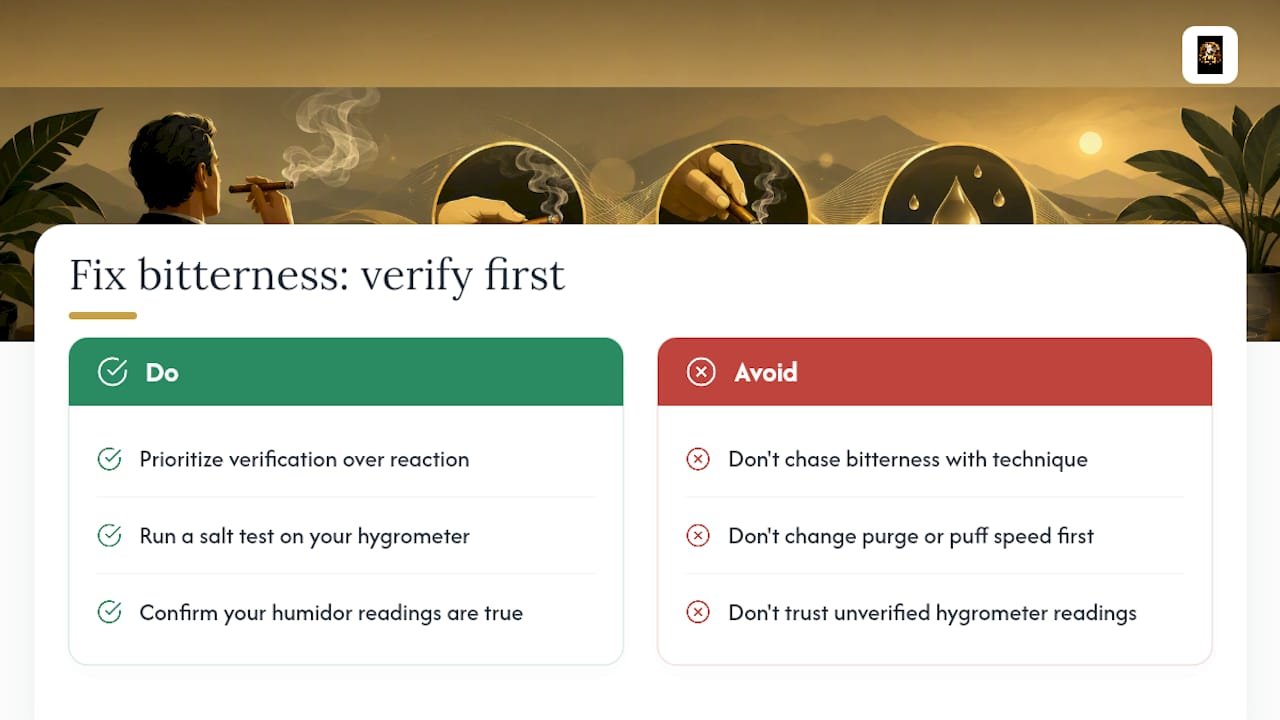
The conventional wisdom also overrates gear you already own and underrates the boring stuff, like actually running a salt test before trusting your readings. Everyone owns a torch and a cutter. Far fewer people have confirmed their humidor is telling the truth.
If you take one thing from this guide, prioritize verification over reaction. Don’t chase bitterness with a faster purge or a slower puff until you’ve ruled out that your storage numbers are simply wrong. Technique fixes a bad session. Accurate humidity fixes every session that follows it.
— Kevin
Build a Setup That Prevents Bitterness From the Start
A lot of bitterness problems trace back to a mismatched setup rather than bad luck. A humidor with no reliable hygrometer, a torch that scorches instead of toasts, a cutter that tears rather than slices, and even a great blend will fight you every time.

Thor’s Cigar Vault stocks the full starter kit in one place: a properly sealed humidor, Boveda packs, a calibrated hygrometer, and the torches and cutters that actually make a difference to flavor. Once your storage is dialed in, browse curated cigars chosen for consistent resting and handling, rather than whatever showed up cheapest that week. Start with the humidor category and build outward from there.
Sources
- Tips for better cigar enjoyment — Boveda
- What makes cigars taste harsh? — Fuel & Fire
- Cigar smoking tips: manage the last inches of a premium smoke — StogieHub
FAQ
What Is a Natural Bitter Blocker?
There’s no single accepted “bitter blocker” ingredient or product in cigar smoking; the practical equivalents are pacing your puffs, purging gently, and keeping your humidor properly calibrated, since those address the actual causes of bitterness.
Is Smoking Two Cigars a Week Bad?
Cigar smoking carries known health risks at any frequency, and this article doesn’t provide medical guidance on safe consumption levels; anyone concerned about frequency should talk to a doctor rather than rely on a general rule of thumb.