
Retrohale a Cigar: Unlock Hidden Flavors in Three Sessions
A retrohale cigar technique means exhaling a small portion of smoke through your nose instead of your mouth, which routes it past your retronasal olfactory receptors. That matters because roughly 80% of what you perceive as flavor comes from smell, not taste, so retrohaling exposes pepper, cocoa, and cedar notes your tongue alone will never catch. It is not inhaling, and done right, it never touches your lungs.
TL;DR:
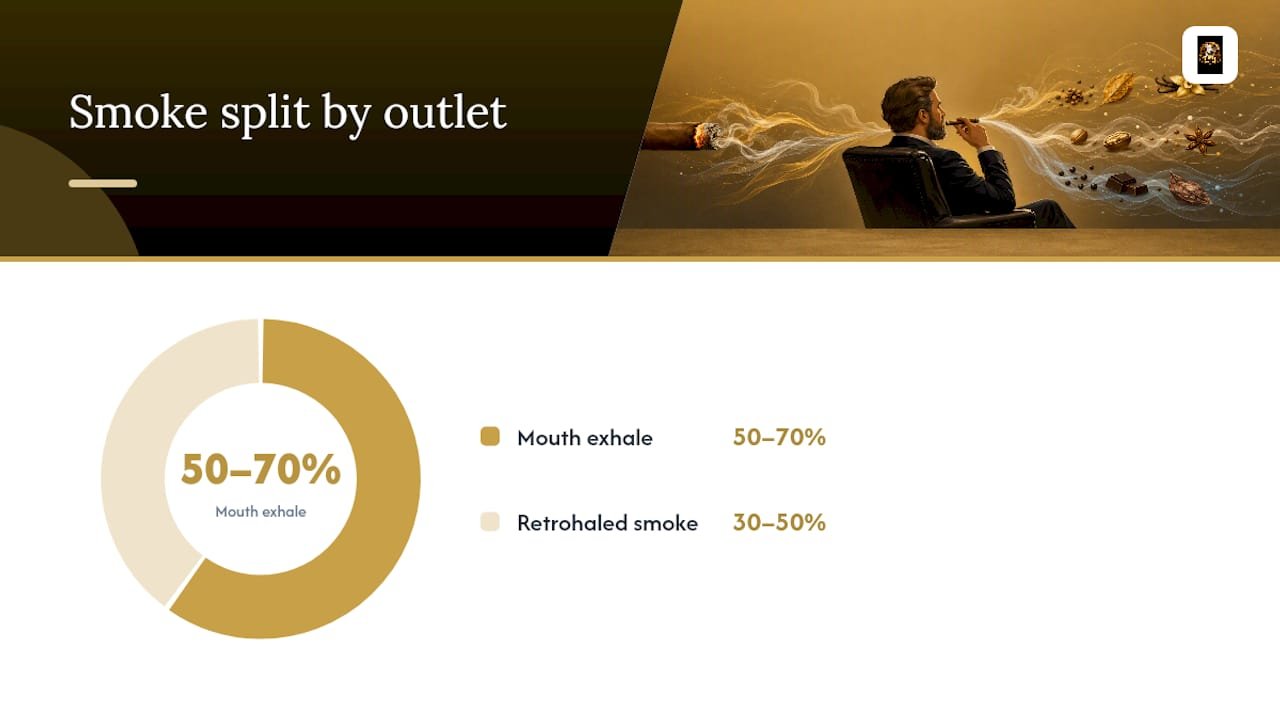
- Proper retrohaling involves exhaling 50 to 70 percent of the smoke through your mouth before gently pushing the remaining smoke upward with a tongue motion, not lung force.
- Most smokers should limit retrohales to two or three per third of the cigar to prevent nasal fatigue and irritation, especially with full-bodied or spice-heavy blends.
- The technique reveals important aroma notes such as pepper, cedar, leather, cocoa, and dried fruit that are not as apparent through mouth taste alone.
- Beginners should practice on milder cigars with a sampler to develop the motion comfortably and avoid discomfort or coughing.
- Retrohaling is safe as long as smoke stays in the mouth and nasal passages, but those with nasal sensitivities or sinus issues should approach with caution.
Table of Contents
- What Retrohaling Actually Does to Your Palate
- How to Retrohale a Cigar Step by Step
- Common Retrohale Mistakes and Easy Fixes
- How Often Should You Retrohale a Cigar?
- What Retrohaling Reveals: Flavor Groups to Listen For
- Is Retrohaling a Cigar Bad for You?
- A Three-Session Plan to Build the Habit
- Perspective: When Retrohaling Matters and When It Doesn’t
- Where to Practice Your Retrohale Technique
- Sources
- FAQ
What Retrohaling Actually Does to Your Palate
Your tongue can only tell you so much: sweet, salty, bitter, sour, and a handful of textures. Everything you’d call “flavor” beyond that, the cedar, the leather, the dried fig, the black pepper snap, comes from your olfactory bulb reading aromatic compounds as air moves across it. Retrohaling forces that air to travel a second time, backward through the nasal passage, giving those receptors a second shot at the same mouthful of smoke.
That second pass is why professional blenders and tobacconists rely on the technique constantly. It is standard practice at Tobacconist University’s tasting curriculum, where it is treated less like a party trick and more like a diagnostic tool for reading how a blend is built.
Here’s the distinction that trips people up:
- Mouth exhale delivers flavor through taste buds and a small amount of orthonasal smell as the smoke passes your nose on the way out.
- Retrohale pushes smoke backward through the nasal cavity from inside your mouth, hitting olfactory receptors directly and at closer range.
- Inhaling draws smoke into your lungs, which is a different act entirely and not what retrohaling does.
The confusion between the second and third bullet is where most beginners hesitate, and it’s a fair worry. Proper retrohale technique keeps smoke confined to your mouth and nasal passages, never your chest. Once you understand that mechanically, the rest is just practice.
How to Retrohale a Cigar Step by Step
Retrohaling rewards patience more than lung capacity. Rushing it is exactly how people end up coughing through their first attempt and swearing off the whole idea. Here’s the sequence that actually works.
- Draw normally. Take your usual puff and let the smoke sit in your mouth for a second. Don’t hold it like you’re about to dive underwater; just let it settle.
- Exhale most of it through your mouth first. Push out roughly 50% to 70% of the smoke through your lips, leaving only a small remainder behind. This single step prevents almost every beginner mistake.
- Close your mouth and relax your throat. With the leftover smoke still sitting there, close your lips gently.
- Use a soft tongue push, not a breath. Instead of trying to force air with your lungs, use a motion close to a swallow, a gentle upward push with your tongue and soft palate. That subtle pressure sends the remaining smoke up through the nasal passage on its own.
- Exhale gently through your nose. You should feel a light, warm stream of smoke leave through your nostrils. If it burns or makes you cough, you pushed too much or too hard.
- Pause and register what you smelled. Give your brain a beat to catch up before your next draw.
The tongue cue, essentially a near-swallow motion, is the mechanical key here. Lung pressure is what causes irritation and accidental inhalation; tongue pressure is what professional smokers use to keep the whole process gentle and controlled.
Expect your first two or three tries to feel awkward. That’s normal, and it has nothing to do with cigar quality or your palate. It’s motor memory, the same way learning to whistle or roll your tongue takes a few failed attempts before it clicks.
Pro Tip: Practice the tongue push with zero smoke first, just air, while sitting at your desk. Once the movement feels automatic, add smoke back in. Separating the mechanics from the smoke removes most of the anxiety beginners feel.
Start with cigars that have a milder profile while you’re building the motion. A Connecticut shade wrapper or other mild to medium blend gives you room to make mistakes without your nose paying the price for it.
Common Retrohale Mistakes and Easy Fixes
Nearly every bad first experience with retrohaling traces back to the same handful of errors, and all of them are fixable in one session.
- Trying to retrohale the whole mouthful. This is the single biggest mistake. Attempting a full exhale through the nose instead of a partial one causes burning that makes people quit after one try.
- Using lung force instead of the tongue cue. Blowing hard through your nose like you’re clearing it after a cold sends too much smoke too fast, and it stings.
- Retrohaling every single draw. Your olfactory receptors fatigue quickly, and doing this on every puff dulls your ability to pick up new notes.
- Jumping straight to a full-bodied cigar. A maduro or ligero-heavy blend will overwhelm an untrained nose before you’ve built any tolerance.
- Skipping hydration. A dry mouth and dry nasal passage amplify irritation that a sip of water would have prevented.
The fix for almost all of these is the same: exhale less, push gentler, and space it out. If your nose stings, you weren’t too sensitive, you just retrohaled too much smoke too fast.
Pro Tip: Keep a one-line note after each cigar: what you smelled, how strong the burn or discomfort was, and what cigar you smoked. After four or five sessions, you’ll notice which cigars and which exhale percentages work best for your nose specifically.
How Often Should You Retrohale a Cigar?
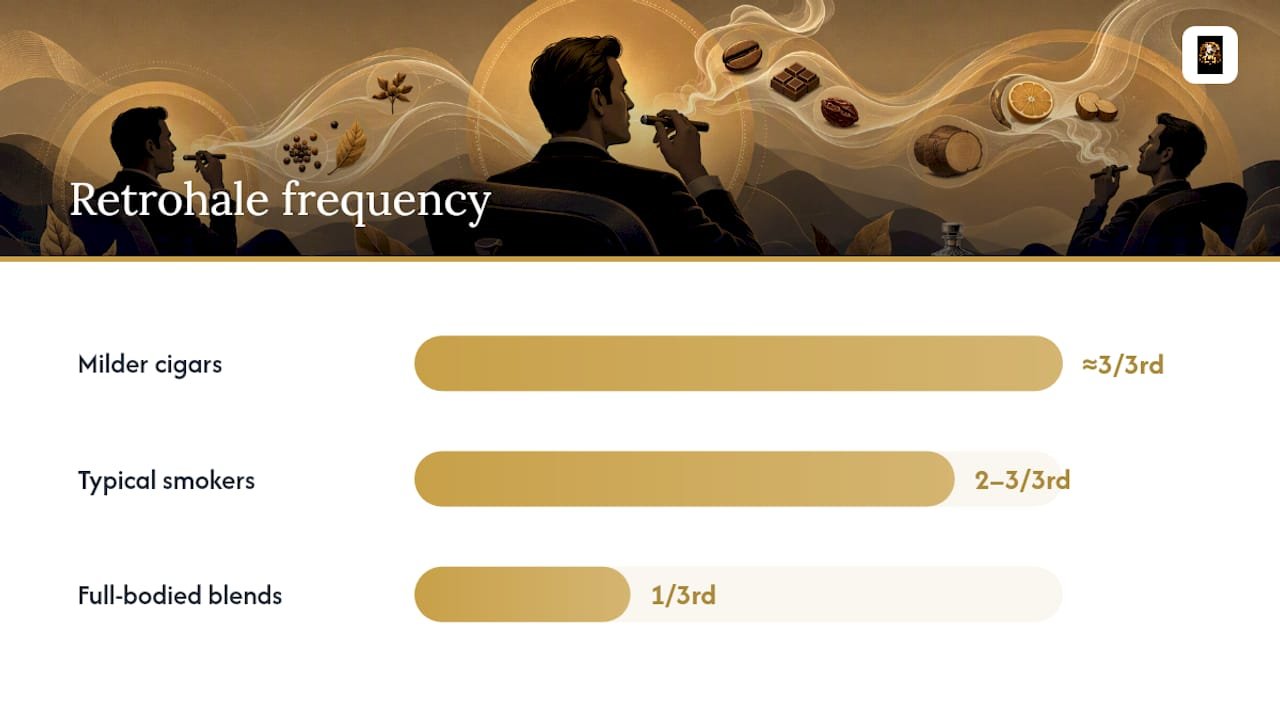
There’s no fixed rule, but most experienced smokers settle into a rhythm of two to three retrohales per third of the cigar, roughly once every several draws rather than on every puff. That spacing gives your nose time to reset between attempts instead of flooding it with smoke it can’t process.
A few practical adjustments to that baseline:
- Milder cigars tolerate more frequent retrohaling since the smoke is gentler on the nasal passage.
- Full-bodied or spice-heavy blends deserve fewer, more spaced-out attempts. Once per third is often plenty.
- As the cigar progresses, the flavor profile shifts, so a retrohale in the final third often reveals something completely different from the first third, worth checking even if you skipped the middle.
- Between attempts, take a sip of water or a neutral palate reset. Olfactory fatigue sets in fast, and a fresh nose reads the next third far more accurately than a tired one.
There’s genuinely no single correct frequency here. Some smokers retrohale constantly on mild cigars and rarely on strong ones; others do the opposite while training their tolerance. Let the cigar’s strength and your own comfort set the pace rather than chasing a number.
What Retrohaling Reveals: Flavor Groups to Listen For
Once the mechanics feel natural, the real payoff starts: noticing things you’d otherwise miss entirely. Retrohaling tends to surface a specific cluster of notes that mouth-only smoking flattens or hides.
- Pepper and spice. Black pepper, white pepper, and baking spice show up far more sharply through the nose than the mouth.
- Cedar and wood. A lot of the “cigar box” character people describe comes almost entirely from retronasal detection.
- Leather and earth. These deeper, savory notes often stay muted until you retrohale.
- Cocoa and coffee. Roasted, bittersweet notes that read as vague “richness” on the tongue sharpen into something specific through the nose.
- Dried fruit and floral hints. Fig, raisin, and occasional floral touches are almost exclusively retronasal discoveries.
Wrapper type shapes what you’ll find. A Connecticut shade tends to push cedar, cream, and light florals to the front, while a darker maduro wrapper leans into cocoa, espresso, and dried fruit. Blenders lean on this exact contrast when they evaluate how a blend’s architecture holds together from foot to nub. Each third of the cigar can also reveal a different structure entirely, so a stick that opens with pepper might settle into leather by the midpoint and finish on cocoa, a shift you’d likely miss without checking in through the nose at each stage.
Is Retrohaling a Cigar Bad for You?
Retrohaling is not inhaling, and that distinction is the entire safety story. The smoke stays in your mouth and nasal passage; it never reaches your lungs the way cigarette or cigar inhalation does. That said, “not inhaling” doesn’t mean “risk free,” and a few honest caveats are worth knowing.
- Nasal irritation and watering eyes are common in the first few attempts, especially if you push too much smoke too fast. This usually fades as your technique improves.
- Sinus surgery or chronic sinus conditions can make retrohaling uncomfortable or inadvisable. If you’ve had recent nasal or sinus surgery, check with your doctor before trying it.
- Severe allergies or nasal sensitivity may make even small amounts of smoke through the nose unpleasant. There’s no requirement to push through discomfort.
- Frequency matters for comfort, not just flavor. Retrohaling constantly on every draw increases irritation risk regardless of cigar strength.
The practical safety habit is simple: start with a small percentage of smoke, use the gentle tongue push rather than force, and stop if anything stings beyond a light warmth. Discomfort is a signal to adjust your technique, not a sign you’re doing something dangerous.
A Three-Session Plan to Build the Habit
Retrohaling becomes close to automatic after a few honest attempts, and a short structured plan gets you there faster than random trial and error.
- Session one: mechanics only. Smoke a mild cigar and focus purely on the 50 to 70% partial exhale and the tongue push. Don’t worry about identifying flavors yet, just get the motion comfortable. Note one word for how it felt.
- Session two: one flavor group. Pick a mild to medium cigar and retrohale two or three times per third, hunting specifically for pepper or cedar. Write down whether you noticed it and where in the cigar.
- Session three: compare thirds. Using a medium-bodied cigar, retrohale once in each third and jot a quick note on how the profile shifted from start to finish.
By session three, most smokers report the motion no longer feels forced. This piece was reviewed by the Thor’s Cigar Vault editorial team, drawing on the tasting notes and staff recommendations built into our curated cigar selection.
Perspective: When Retrohaling Matters and When It Doesn’t
Retrohaling gets treated in some circles like a rite of passage, as if you’re not a “real” cigar smoker until you’re doing it every third puff. That framing does more harm than good. It’s a sensory tool, useful for exploration and genuinely rewarding once you’ve got the motion down, but it’s optional. Plenty of people have smoked cigars happily for decades without ever pushing smoke through their nose on purpose.
There are also contexts where it’s simply the wrong move: a crowded room, a formal dinner, or any moment where a coughing fit would be more disruptive than discovering a cocoa note. Save the practice sessions for when you can focus. Beyond that, let your own preference decide how often you reach for it, not a rule you read somewhere.
— Kevin
Where to Practice Your Retrohale Technique
Learning to retrohale well starts with the right cigar, and that means something mild enough to forgive an imperfect exhale while you’re still training the motion. Curated collections spanning mild, medium, and full profiles are available, so you’re not guessing which stick to grab for a training session versus a stronger smoke you save for later.

For beginners specifically, a sampler pack takes the guesswork out of picking your first few practice cigars. The Artesano Del Tobacco El Pulpo Sampler gives you a range of profiles in one order, which is a practical way to figure out which strength your nose tolerates best. Once you’ve settled on cigars you like, a proper humidor keeps them at the right humidity so every practice session starts with a cigar that’s actually burning the way it should. Browse the full cigar selection to pick your next practice stick.
Sources
- The Retrohale: Reading the Cigar Through the Nose — Cigar & Cocktail Magazine
- How to Retrohale a Cigar: Step-by-Step Guide to Unlock Hidden Flavors – The Manual
- Retrohaling Cigars & Pipe Tobacco | Taste College | TU
- Retrohaling Explained: How to Taste More in Every Cigar – Cigars Smoke
FAQ
What Does It Mean to Retrohale a Cigar?
Retrohaling means exhaling a small portion of cigar smoke through your nose after drawing it into your mouth, which routes it past your retronasal olfactory receptors to reveal aroma-driven flavor notes.
Is Retrohaling a Cigar Bad for You?
Retrohaling is not inhaling and keeps smoke out of your lungs, though it can cause mild nasal irritation or watering eyes at first, and people with sinus conditions should check with a doctor before trying it.
How Often Should You Retrohale a Cigar?
Most experienced smokers retrohale a few times per third of the cigar, spacing attempts out rather than doing it on every draw to avoid olfactory fatigue.
How Do You Properly Retrohale a Cigar?
Exhale 50% to 70% of the smoke through your mouth first, then use a gentle tongue push, similar to a swallowing motion, to send the remaining smoke up through your nose without forcing it with your lungs.
What Cigars Are Best for Learning to Retrohale?
Mild to medium cigars, such as those with a Connecticut shade wrapper, are easiest for beginners since they’re gentler on the nasal passage while you build the technique.