Keep Your Cigar Lit: Fix 65–72% RH and Puff Every 30–60s
Most cigars that won’t stay lit are either over-humidified, poorly lit at the start, or smoked too slowly. Relight with the toast-then-light method, keep a steady draw, and pace your puffs every 30 to 60 seconds. This fixes the problem most of the time. If it keeps happening across different cigars, check your storage before you blame the tobacco.
TL;DR:
- Over-humidified cigars tend to burn slow and resist lighting despite proper technique, indicating the importance of maintaining 65-72% RH in storage.
- Using a toast-then-light method with butane or long matches ensures an even, complete burn from the start, preventing common issues like canoeing.
- Pacing your puffs every 30 to 60 seconds, with gentle draws, is crucial for maintaining a steady ember and avoiding relight problems over the smoking session.
- Uneven burns such as canoeing or tunneling often result from improper lighting or internal roll issues, which can be addressed by rotating the cigar and targeted relights.
- Proper storage, calibrated equipment, and quality cigars significantly reduce relight frequency and improve overall smoking consistency.
Table of Contents
- How to Light a Cigar So It Actually Stays Lit
- Is Your Cigar Too Humid to Stay Lit?
- How Often Should You Puff to Keep a Cigar Lit?
- Fixing Canoeing, Tunneling, and Other Uneven Burns
- Tight Draw or Plugged Cigar: What’s the Difference?
- Storage Habits That Prevent Future Relights
- What Thor’s Cigar Vault Knows About Keeping a Light
- When Should You Just Accept a Relight?
- Shop the Gear That Stops Relights Before They Start
- Sources
- FAQ
How to Light a Cigar So It Actually Stays Lit
A weak first light is the number one reason a cigar dies on you five minutes in. Cigars need more coaxing than a cigarette, and skipping the warmup step almost guarantees an uneven, half-lit foot that goes cold the moment you stop puffing.
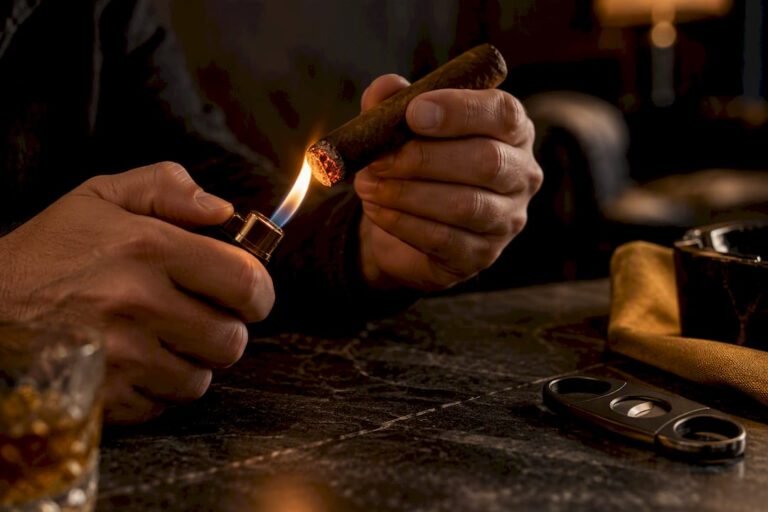
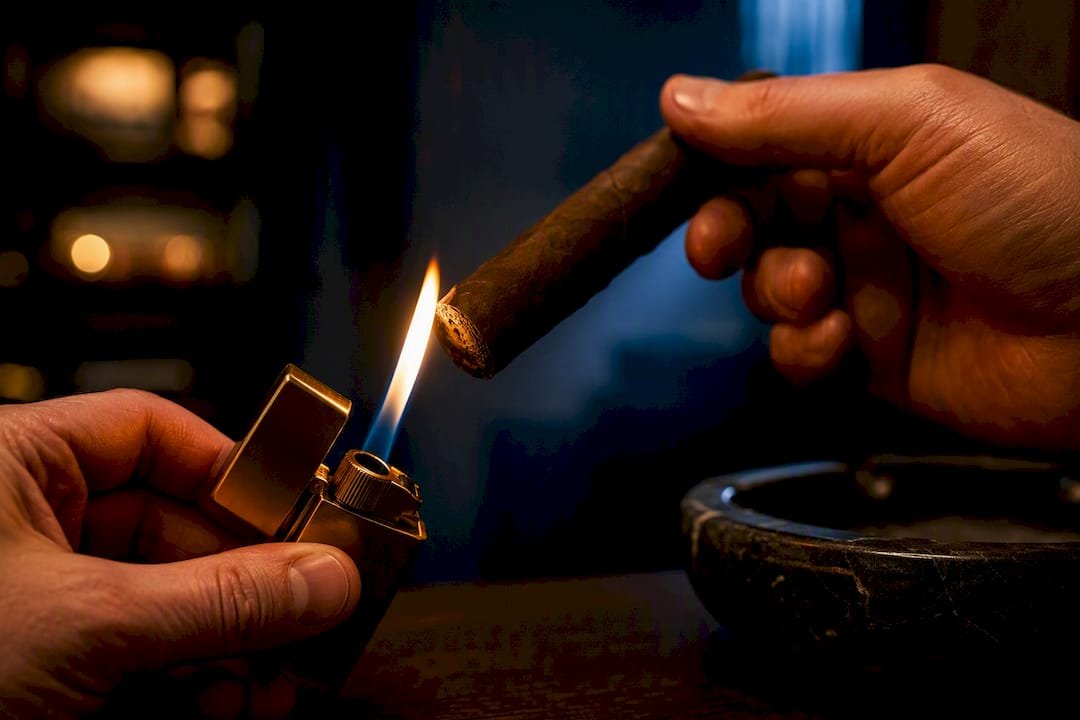
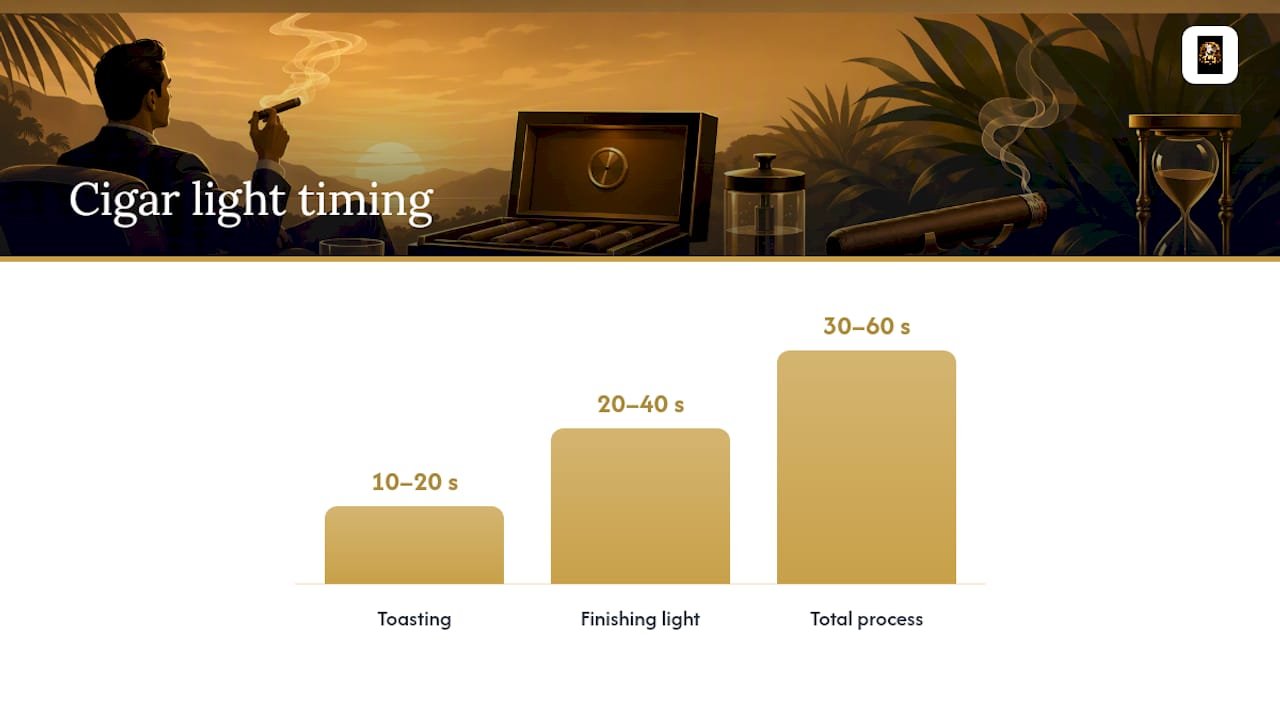
The toast-then-light method works like toasting a marshmallow: hold the foot just above the flame, not in it, and rotate the cigar until the entire rim glows orange. Only then do you bring it to your mouth and draw gently while rotating again, checking that the ember has formed a complete, even ring. The whole process runs about 30 to 60 seconds, roughly 10 to 20 seconds toasting and another 20 to 40 seconds finishing the light.
Tool choice matters more than most new smokers realize:
- Butane lighters burn cleanly and give you a controllable flame.
- Long wooden matches (sulfurless) work well for a slower, more traditional light.
- Avoid Zippos, candles, and fluid lighters. Their fuel imparts an off-taste that ruins the first third of the cigar.
If one side lights and the other stays dark, don’t panic and don’t relight the whole foot. Just point the flame at the cold section for a few seconds while rotating slowly until it catches up to the rest of the ring.
Pro Tip: Hold the cigar at a slight angle away from the flame during toasting. Direct contact scorches the wrapper and can cause the canoeing problems you’ll read about below.
Is Your Cigar Too Humid to Stay Lit?
Moisture is the single biggest reason cigars go out over and over, even when your lighting technique is solid. A cigar that’s absorbed too much humidity burns cool and slow because the flame has to work through water content before it reaches the tobacco.
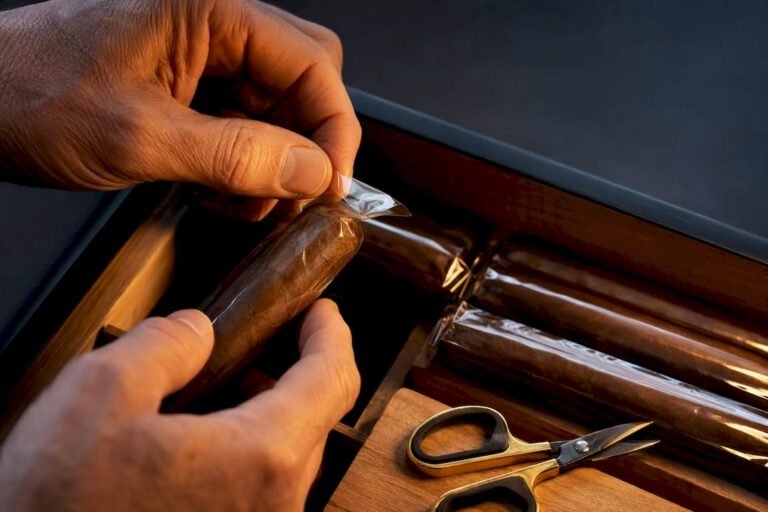
Storage humidity between 65% and 72% relative humidity is the range most experienced smokers and cigar guides agree on, with a stable temperature around 65 to 70°F. Above that range, cigars feel spongy, the wrapper looks slightly swollen, and the foot resists lighting no matter how long you toast it.
Signs you’re dealing with an over-humidified stick:
- The wrapper feels tacky or damp rather than smooth and dry.
- The cigar feels noticeably heavier or springy when you squeeze it gently.
- It refuses to hold an ember even after a proper toast-then-light.
If you’re mid-session and the cigar is only slightly damp, a longer toast and a patient, extended first light often gets it burning. Don’t try to force-dry a wet cigar by blasting it with flame. That scorches the wrapper without solving the underlying moisture problem.
For a stick that’s consistently too wet, reconditioning over several days in a slightly drier environment works better than any in-session fix. Set it aside, recalibrate your humidor, and give it time rather than trying to rescue it on the spot.
How Often Should You Puff to Keep a Cigar Lit?
Pacing is where most relight problems actually start, not the lighter. A cigar is not a cigarette. It needs a slower burn to develop flavor, but too slow and the ember simply dies from lack of oxygen and heat.
- Aim for one draw roughly every half a minute to a minute. This cadence keeps the ember warm without overheating the tobacco, a rule cigar industry veterans have repeated for decades.
- Watch for under-puffing. If you’re deep in conversation and let ten minutes pass, the cigar will go cold. Set a mental reminder or take a puff every time you finish a sentence in a conversation.
- Watch for over-puffing. Puffing every 10 to 15 seconds overheats the cigar, causing a harsh, hot taste and sometimes uneven burning on top of the lighting issue.
- Draw gently, not hard. A soft, even pull draws smoke through the tobacco without scorching one section faster than another.
Finding that middle rhythm is a skill you build over a handful of cigars, not something you nail on your first try.
Fixing Canoeing, Tunneling, and Other Uneven Burns
Canoeing (one side burning faster, leaving a lopsided ash line) and tunneling (the core burning ahead of the wrapper) usually trace back to uneven lighting, wind exposure, or how you’re holding the cigar. A cigar held at the same angle for twenty minutes straight often burns unevenly because one side gets more airflow than the other.
The fix is simple and doesn’t require relighting the whole thing:
- Rotate the cigar in your hand every few puffs to distribute heat evenly.
- If one side is clearly lagging, aim your flame at just that section and puff gently while rotating.
- For a stubborn cold spot, a brief, targeted toast fixes it faster than trying to relight the entire foot again.
Relighting itself is normal and nothing to stress over. Toast the foot until it glows, then draw gently to bring the ember back. Doing this within about two hours of it going out preserves the flavor best.
Pro Tip: If a cigar keeps canoeing or tunneling despite correct lighting and steady pacing, the problem might be inside the roll. Loose filler or an inconsistent binder can cause burn issues no technique will fix.
Tight Draw or Plugged Cigar: What’s the Difference?
A tight draw pulls hard but still moves air and smoke, just with more resistance than you’d like. A plugged cigar barely moves air at all, no matter how hard you pull, and often struggles to stay lit because it’s not getting enough oxygen.
Try these before giving up on the stick:
- Re-cut the cap slightly deeper. Sometimes the first cut just wasn’t clean.
- Switch cutters. A dull blade crushes the wrapper and tightens the draw further.
- Purge the cigar by blowing gently through the lit end. This clears tar and built-up combustion residue that’s choking the draw.
If none of that opens things up, the cigar is likely defective, and no amount of relighting will save it.
Storage Habits That Prevent Future Relights
Most relight problems trace back to storage, not smoking. A few consistent habits solve the issue before you ever light up.
- Calibrate your hygrometer every few months. Cheap analog units drift and can lie to you about actual RH.
- Keep your humidor steady in the 65 to 72% range and avoid opening it constantly, which causes swings.
- Rest new cigars for a few days after purchase before smoking them, letting them adjust to your humidor’s environment.
- Stock reliable accessories: a butane lighter for consistency, and cedar spills for a clean relight without touching your main flame source to the wrapper.
- Let ash build up rather than tapping it off constantly. It insulates the ember and helps regulate burn temperature.
What Thor’s Cigar Vault Knows About Keeping a Light
Premium and limited-edition cigars are offered alongside humidors and accessories aimed at solving exactly these problems: reliable butane lighters, cedar spills, and calibrated humidors that hold a steady RH. Product pages typically include details to help match gear to various storage setups. If you’re rebuilding your rotation after a run of relight headaches, well-constructed sticks from a curated sampler are a solid way to practice technique on cigars built for a consistent burn.
When Should You Just Accept a Relight?
Relighting is a normal part of smoking a cigar, not a failure. Do it within roughly two hours and the flavor holds up fine. Let it sit cold much longer than that, or relight it repeatedly over a long stretch, and you start tasting bitterness that no amount of purging fully clears. The better move is almost always fixing your technique, not blaming the stick.
— Kevin
Shop the Gear That Stops Relights Before They Start
Thor’s Cigar Vault gives you a curated shortcut past the trial and error most smokers go through with cheap lighters and uncalibrated humidors. Instead of guessing which butane lighter holds a flame in wind or which humidor actually maintains a steady 65 to 72% RH, you get gear and cigars picked for consistency from the start.

Browse the accessories collection for butane lighters, cutters, and cedar spills that make clean, even lights easier every time. Pair that with a properly calibrated humidor and you remove the over-humidification problem before it ever reaches your lighter. If you’re rebuilding confidence after a run of frustrating sessions, the Sinistro Sampler offers a practice-friendly lineup of well-constructed cigars, and new subscribers get 10% off their first order to start that rotation. Pick your accessories, grab a sampler, and enjoy a cigar that actually stays lit.
Sources
- Can You Relight a Cigar? Plus Tunneling, Tight Draw & More Fixes · Cigarista
- How to smoke a cigar properly: The ultimate beginner’s guide – The Manual
- How to light a cigar · Cigar Aficionado
FAQ
Can I still smoke a dry cigar?
Yes, though it will burn hot and fast, and the flavor often turns sharp or harsh. Draw slower and more gently than usual to keep the temperature down.
What is the 135 rule for cigars?
There’s no verified rule tied to reputable cigar guidance. If you’ve seen one referenced, treat it skeptically and stick to the 65 to 72% RH storage range and 30 to 60 second puff cadence covered in this guide.
How can I fix an unevenly burning cigar?
Rotate the cigar regularly and aim a brief, targeted flame at the slower side while puffing gently to even out the burn. If canoeing or tunneling keeps recurring across multiple cigars, the construction itself may be the cause.
Can you put a cigar out and relight it?
Yes, and it’s completely normal. Toast the foot until it glows, then draw gently to bring it back, ideally within about two hours for the best flavor.
Why does my cigar keep going out even with correct technique?
If lighting and pacing are both correct and it still won’t hold an ember, check storage humidity first, then consider that the leaf or construction inside that specific cigar may be inconsistent.