Fix a Cracked Cigar in Minutes With Pectin or Gum Arabic
A cracked cigar wrapper is usually salvageable if the damage is limited to a thin surface split. The most reliable fix is a thin layer of food-grade pectin or gum arabic brushed along the crack, or a small donor-leaf patch for larger tears. Deep structural damage, soft or crumbling tobacco, or signs of mold or beetle activity are not worth repairing. Whatever adhesive you use, apply it sparingly and stick to food-safe materials.
TL;DR:
- Most wrapper cracks result from moisture loss, especially when humidity dips below 15%, making the leaf brittle and prone to splitting.
- Rapid temperature changes and rough handling during cutting or transport significantly increase the risk of cracking or damaging the wrapper.
- Food-grade pectin is the preferred repair agent for small surface cracks due to its near flavorless profile and ease of control, while gum arabic offers stronger adhesion for patches.
- Repairs should be avoided on cigars with soft, crumbling, or moldy tobacco, as internal damage renders surface fixes ineffective and risky.
- Maintaining steady humidity using calibrated hygrometers and two-way packs like Boveda drastically reduces the likelihood of wrapper cracks in storage.
Table of Contents
- Why cigar wrappers crack: common causes
- Quick fixes you can try right now
- Step-by-step: repairing a wrapper with pectin
- When repairing a cigar is not worth it
- Preventing wrapper cracks before they happen
- Safety and flavor considerations after a repair
- Assessing how bad the crack really is
- Trimming and handling damaged areas correctly
- Getting the burn and draw right after a repair
- What a repair means for aging and long-term flavor
- A practical note on repairs and expectations
- Where to find humidors, humidity packs and replacement cigars
- Sources
- FAQ
Why cigar wrappers crack: common causes
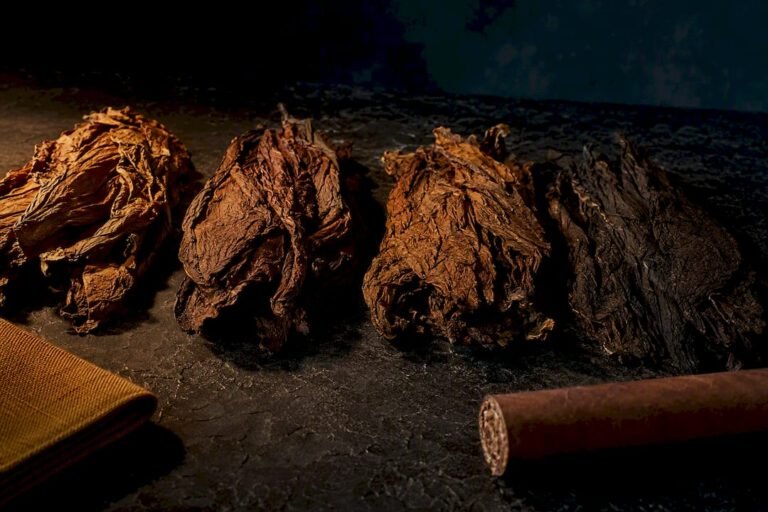
Most wrapper cracks trace back to moisture loss. Cured tobacco leaf stays pliable when its moisture content and the surrounding relative humidity stay in the right range. Growers and handlers often work with ambient RH above 70% during curing and handling to keep leaves from cracking, and they target roughly 15% moisture content for the wrapper itself, according to barn management guidance for curing tobacco. Once a wrapper drops below its ideal moisture range, it loses elasticity and splits under the smallest pressure.
Temperature swings compound the problem. A cigar that goes from a warm car to an air-conditioned house, or from a humidor to a cold mailbox, expands and contracts unevenly, and the wrapper often takes the strain first.
Handling matters just as much as climate. A dull cutter, a band ripped off too fast, or a cigar squeezed in a pocket can all open a crack that humidity alone never would have caused.
- Low relative humidity dries out the wrapper leaf and makes it brittle.
- Rapid temperature changes during storage or transport stress the leaf unevenly.
- Rough handling, including cutting, band removal, or squeezing, can tear the wrapper directly.
- Curing defects or, less commonly, tobacco beetle activity and mold can weaken the leaf from the inside.
Reliable RH readings matter more than most smokers realize. A cheap analog hygrometer can drift several points off true, so checking it with a 75% salt test before you trust it is worth the ten minutes it takes.
Quick fixes you can try right now
Once you know what caused the crack, the repair choice comes down to size and location. Here is what actually works, and where each option falls short.
- Pectin: A small amount of food-grade fruit pectin mixed with distilled water into a paste works well on hairline cracks, applies thin and discreetly, and has little effect on flavor when used sparingly, based on the pectin repair method described by CigarDojo.
- Gum arabic: Cigar rollers have long used gum arabic, also called acacia gum, as a natural glue for seams, and hobbyists on forums like the cigar community on Reddit recommend it for the same small-patch repairs.
- Donor-leaf patch: When the crack is wide or sits somewhere visible, a small scrap cut from another cigar’s wrapper, ideally the same blend, can be glued over the damage with pectin or gum arabic for a more finished repair.
- Household stopgaps: Chapstick or Vaseline can hold a crack together in a pinch, but both can leave a waxy residue and shift the taste of the smoke, so DIY adhesive guidance treats them strictly as last resorts.
- Saliva: Skip it. It introduces bacteria and moisture in the wrong places, and unlike a food-grade sealer it does nothing to actually hold the leaf together.
Pectin tends to be the better starting point for most cracks because it is nearly flavorless once dry and easy to control with a fine brush. Gum arabic holds slightly stronger for patch work, which makes it the better pick when you are gluing a donor scrap rather than sealing a hairline split. Save the household stopgaps for situations where you have neither on hand and need to finish a smoke without the crack spreading further.
Step-by-step: repairing a wrapper with pectin
This method works for most surface-level cracks and takes only a few minutes of hands-on time.
Materials: food-grade pectin, distilled water, a fine brush or toothpick, a clean cloth, and a donor wrapper scrap if you are patching rather than sealing.
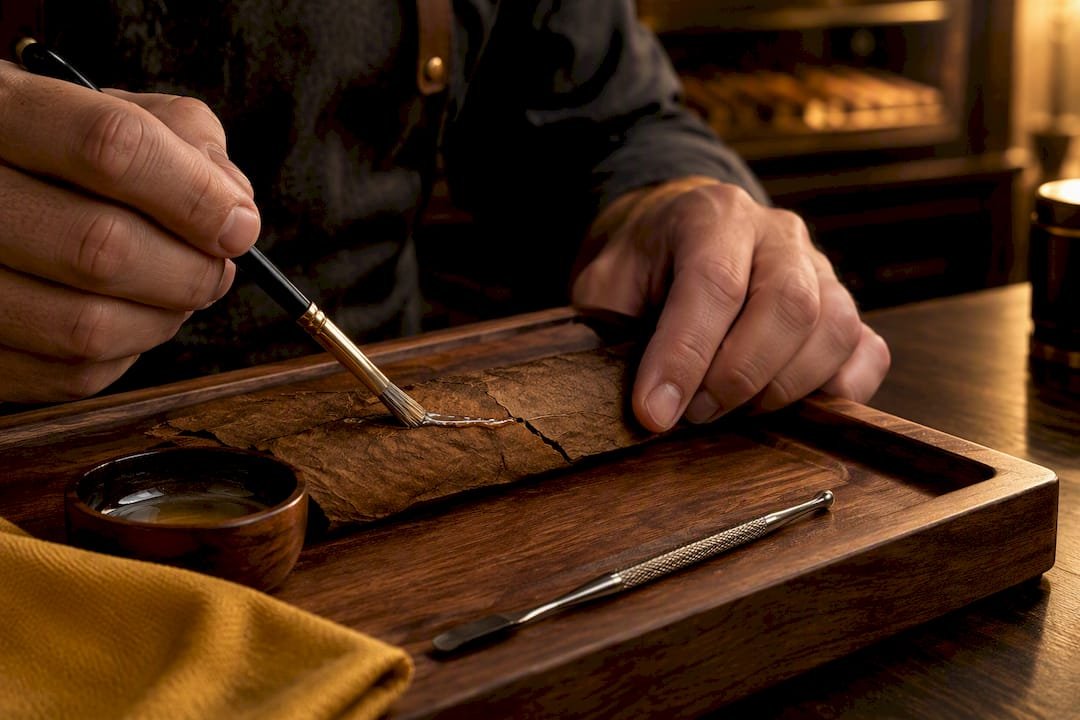
- Mix a small amount of pectin with a few drops of distilled water until you get a paste roughly the consistency of honey.
- If the cigar feels overly dry, give it a brief rehydration rather than a full soak, then let it rest on a stable, flat surface.
- Dip a fine brush or toothpick into the paste and run a thin line along the length of the crack.
- Gently press the wrapper back into alignment with a clean cloth, then wipe away any excess paste immediately.
- For a donor patch, spread a thin layer of paste on the underside of the scrap, align it over the damaged area, and hold it in place with a cigar band or a soft clamp until it sets.
- Let a simple crack seal for one to two minutes; give a patch longer, then check the draw and inspect the burn line before lighting.
This entire process follows the pectin-and-water repair method outlined by CigarDojo, which remains one of the most cited approaches among hobbyists for this kind of fix.
Pro Tip: Keep a small jar of premixed pectin paste in your travel case. A crack you catch within minutes is far easier to seal than one that has already started to lift and curl.
When repairing a cigar is not worth it
Some damage goes past what any adhesive can fix. If the filler or binder is exposed, if the wrapper feels soft or crumbles when you touch it, or if you spot small tunnels or a fine mold dust, repair is not the right move.
- Exposed filler or binder tobacco usually means the wrapper has failed structurally, not just cosmetically.
- Soft, spongy, or crumbling spots often signal deeper moisture damage that a surface patch will not hold.
- Visible tunnels or holes point to tobacco beetle activity, which can spread to other cigars nearby.
- A musty smell or fuzzy patches mean mold, and that cigar should be discarded rather than smoked.
If a cigar is only lightly compromised, cutting it down to a shorter smoke can salvage part of the experience even when a full repair is not practical. When in doubt, isolate the cigar from the rest of your collection and ask a tobacconist to take a look before you decide.
Preventing wrapper cracks before they happen
Most cracks are preventable with a few consistent habits around storage and handling.
Stable humidity is the foundation. Two-way humidification packs such as Boveda are widely used to hold that range automatically, since they release or absorb moisture as needed rather than requiring constant adjustment, according to Boveda’s own storage guidance. If you use an active humidification system instead, stick to distilled water, since tap water can leave mineral deposits that clog the unit and affect flavor over time, a point echoed in tobacco curing research.
- Keep humidor RH steady in the 65% to 70% range for most blends, checked with a properly calibrated hygrometer.
- Use two-way humidity packs like Boveda, or a well-maintained active humidifier filled only with distilled water.
- Recheck your hygrometer against the 75% salt test periodically, since even quality units drift over months of use.
- Avoid sudden temperature swings during travel by using a hard travel humidor or case with a Boveda pack inside.
- Handle cigars with a sharp cutter, delay removing the band until you are ready to smoke, and never squeeze or drop them.
- If you suspect a new purchase carries beetle eggs, a brief freezing quarantine is a common precaution in the hobby, per beetle prevention guidance from VDG Cigars.
None of these steps take much effort once they become routine, and together they remove most of the conditions that lead to a cracked wrapper in the first place.
Safety and flavor considerations after a repair
Stick to food-grade adhesives only. Pectin and gum arabic are both safe to smoke around because they are meant for consumption, while solvents, craft glues, or tape are not.
Less adhesive is always better. Too much paste creates a gummy spot that burns unevenly and can leave an odd, waxy taste in the smoke.
Light a repaired cigar carefully and pay attention to the first few draws. An uneven burn, a canoeing wrapper, or an off taste near the repair means you should stop and let it rest rather than pushing through.
Before lighting, run a quick check: smell the patch for anything unusual, give the cigar a gentle squeeze to confirm the structure feels sound, and test the draw to make sure nothing feels blocked.
Assessing how bad the crack really is
Before reaching for pectin or gum arabic, take thirty seconds to actually look at the damage. A hairline crack confined to the wrapper leaf, with the binder underneath still intact, is a simple fix. A crack that runs through to the binder or filler is a different problem entirely, and no amount of surface adhesive will hold it together for long.
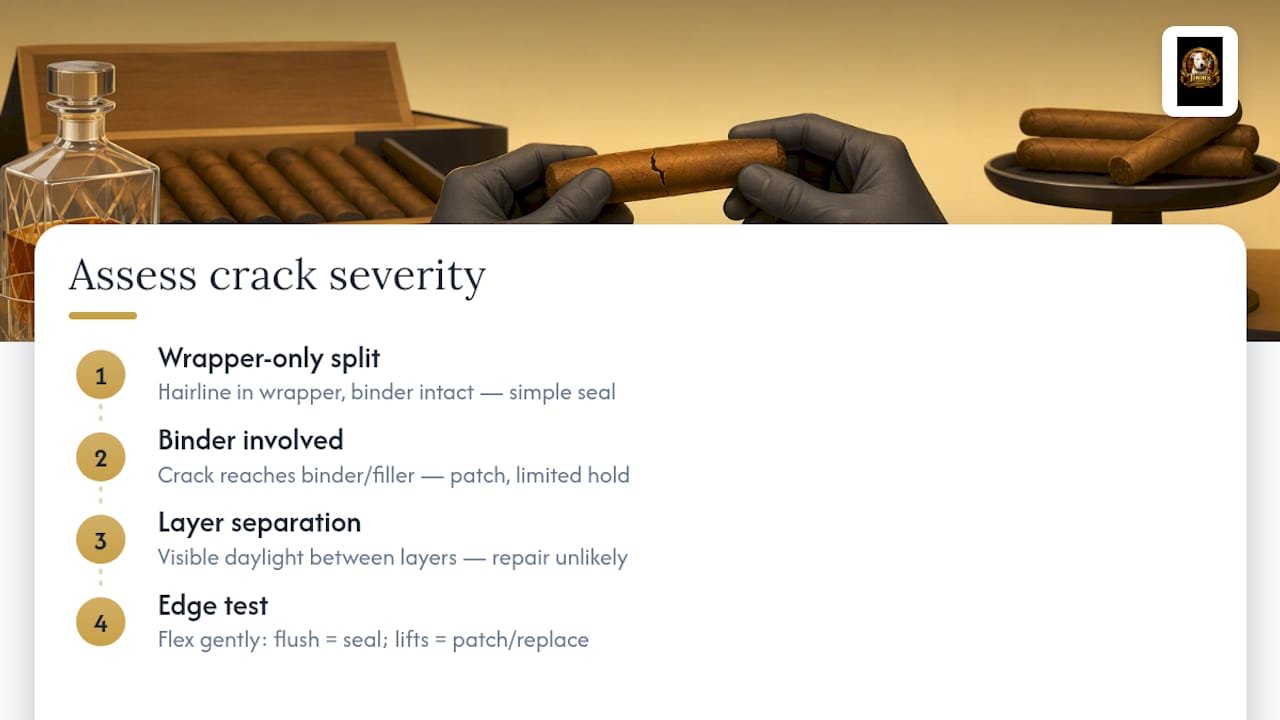
Location matters too. A crack near the foot rarely affects the draw and is mostly cosmetic. One running along the length of the cigar, especially near where you plan to cut, can open further the moment you clip the head. A crack circling the body is the most serious, since it can separate the wrapper from the binder entirely once you start smoking.
Gently flex the cigar near the crack, without forcing it, to see whether the edges want to separate further or stay put. If the wrapper lifts away easily or you can see daylight between the layers, you are looking at a patch job rather than a simple seal. If it stays flush and only the outer leaf shows a thin split, a quick pectin line will likely hold for the rest of the smoke.
Trimming and handling damaged areas correctly
If a crack has left a ragged edge or a small flap of loose wrapper, trimming it cleanly before repair gives the adhesive a better surface to bond to. A sharp pair of small scissors, the kind found in most cigar accessory kits, works better here than a cutter, since a cutter is built for a straight guillotine slice rather than careful trimming around an irregular tear.
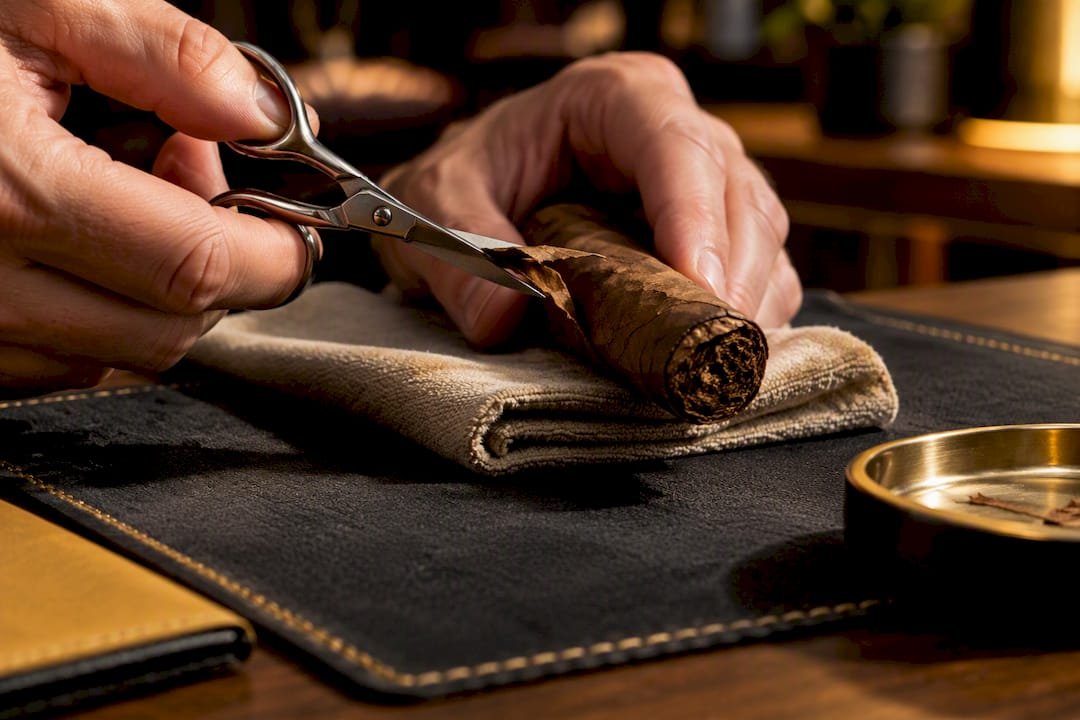
Handle the cigar by the body, not by pressing near the damaged spot, while you work. Resting it on a soft cloth rather than a hard countertop reduces the chance of putting new pressure cracks into an already weakened wrapper. If you are trimming loose wrapper near the head, work slowly and stop as soon as the edge feels stable, since removing more material than necessary can expose binder tobacco and turn a cosmetic fix into a structural one.
Clean scissors matter more than people expect. A dull or sticky blade can tear rather than cut, which turns a small flap into a longer crack in seconds.
Getting the burn and draw right after a repair
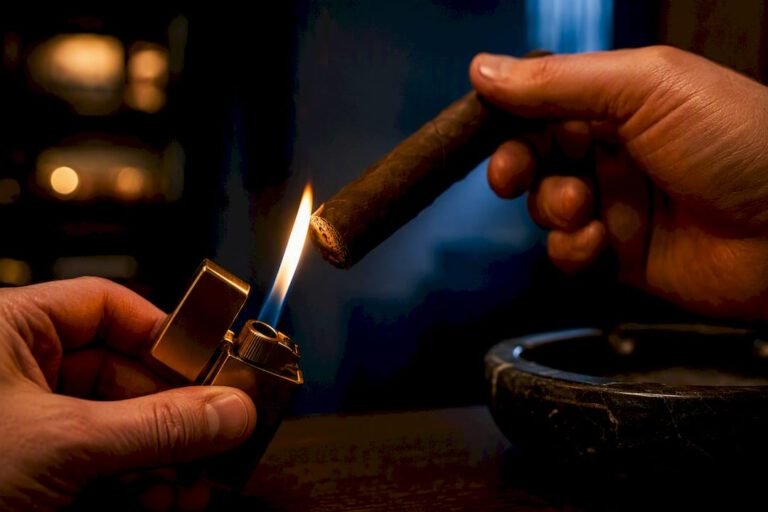
A repair that looks clean can still throw off how the cigar smokes if you rush the first light. Toast the foot a little more slowly than usual, rotating the cigar to bring the flame evenly around the repaired section rather than concentrating heat on one side.
Watch for canoeing, where one side burns faster than the other, near the patch or seal. A light touch-up with your lighter on the slow side usually corrects it within a minute or two.
Check the draw before you commit to smoking the whole cigar. A patch applied too thick can tighten the draw slightly, while a poorly aligned donor leaf can loosen it. If the draw feels noticeably off, a gentle draw poker inserted from the head can sometimes open a tight spot without disturbing the repair itself.
Most repaired cigars smoke close to normal once past the first inch, since the adhesive is confined to a small area and burns away along with the rest of the wrapper.
What a repair means for aging and long-term flavor
A cigar repaired for immediate smoking is not the same as one you plan to age for months or years. Pectin and gum arabic are stable once dry, but neither is designed to hold up over long-term storage the way an intact wrapper leaf does.
If a repaired cigar sits in a humidor for an extended period, the patched area may age slightly differently from the rest of the wrapper, since the adhesive does not breathe or interact with humidity the same way tobacco does. In practice, this usually shows up as a subtle difference in color or sheen at the repair site rather than any noticeable flavor problem.
The safest approach is treating a repaired cigar as one to smoke within a reasonable window rather than adding to a long-term aging rotation. If a wrapper cracked because of poor storage conditions to begin with, the rest of that batch may be at risk too, which makes it worth checking your humidor’s humidity levels before continuing to age similar cigars.
A practical note on repairs and expectations
Most cracks I have seen fixed came down to catching them early and not overdoing the adhesive. A thin, patient repair almost always beats a thick, rushed one. If you run into damage that looks beyond a home fix, whether that means a structural split or something that looks like beetle activity, you can purchase humidors, humidification packs, cutters, and replacement cigars from an online supplier if you need to start fresh. Reach out to support if you run into an unusual case.
— Kevin
Where to find humidors, humidity packs and replacement cigars
If the crack turned out to be beyond saving, or you would rather prevent the next one, you can find what you need for both online. Better storage now means fewer repairs later, and a curated replacement is often just a click away if a favorite cigar did not survive.

- Browse humidors built to hold steady humidity for long-term storage.
- Check accessories for cutters, travel cases, and Boveda-compatible humidification.
- Replace a lost cigar from our cigars collection or a curated sampler pack.
Sources
- How to repair a damaged cigar — CigarDojo
- Barn management for curing Connecticut Broadleaf — University/extension paper
- Storing cigars 101 — Boveda (official site)
FAQ
Can I still smoke a cracked cigar?
Yes, in most cases, as long as the crack is a surface-level wrapper split rather than damage reaching the binder or filler. Repair it first with a thin pectin or gum arabic seal, or simply smoke it carefully if the crack is small, since a minor split rarely affects flavor once lit.
How do I fix a dry cigar quickly without a humidor?
A quick fix is a brief, gentle rehydration rather than a soak, using a slightly damp paper towel in a sealed plastic bag for a short period rather than direct water contact. This is a stopgap, not a long-term fix, and the cigar should go into proper humidity-controlled storage as soon as possible afterward.
What causes a cigar to crack?
Low relative humidity and moisture loss are the leading causes, since dry wrapper leaf loses its elasticity and splits under normal handling, according to tobacco curing research. Rapid temperature changes, rough handling during cutting or band removal, and less commonly, curing defects or beetle damage, round out the main causes.
What glue do they use on cigars?
Food-grade fruit pectin mixed with distilled water is a common choice for small wrapper repairs, as described in CigarDojo’s repair guide. Gum arabic, the traditional roller’s glue, is another widely used option, especially for patching in a donor-leaf scrap.