

Cigar Sickness Relief: Sugar, Electrolytes, and 1–2 Hour Recovery
If you feel nauseous or dizzy after a cigar, stop smoking, get fresh air, sit or lie down, and sip fluids if you can. A sugary drink or a bit of sugar under the tongue often helps within minutes. If you notice trouble breathing, a seizure, severe vomiting, or chest pain, call poison control at 1-800-222-1222 or get emergency help right away.
TL;DR:
- Most cigar sickness is avoidable by pacing puffs, eating beforehand, staying hydrated, and choosing milder cigars suited to your experience level.
- Symptoms typically appear within 15 minutes to an hour and usually resolve in one to two hours with rest; severe cases can last up to 24 hours.
- In case of serious symptoms like trouble breathing, seizures, or persistent vomiting, promptly contact poison control or seek emergency medical help.
- Using sugar under the tongue or drinking a sugary or electrolyte beverage may provide quick relief, but there is no specific antidote for nicotine poisoning.
- Preparing a small kit with water, a sugary drink, and a chair before smoking helps manage mild symptoms and avoid escalation.
Table of Contents
- Why cigar sickness happens and who’s most vulnerable
- How to prevent cigar sickness: pacing, preparation, and simple habits
- Fast remedies people use and what authorities say about them
- Red flags and how to get professional help
- Typical symptom timeline and monitoring during recovery
- Publisher practical tips and resources
- A short perspective on smoking smarter
- A safer way to explore new cigars
- Sources
- FAQ
Why cigar sickness happens and who’s most vulnerable
The culprit behind most cigar-related nausea is nicotine, a fast-acting toxin that the body absorbs through the mouth and lungs during a smoking session. Even experienced smokers can overshoot their tolerance, and the CDC/NIOSH lists nausea, vomiting, dizziness, sweating, headache, weakness, palpitations, and blood pressure changes as common signs of mild nicotine exposure.
Certain habits make an episode far more likely. Puffing too fast, inhaling cigar smoke instead of just tasting it, chain-smoking one stick after another, and smoking on an empty stomach all raise how much nicotine reaches your bloodstream at once. Mixing in alcohol compounds the effect, since both substances tax circulation and hydration at the same time.
Product choice matters too. Newer smokers who jump straight into a large, full-strength cigar often get hit harder than someone easing in with a milder blend.
A few less common but important scenarios round out the picture:
- Tobacco farm workers can absorb nicotine through the skin, a condition known as green tobacco sickness.
- Young children face serious risk from accidental ingestion of cigars, cigarette butts, or nicotine products, since nicotine is toxic even in small doses and children are especially sensitive.
How to prevent cigar sickness: pacing, preparation, and simple habits
Most cigar sickness is preventable with a few habits built into your routine before you ever light up.
- Take small, spaced-out puffs and never inhale the smoke into your lungs, treating the cigar more like a tasting experience than a cigarette.
- Keep sessions shorter, especially if you’re still learning your tolerance, rather than pushing through a long smoke out of habit.
- Eat a light meal or snack beforehand. Smoking on an empty stomach is one of the fastest routes to nausea.
- Drink water before and during your session, and go easy on alcohol, since dehydration and drinking both amplify nicotine’s effects.
- Match the cigar to your experience level. A milder, shorter cigar or a sampler is a smarter way to explore new strengths than jumping into something full-bodied.
Pro Tip: Pack a small kit before you smoke, water, an electrolyte or sugary drink, a sugar packet, and a chair, so you’re ready the moment symptoms start.
Fast remedies people use and what authorities say about them
If symptoms show up, work through a simple sequence. Stop smoking immediately, step outside for fresh air, and sit or lie down so you don’t fall if you feel lightheaded. From there:
- Put a small amount of sugar under your tongue or sip a sugary drink, a trick many smokers swear by for quick relief.
- Follow with an electrolyte drink to help replace fluids and minerals.
- Try ginger or peppermint tea if nausea lingers, both commonly used for settling an upset stomach.
- Rest until symptoms ease, since pushing through and continuing to smoke only makes things worse.
Sugar likely helps because nicotine can drop blood sugar and trigger a stress response that mimics low glucose. That gives a plausible, practical reason it works for many people, but it isn’t a medical antidote.
No treatment reverses nicotine poisoning directly. MedlinePlus states plainly that there is no specific antidote for nicotine poisoning and that care is supportive, meaning doctors treat the symptoms rather than counteract the substance itself.
A few cautions matter here. Don’t force vomiting unless a poison control expert tells you to, and never give food or drink to someone who is unconscious. Avoid antacids as a home fix too, since Poison Control notes that changing stomach pH can actually affect how nicotine is absorbed, doing more harm than good.
Red flags and how to get professional help
Most cigar sickness resolves with rest, but some signs mean it’s time to call for help immediately. Watch for:
- Severe or repeated vomiting that won’t stop.
- Confusion, fainting, or altered mental status.
- Trouble breathing or chest pain.
- Seizures.
- A racing heart rate or unusually low blood pressure that doesn’t settle.
If any of these appear, call poison control at 1-800-222-1222 or use webPOISONCONTROL for free, confidential guidance based on age, amount smoked, and symptoms. Have details ready: what was smoked, roughly how much, and when symptoms started.
Hospitals treat nicotine poisoning with supportive care, IV fluids, anti-nausea medication, oxygen, or airway support as needed. Activated charcoal is sometimes used, but only under clinical supervision with the airway secured, never as a home remedy. There is no shortcut antidote, which is exactly why getting expert guidance quickly matters more than guessing at home fixes.
Typical symptom timeline and monitoring during recovery
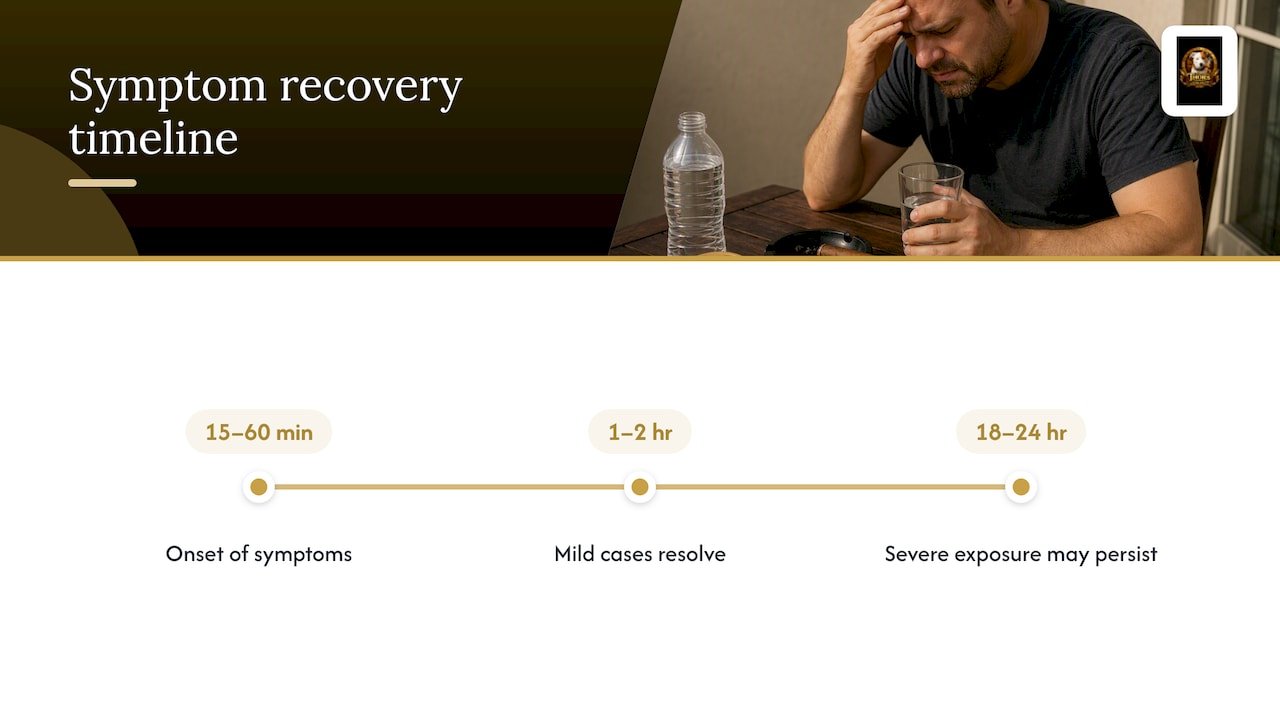
Nicotine symptoms usually start within 15 minutes to an hour of smoking. For most mild cases, the CDC/NIOSH notes that symptoms resolve in about one to two hours, especially once you stop smoking and rest. Severe exposure is different: effects can linger for 18 to 24 hours, so it’s worth monitoring yourself even after you start feeling better.
While recovering, keep sipping water, eat small bland foods once your stomach settles, and avoid pushing back into activity too fast. If symptoms return the next day or feel different, like a lingering headache paired with chills or fatigue, consider whether alcohol, other smoke exposure, or an unrelated illness is actually to blame, and check in with a primary care provider if you’re unsure.
Publisher practical tips and resources
A little preparation goes a long way toward a session that ends with a good cigar instead of a bad afternoon. Before lighting up, run through a short checklist:
- Choose a size and strength that matches your experience, not just what looks impressive.
- Hydrate before you start and keep water nearby throughout.
- Pace your puffs and take breaks between them.
- Keep a sugar packet or electrolyte drink within reach just in case.
- Sit down for the full session rather than smoking while active.
Smaller formats and sampler packs are useful tools here, since they let you test a new blend’s strength without committing to a long, high-nicotine smoke. If you’re unsure what size or strength fits your tolerance, product pages and staff guidance can help narrow the choice before you buy.
A short perspective on smoking smarter
Cigars reward patience more than intensity. The point is flavor, not a nicotine rush, and most sickness comes from treating a cigar like a race instead of a slow, deliberate habit. Pace yourself, stay hydrated, and don’t hesitate to stop and seek help if something feels seriously wrong.
— Kevin
A safer way to explore new cigars
Testing a new strength doesn’t have to mean gambling on a full-size cigar you’ve never tried. Samplers and smaller formats let you sample a range of blends in manageable amounts, so you learn your tolerance without committing to a long, heavy session. Thor’s Cigar Vault carries curated samplers and smaller-format options like the Artesano Del Tobacco The Squid, alongside accessories that support a more comfortable session.

- Browse the full cigar selection to find milder options suited to your experience.
- New customers may find promotions such as discounts when they sign up for updates.
- This is a shopping option for building a smarter collection, not a medical treatment, so pair it with the prevention habits above.
Visit Thor’s Cigar Vault to start browsing samplers and find a size that fits how you actually want to smoke.
Sources
This guide draws on nicotine exposure guidance from CDC/NIOSH, treatment information from MedlinePlus, and first-aid recommendations from Poison Control and Poison.org. For immediate help, call 1-800-222-1222 or use webPOISONCONTROL online. Readers weighing quitting nicotine altogether can also find background in this step-by-step cessation guide.
This article is general information, not a substitute for advice from a qualified doctor. Consult a qualified healthcare professional about your own circumstances before acting on anything here.
FAQ
How can I get rid of nicotine sickness quickly?
Stop smoking right away, move to fresh air, and sit or lie down if you feel dizzy. Sipping a sugary drink or an electrolyte beverage often eases symptoms within minutes, though MedlinePlus notes there’s no specific antidote, just supportive care and time.
How long can cigar sickness last?
Mild symptoms typically ease within one to two hours once you stop smoking and rest, according to CDC/NIOSH. Severe exposure can take 18 to 24 hours to fully resolve, so keep monitoring yourself even after you start to feel better.
What is a cigar hangover?
A cigar hangover describes the lingering nausea, headache, and fatigue some people feel after smoking too much or too fast, driven mainly by nicotine’s effects on the body. It’s not a medical term, but it maps closely to the mild nicotine exposure symptoms described by CDC/NIOSH.
Why does sugar help nicotine sickness?
Nicotine can affect blood sugar and trigger a stress response that feels similar to a glucose crash, which is likely why a sugary drink or a bit of sugar under the tongue brings quick relief for many people. It’s a helpful home comfort measure, not a clinical treatment, since supportive care remains the standard approach according to MedlinePlus.
When should I call poison control after a cigar?
Call 1-800-222-1222 or use webPOISONCONTROL if symptoms are severe or don’t improve with rest, including repeated vomiting, confusion, trouble breathing, or a seizure. Poison Control can give free, immediate guidance based on your specific symptoms and what you smoked.