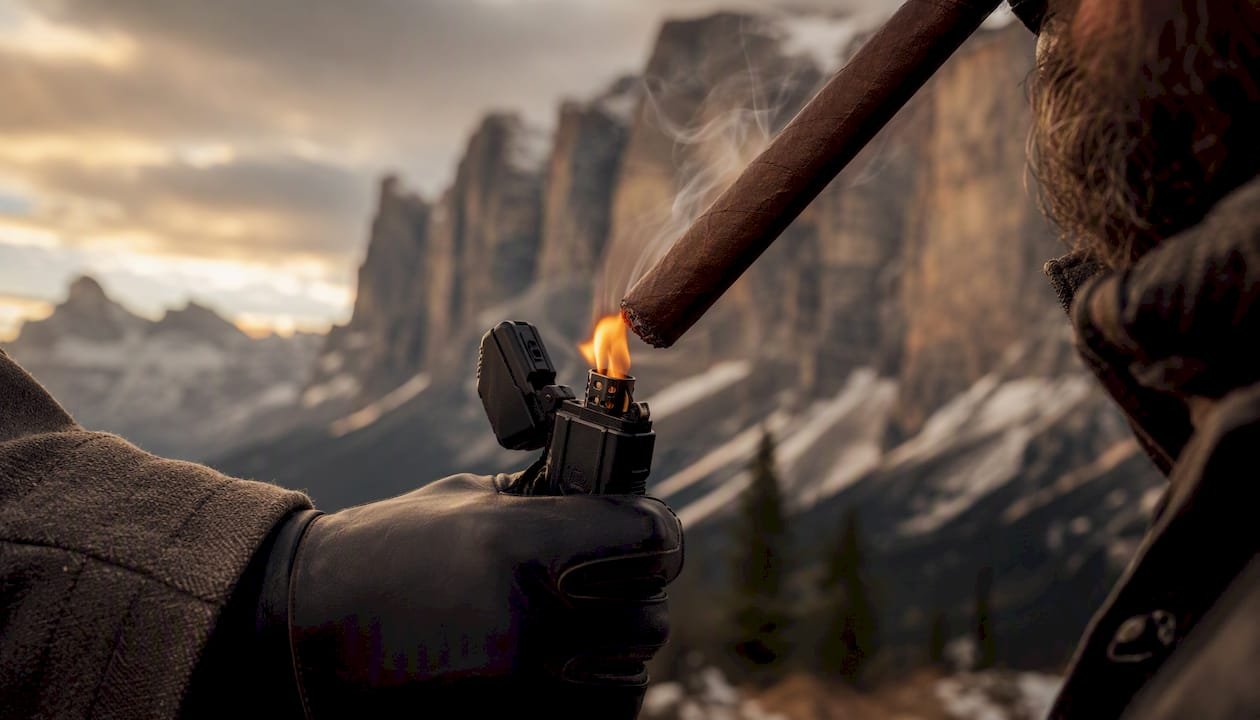
Cigar Lighter Altitude: What Actually Works Up High
For reliably lighting cigars above roughly 9,000 feet, your best setup is a dual-jet or single-jet torch lighter as your primary, a soft-flame (valve-driven) lighter as your backup, and waterproof matches or a plasma/electronic lighter as your non-gas insurance.
That combination comes from real hands-on altitude tests, not marketing copy. Independent testing found that non-torch soft-flame lighters actually outperformed several torch models at high altitudes under cold and wind, because torch jets can push fuel without igniting when oxygen is too thin. Carrying both types covers you when one fails.
Quick what-to-carry checklist:
- Primary: A refillable single-jet or dual-jet torch lighter with a pressure-regulated valve and visible fuel window
- Backup: A soft-flame (non-torch) butane lighter or a charcoal/pipe-style lighter with multiple air intake vents
- Non-gas backup: Waterproof/stormproof matches or a plasma arc (electronic) lighter that needs no fuel or oxygen
Key Takeaways
Torch lighters are the right primary choice at elevation, but independent tests show soft-flame and multi-vent designs often outperform torches above 9,000 feet in cold and wind, making redundancy the single most important preparation.
| Point | Details |
|---|---|
| Carry two lighter types | A torch primary plus a soft-flame or multi-vent backup covers the failure modes each type has at altitude. |
| Soft-flame can outperform torches | Independent testing found non-torch lighters lit at every elevation tested while several torches failed above 9,000–13,000 ft. |
| Design features matter more than claims | Air intake vents, pressure-regulated valves, and visible fuel windows predict field reliability better than advertised altitude ratings. |
| Warm the lighter before use | Keeping a butane lighter in an inner pocket for 10–15 minutes before ignition restores vapor pressure lost to cold. |
| Thor’s Cigar Vault for travel accessories | The shop carries lighters, carry cases, and premium cigars suited for high-altitude travel kits. |
Table of Contents
- Which lighter types perform best at high altitude?
- How does altitude make your lighter fail?
- What features should you look for when buying a high-altitude lighter?
- How to use and care for your lighter at altitude
- What are the TSA and airline rules for carrying cigar lighters?
- What do hands-on tests and user reports show about altitude thresholds?
- What should you carry for a high-altitude cigar session?
- Where the evidence is strong and where gaps remain
- A note on weighing the evidence
- Thor’s Cigar Vault has the accessories for your next mountain trip
- Sources
- FAQ
Which lighter types perform best at high altitude?
Not all ignition systems respond the same way to thin air. Here is how the main categories stack up as elevation climbs.
- Dual-jet torch lighters generate a concentrated, wind-resistant flame and are the go-to for most cigar smokers at elevation. S.T. Dupont’s dual-jet model, for example, carries manufacturer claims of performance at high altitudes in harsh temperatures. The limitation: above roughly 12,000–13,000 feet, even strong torches can sputter if oxygen is critically low.
- Single-jet torch lighters are lighter to carry and often more fuel-efficient. Vector’s Aztech, Epic, and Boom models advertise altitude ratings between 12,000 and 20,000 feet, though those are manufacturer figures. Independent tests show more variation.
- Soft-flame (valve-driven) lighters are the underdog story at extreme elevation. They draw less fuel per ignition attempt and do not rely on a pressurized jet, so they can light when a torch jet is pushing fuel into air too thin to combust. The tradeoff is wind sensitivity.
- Charcoal/pipe-style lighters with multiple air intake vents, like the Colibri Daytona, are worth noting. The Colibri Daytona’s multiple air intake vents actively channel oxygen to the ignition area, and reviewers reported first-try ignition in altitude conditions. The company claims capability up to 12,000 feet.
- Disposable BIC-style lighters work reasonably well at moderate elevation but are not refillable and offer no pressure regulation. Treat them as emergency backups only.
- Plasma/electronic arc lighters need no butane and no oxygen for combustion, making them theoretically altitude-proof. The catch: they produce a small, low-heat arc that struggles to toast a thick cigar foot evenly. Useful as a last resort, not a primary.
Manufacturer altitude claims exist across nearly every category. Independent tests consistently show more failures, sooner, than the marketing suggests.
How does altitude make your lighter fail?
The core problem is simple: as elevation rises, air pressure drops and oxygen density falls. A lighter that ignites easily at sea level is working with roughly 21% oxygen in the air. At 10,000 feet, that same air contains meaningfully less oxygen per cubic foot, and the fuel-to-air ratio that your lighter was calibrated for no longer holds.
Here is what actually happens at ignition when altitude is working against you:
- You press the valve. Butane flows from the tank at its rated pressure.
- The piezo or flint sparks. Ignition requires a combustible mix of fuel vapor and oxygen.
- If oxygen density is too low, the spark fires but the fuel-air mix does not sustain a flame. The torch pushes fuel out unburned.
- Cold compounds this. Butane’s vapor pressure drops sharply in cold temperatures, meaning less fuel reaches the jet even when you press the valve fully.
- Wind strips heat and oxygen away from the ignition point before the flame can stabilize, especially with torch jets that project outward.
The result is a lighter that clicks, hisses, and produces nothing. Or one that lights for a second and dies. Technical guidance from field sources suggests most butane lighters perform well up to about 5,000 feet, begin to degrade around 7,000 feet, and fail frequently above 9,000–10,000 feet, though humidity and temperature add variability.
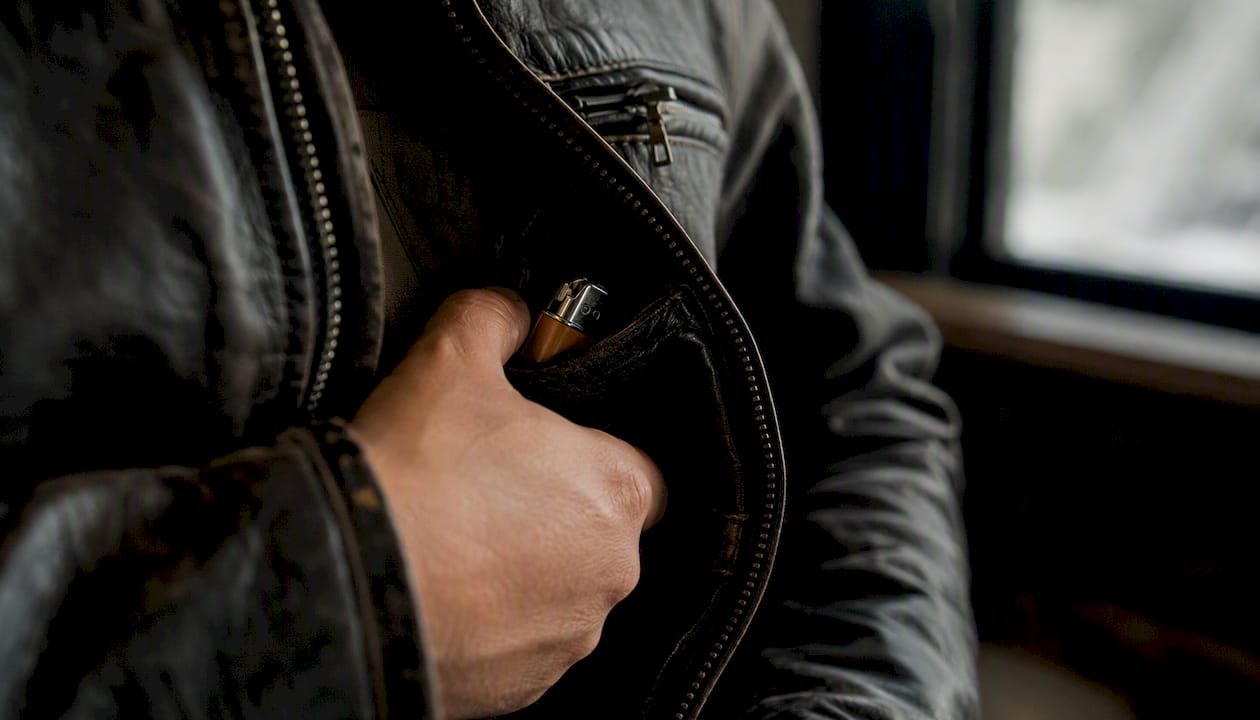
Pro Tip: Warm your lighter in an inner jacket pocket for 10–15 minutes before you need it. Cold butane tanks produce less vapor pressure, which starves the flame. Warming restores vapor pressure and dramatically improves first-try ignition. Do not hold the lighter directly against your skin or near an open flame to warm it — a gentle pocket warm is all you need.
What features should you look for when buying a high-altitude lighter?
The most predictive features for altitude reliability are a pressure-regulated valve, multiple air intake vents, a visible fuel window, an accessible flame adjuster, and a metal body. Here is why each one matters.
Features that earn their place:
- Pressure-regulated valve: Compensates for lower atmospheric pressure by maintaining consistent fuel delivery. Without it, fuel flow becomes erratic as elevation rises.
- Multiple air intake vents: The Colibri Daytona’s six-vent design is a textbook example. More vents mean more oxygen delivered to the combustion zone, directly countering thin-air ignition failure.
- Visible fuel window: Lets you check fuel level before a hike, not after a failed ignition at 11,000 feet. The XIKAR Ion’s fuel window is specifically cited by reviewers as a practical field advantage.
- Accessible flame adjuster: You may need to dial the flame up slightly at altitude to compensate for reduced combustion. A recessed or tool-only adjuster is a liability in the field.
- Metal body: Retains warmth better than plastic, which helps maintain butane vapor pressure in cold conditions.
- Fuel capacity: A larger tank means fewer refills on a multi-day trip. Pair it with a small, approved butane canister in your checked bag.
- Large ignition mechanism: The XIKAR Ion’s oversized ignition panel is designed for gloved or cold-stiffened hands. Small piezo buttons are easy to miss when your fingers are numb.
Simple rating criteria when comparing specs:
- Does the manufacturer publish an altitude-test figure, and is it independently verified or just marketing copy?
- Does the design include at least two of the above features (vents, regulated valve, fuel window)?
- Is it refillable with standard premium butane?
- Are there independent reviews or hands-on tests, not just product pages?
Dealbreakers to avoid:
- Fragile piezo ignition with no manual flint override. If the piezo fails at 12,000 feet, you have nothing.
- Non-refillable designs. Disposables cannot be topped off mid-trip.
- Plastic bodies with no insulation. They lose heat fast and reduce butane vapor pressure in cold air.
- Lighters with no flame adjuster. You cannot tune them for altitude conditions.
The XIKAR Stratosphere is marketed with an altitude-tested claim of 10,000 feet and includes a fuel window and windproof torch flame. Treat that figure as a manufacturer baseline, not a ceiling, and test before you commit to a summit.
How to use and care for your lighter at altitude
Simple field habits close the gap between a lighter that “should” work and one that actually does.
Field checklist for lighting a cigar at elevation:
- Warm the lighter in your inner jacket pocket for at least 10 minutes before use.
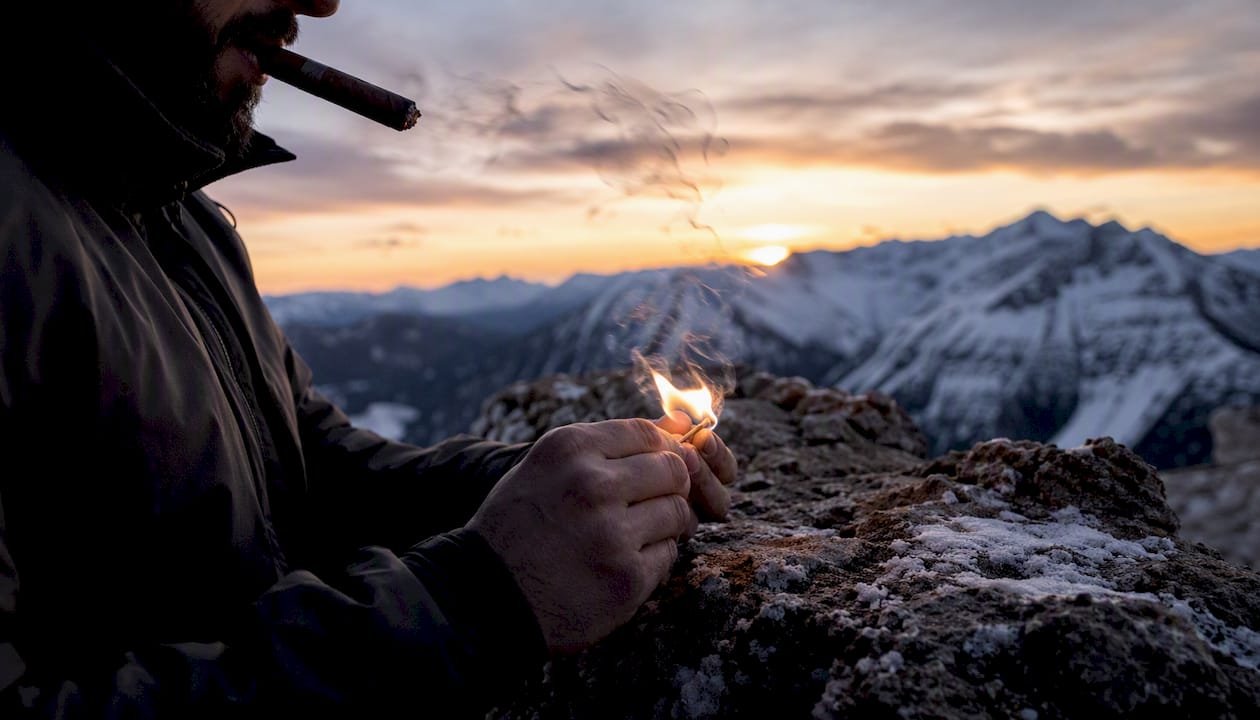
- Move to a sheltered spot or crouch to block wind. Even a slight wind break makes a measurable difference.
- Test-ignite before bringing the cigar to the flame. If it sputters, re-warm and try once more.
- Hold the flame below the cigar foot and rotate the cigar slowly. Do not jam the foot into the flame.
- If the lighter sputters mid-light, pull back, re-prime by pressing the valve briefly without sparking, then re-ignite.
- If two attempts fail, switch to your backup. Do not drain the primary trying to force it.
Maintenance that prevents altitude failures:
- Keep the fuel tank at least half full before any elevation gain. A near-empty tank has less pressure and less vapor.
- Check the seal around the fuel valve periodically. A worn seal bleeds pressure and causes erratic flow.
- Do not over-tighten the flame adjuster screw. Stripping it means you cannot tune the flame in the field.
- Use premium triple-refined butane when refilling. Impurities clog jets and reduce ignition reliability.
- Store lighters horizontally in a padded case during hikes to protect the ignition mechanism from impact.
Pro Tip: If a torch lighter is clicking but not igniting at altitude, try bleeding the tank briefly (press the fuel valve with a small tool to release any air pocket), then refill with a small amount of butane and re-attempt. An air lock in the tank is a common cause of ignition failure that has nothing to do with elevation. Field guides for high-altitude use consistently flag this as a fixable problem before you reach for the matches.
Know when to switch. If you are above 12,000 feet in wind and cold and your torch has failed twice, the match or electronic backup is the right call. Pride in your lighter is not worth a ruined cigar.
What are the TSA and airline rules for carrying cigar lighters?
The short answer: one common lighter is generally allowed in carry-on luggage under TSA rules, but torch lighters face stricter treatment, and you must confirm your specific airline’s policy before you fly.
Key rules to know:
- Common lighters (BIC-style, soft-flame): TSA generally permits one per passenger in carry-on. These may not go in checked baggage.
- Torch lighters: TSA classifies most torch lighters as prohibited in both carry-on and checked baggage unless they are in a DOT-approved case. Some airlines apply additional restrictions.
- Butane fuel canisters: Not permitted in carry-on or checked baggage on commercial flights. Refill at your destination or ship fuel ahead via ground freight.
- Checked baggage: Lighters of any type are generally prohibited in checked bags. Keep your lighter on your person or in carry-on.
- International travel: Rules vary by country and airline. U.S. TSA rules apply only to flights departing from U.S. airports.
Official guidance: TSA’s published rules allow one lighter in carry-on under specific conditions, but torch lighters are frequently flagged at security. Always check the TSA website and your airline’s specific policy before travel — rules can change, and a confiscated lighter at the gate is a poor start to a mountain trip. Confirm the current rules at Tsa before every trip.
Practical packing tips:
- Use a DOT-approved lighter case if you carry a torch model. Some cases are specifically designed to meet airline requirements.
- Drain or lock the fuel valve on any lighter before packing, even in carry-on.
- Pack waterproof matches in your carry-on as a compliant, no-hassle backup. They are almost universally permitted.
- Never pack butane canisters in any bag you check. Buy butane at your destination when possible.
What do hands-on tests and user reports show about altitude thresholds?
The most useful data point in this space comes from a Police1 hands-on altitude test that evaluated multiple lighter types at 1,000-foot intervals starting around 9,000 feet. The finding that surprises most cigar smokers: non-torch soft-flame lighters lit at every elevation tested, while several torch models failed to ignite above roughly 10,000–13,000 feet under cold and wind.
Altitude performance patterns from tests and user reports:
| Elevation Band | Typical Performance |
|---|---|
| Sea level to 5,000 ft | Nearly all butane lighters perform reliably |
| 5,000–7,000 ft | Minor degradation possible; most lighters still work |
| 7,000–9,000 ft | Noticeable failures begin; torch lighters may sputter |
| 9,000–12,000 ft | Torch failures become common; soft-flame and vented designs often outperform |
| Above 12,000 ft | Most butane lighters unreliable; non-gas backups recommended |
Manufacturer claims in this space vary widely. Vector’s single-flame torch models carry advertised altitude ratings up to 20,000 feet, while the XIKAR Ion’s maker claims altitude testing to 14,000 feet. Those figures are manufacturer-supplied and have not been independently replicated in published tests at those exact elevations.
User reports from forums and field blogs add texture. Smokers at Colorado ski resorts (roughly 9,000–11,000 feet) frequently report that torch lighters work fine in calm, mild conditions but fail in wind or cold. The same lighter that works perfectly in a lodge at 10,000 feet may refuse to ignite on an exposed ridge at the same elevation.
The Colibri Daytona’s multi-vent design stands out in reviewer notes. Its six air intake vents are credited with reliable first-try ignition in altitude conditions, and the company’s 12,000-foot claim aligns with what reviewers observed in use.
What should you carry for a high-altitude cigar session?
Carry a dual-jet or single-jet torch lighter as your primary, a soft-flame or multi-vent charcoal-style lighter as your backup, and waterproof matches or a plasma arc lighter as your non-gas insurance.
High-altitude cigar kit checklist:
- Refillable torch lighter (dual-jet preferred) with pressure-regulated valve and visible fuel window
- Soft-flame or multi-vent backup lighter, fully fueled
- Waterproof or stormproof matches (at least one box)
- Small premium butane canister (in checked baggage or purchased at destination)
- Padded lighter case that meets DOT/airline requirements if flying
- Cigar cutter in a protective sleeve
A quick safety note: at high altitude, wind and dry air increase the risk of a flame flare-up if you over-prime a torch. Keep the flame adjuster at a moderate setting, not maximum, and always ignite away from your face and any dry brush or material.
Before you fly, confirm TSA and your airline’s current lighter rules. Policies update, and a torch lighter in the wrong bag means a confiscation, not a warning.
Where the evidence is strong and where gaps remain
What the research establishes clearly:
- Independent hands-on testing shows a consistent pattern of torch lighter failures above roughly 9,000–13,000 feet under cold and wind, with soft-flame and multi-vent designs often outperforming in those conditions.
- Design features (air intake vents, pressure-regulated valves, visible fuel windows, large ignition surfaces) correlate with better altitude performance across multiple independent reviews.
- Field techniques (warming, shielding, priming, carrying backups) are consistently recommended across independent sources and have a logical physical basis.
Where uncertainty remains:
- Manufacturer altitude claims (10,000 to 20,000 feet across various models) are not independently verified at those specific elevations in published tests. Treat them as design intent, not guaranteed performance.
- Independent altitude testing of cigar-specific lighters is limited. Most published tests cover general-purpose lighters; cigar lighter performance at extreme elevation is under-documented.
- Individual lighter condition, fuel quality, and specific weather conditions on a given day introduce variability that no published test fully captures.
U.S. travel rules:
- TSA rules for common lighters are relatively clear. Torch lighter rules are stricter and require DOT-approved cases.
- Airline-specific rules add a layer that TSA rules alone do not cover. Always check both before flying.
A note on weighing the evidence
The conventional wisdom in cigar circles is that a high-end torch lighter is always the right answer at altitude. The test evidence complicates that. A torch lighter is the right primary choice in most conditions, but the assumption that a premium torch will outperform everything else above 10,000 feet is not supported by the hands-on data. Soft-flame lighters and multi-vent designs genuinely outperformed torches in the cold, windy conditions that define most mountain smoking situations.
The other thing worth saying plainly: manufacturer altitude claims are marketing. A number like “altitude tested to 20,000 feet” tells you the design was engineered with altitude in mind. It does not tell you how it performs at 11,000 feet in 30 mph wind at 25°F. Those are different questions, and only independent tests answer the second one.
The practical takeaway is redundancy. No single lighter is the answer. The right kit is two different ignition types plus a non-gas backup, and the discipline to switch when the primary fails rather than burning through your fuel trying to force it.
Thor’s Cigar Vault has the accessories for your next mountain trip
This article is published by Thor’s Cigar Vault, a curated online shop for premium cigars and accessories. If you are building a travel kit for high-altitude smoking, the shop carries lighters, carry cases, and accessories selected for quality and field reliability.
Subscribers get 10% off their first order, which makes it a practical starting point if you are outfitting a kit from scratch. Whether you are pairing a travel lighter with a premium stick like the Artesano Del Tobacco The Squid or stocking up on accessories before a mountain trip, the Thor’s Cigar Vault shop has the inventory to match. Browse the full selection and use your first-order discount to build out your altitude kit properly.
Sources
- Going the distance: 8 lighters take the high altitude challenge
- Colibri Daytona | halfwheel
- Vector Ships Aztech, Epic and Boom Single Flame Torch Lighters | halfwheel
- S.T. Dupont Launches First Dual Torch Lighter | Cigar Aficionado
- Stormproof Lighter for High-Altitude Bike Trips | Jet Flame Lighter Ladakh
FAQ
Do lighters work at high elevation?
Most butane lighters work reliably up to about 5,000–7,000 feet. Above 9,000 feet, failures become common as lower oxygen density and air pressure disrupt the fuel-air mix needed for ignition.
What elevation do lighters stop working?
There is no single cutoff, but independent testing shows many torch lighters begin failing between 10,000 and 13,000 feet under cold and wind. Soft-flame and multi-vent designs tend to hold on longer in those conditions.
Why do lighters not work at high altitude?
Thinner air at altitude means less oxygen per cubic foot. The fuel-air ratio a lighter needs to combust is disrupted, so the spark fires but the flame does not sustain. Cold temperatures compound the problem by reducing butane vapor pressure.
How do you travel with a cigar lighter on a U.S. flight?
TSA generally permits one common lighter in carry-on luggage. Torch lighters face stricter rules and typically require a DOT-approved case. No lighters are allowed in checked baggage. Always confirm your airline’s specific policy before flying.
Which cigar lighter is best for mountain use?
A refillable dual-jet or single-jet torch lighter with a pressure-regulated valve and visible fuel window is the best primary choice. Carry a soft-flame or multi-vent backup (such as a charcoal-style lighter) and waterproof matches as a non-gas insurance option.