Ring Gauge Explained: What Cigar Diameter Really Means
Ring gauge is a cigar’s diameter measured in 64ths of an inch. A 50 ring gauge cigar measures 50/64 of an inch across, about 0.78 inches or 19.8 millimeters. That single number tells you far more than size. It signals how hot the cigar burns, how long it lasts, and how much room the filler tobacco has to shape the flavor against the wrapper.
Ring gauge, at a glance: A cigar labeled “6 x 50” is 6 inches long with a 50 ring gauge diameter, roughly the width of a standard No. 2 pencil.
Key Takeaways
Ring gauge, a cigar’s diameter in 64ths of an inch, is the single biggest factor behind how hot a cigar burns, how long it lasts, and how wrapper flavor balances against filler.
| Point | Details |
|---|---|
| Ring gauge is a diameter measurement | Expressed in 64ths of an inch; a 50 ring gauge equals about 0.78 in or 19.8 mm. |
| Notation follows length x gauge | A “6 x 50” label means 6 inches long with a 50 ring gauge diameter. |
| Thin cigars run hotter and wrapper-forward | Thick cigars burn cooler and let filler tobacco show more complexity. |
| Vitola names vary by brand | Always check the printed length x ring gauge rather than trusting the name alone. |
| Match cutter to gauge | Straight cuts suit thin cigars; V-cutters or wide punches suit 50+ ring gauges. |
Table of Contents
- What Is Ring Gauge and How Is It Measured?
- How Does Ring Gauge Affect Flavor and Burn Time?
- What Are the Common Cigar Sizes and Their Ring Gauges?
- How Should Ring Gauge Change Your Cutter and Smoking Technique?
- Which Ring Gauge Should You Start With?
- How Thor’s Cigar Vault Lists Ring Gauge on Every Product
- What Actually Matters When You’re Choosing a Ring Gauge
- Sources
- FAQ
What Is Ring Gauge and How Is It Measured?
The 64ths system dates back to old tobacco trade tooling, and it stuck around because it lets manufacturers describe tiny diameter differences without decimals. In [North America, ring gauge is stated in 64ths of an inch](https://tobacconistuniversity.org/glossary_print.php?ring gauge=163). Other regions, especially in Europe, often list the same measurement in millimeters instead.
The math is simple once you see it laid out. Divide the ring gauge number by 64, and you get the diameter in inches.
- A 26 ring gauge (a slim Panetela) equals 26/64, or about 0.41 inches (10.3 mm).
- A 50 ring gauge equals 50/64, or about 0.78 inches (19.8 mm).
- A 64 ring gauge equals exactly 1.0 inch in diameter, the widest a cigar can measure before the numbering system itself runs out of room.
Cigar labels pair that number with length using a simple notation: length times ring gauge, written as 6" x 50. Read left to right, that’s a 6 inch cigar with a 50 ring gauge. Once you know this shorthand, every box label on a shop shelf turns into useful information instead of a code you have to guess at.
How Does Ring Gauge Affect Flavor and Burn Time?
Diameter changes how a cigar burns, and burn behavior changes what you taste. A thinner cigar exposes more surface area relative to its tobacco volume, so it burns hotter and faster and pushes wrapper flavor to the front. A thicker cigar burns cooler and slower, giving the filler blend more room to develop and round out the smoke.

Wrapper-to-filler ratio is the mechanism behind this. A slim Lancero has a high proportion of wrapper leaf relative to its filler core, so the outer leaf’s character (spice, sweetness, or the specific fermentation of that wrapper varietal) dominates what you taste. A wide Gordo flips that ratio: more filler tobacco packed inside means more blending happens before smoke reaches your palate, often producing a fuller, more complex profile.
Length matters too, but it works alongside gauge rather than against it. A long, thin cigar like a 7 x 38 Lancero burns for a surprisingly long time despite its narrow build, because length adds smoking minutes even as gauge keeps the burn brisk and wrapper-forward.
Picture two cigars side by side: a 5 x 42 Corona and a 5 x 60 Gordo, same length, very different smoke. The Corona finishes quicker and tastes sharper. The Gordo takes its time and tastes rounder.
Pro Tip: If you want to taste what a specific wrapper leaf actually does, choose a thinner ring gauge. If you want to taste how a blender balances multiple filler tobaccos, choose a fatter one.
What Are the Common Cigar Sizes and Their Ring Gauges?
Vitola names describe a shape and rough size range, but two cigars with the same name from different brands can vary in actual dimension. Always check the length x ring gauge printed on the box rather than assuming the name guarantees a specific measurement.
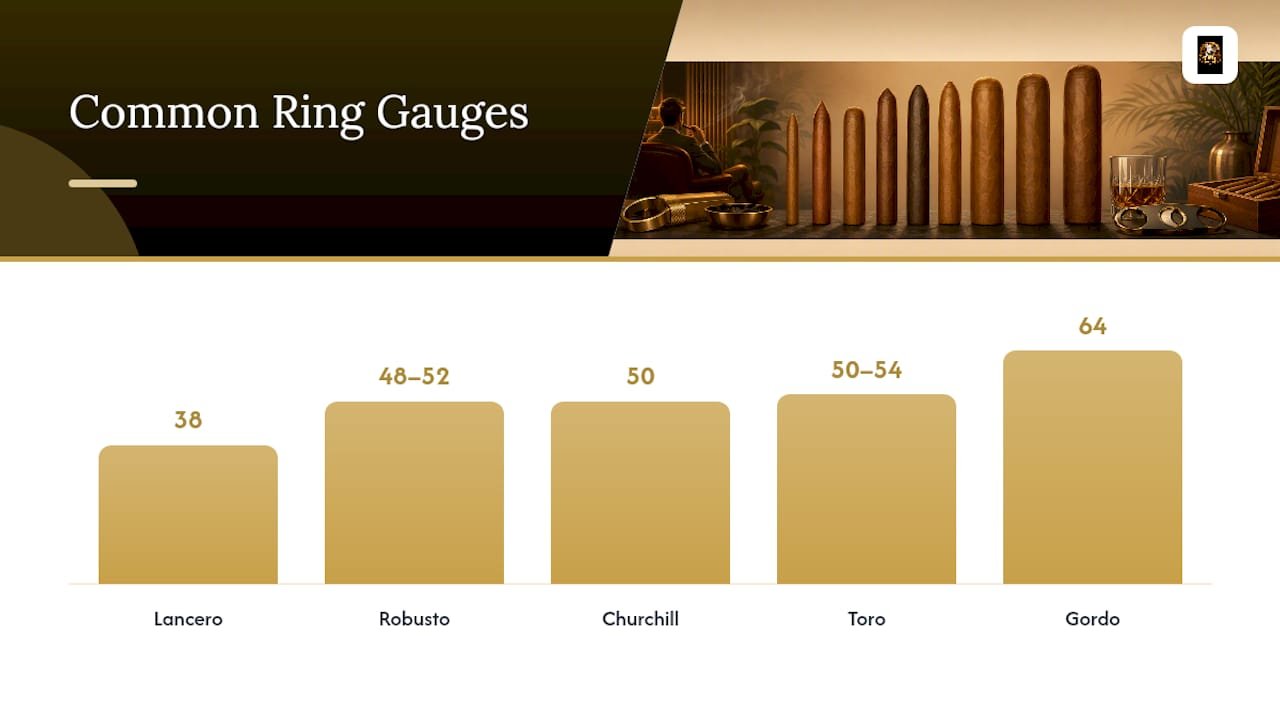
Industry references put traditional cigar ring gauges roughly between 26 and 57, with modern “grande” formats regularly running past 60.
| Vitola | Typical Ring Gauge | Typical Length | Smoking Character |
|---|---|---|---|
| Lancero | 38 | 7 in | Long, wrapper-forward, slow reveal |
| Corona | 42 | 6 in | Balanced, classic proportions |
| Robusto | 48–52 | 5.5 in | Compact, quicker smoke, filler-forward |
| Toro | 50–54 | 6 in | Popular middle ground, full flavor |
| Churchill | 50 | 7 in | Long smoke, gradual flavor build |
| Gordo | 64 | 5–6 in | Cool burn, dense filler complexity |
What was considered “fat” in the 1990s, a 54 to 60 ring gauge, is now mainstream across many blends, and cigars in the 60+ range have shown up regularly on shop shelves in the years since. The Warped Sarto Double Corona is a good example of how a large-format listing actually reads on a real product label.
How Should Ring Gauge Change Your Cutter and Smoking Technique?
Gauge determines how you should cut, pace, and store a cigar, not just how it tastes.
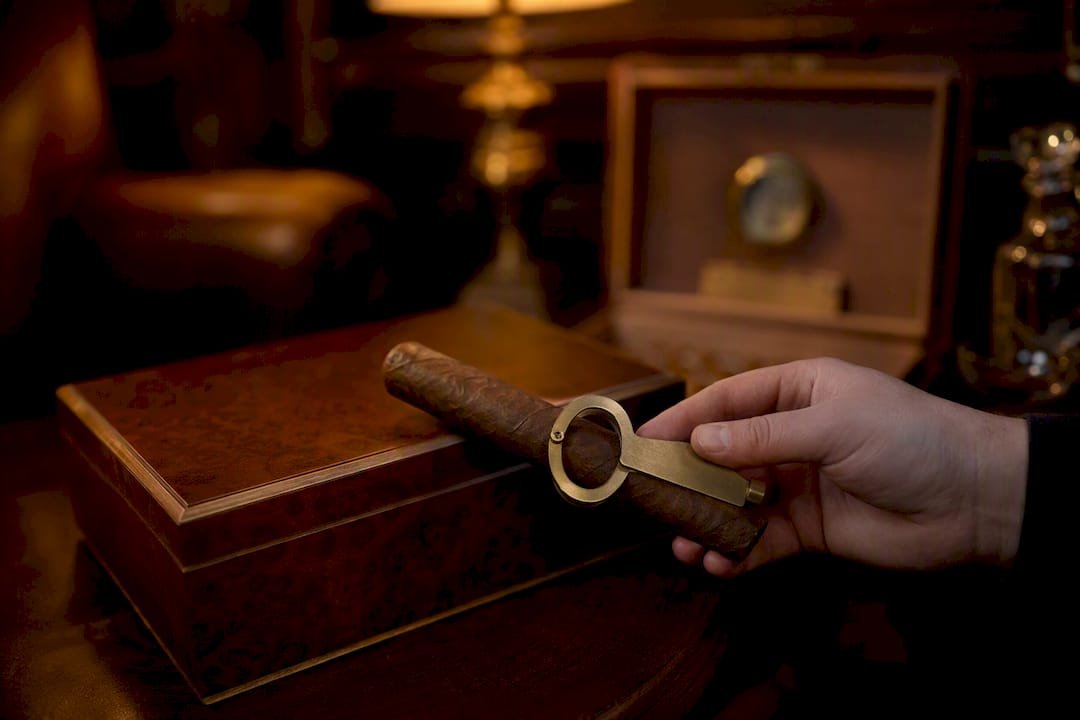
- Match your cutter to the diameter. Thin cigars (42 ring gauge or under) do best with a sharp straight cutter and a small, precise cut to avoid unraveling the wrapper. Fat cigars (50 ring gauge and up) respond better to a wide V-cutter or a 7 to 8 millimeter punch, which opens enough surface area for a proper draw without weakening the cap.
- Expect a different draw. More filler tobacco packed into a wide ring gauge can tighten the draw if the roll is dense, so a slightly larger cut opening compensates.
- Pace yourself by size. Thin cigars burn fast and run hot, so slow, deliberate puffing matters more. Fat cigars are more forgiving of an uneven cadence but can turn flat and waterlogged if you smoke too slowly, since moisture builds up inside a wide format more easily than a slim one.
- Relight without guilt. A cigar that goes out, especially a large gauge, isn’t ruined. Tap off the ash and relight; you lose nothing but a few minutes.
Pro Tip: Store 60+ ring gauge cigars at the low end of your humidor’s humidity range, around 65 percent. Their dense filler holds moisture longer, so they’re more prone to a soggy, muted burn than slimmer formats.
Which Ring Gauge Should You Start With?
If you’re new to cigars, start in the middle of the range rather than at either extreme. A Robusto or Toro (roughly 48 to 54 ring gauge) gives you a forgiving draw, a moderate burn temperature, and enough smoking time to actually evaluate a blend without committing to an hour-plus session. The Black Label Trading Co. Super Deluxe Robusto is a solid example of that starter proportion in practice.
Once you’ve got a few Robustos and Toros under your belt, branch out in either direction. Try a Lancero if you want to taste wrapper character in sharper detail; expect a hotter, faster burn that rewards a slower puff. Try a Gordo or a Belicoso like the Artesano Del Tobacco El Pulpo Belicoso Grande if you want a cooler, longer, more filler-driven smoke.
Before you buy, run through a quick checklist:
- How much time do you have? Thin and short formats finish quicker than long, fat ones.
- How’s your tolerance for a stronger, hotter smoke? Thinner gauges run hotter.
- Do you want wrapper flavor or blended complexity? That’s the thin versus thick question again.
- Do you have the right cutter on hand for the size you’re buying?
How Thor’s Cigar Vault Lists Ring Gauge on Every Product
Every cigar Thor’s Cigar Vault carries lists its length and ring gauge right on the product page, so you’re never guessing at proportions before you buy. A limited release like the Arturo Fuente FFOX Opus X Perfecxion 4 shows exactly how that notation works on a rare, hard-to-find blend. Curated collections and knowledgeable staff back every listing, and first-time buyers get 10% off their first order when they sign up for updates. Browse the full shop to see how vitola names and gauge numbers pair up across dozens of formats.
What Actually Matters When You’re Choosing a Ring Gauge
Most beginner guides treat ring gauge like a size chart problem: pick a number, match it to a vitola name, done. That undersells what’s actually going on. The number is a proxy for a chemistry problem, how much wrapper leaf touches how much filler tobacco, and that ratio is doing more work in your smoking experience than brand, origin, or even price point.
The conventional advice to “start with a Robusto because it’s popular” is fine but incomplete. Start with a Robusto because its proportions are genuinely balanced, not because it’s trendy. The real skill worth building early is reading a length x ring gauge label and predicting, before you light up, whether a cigar will run hot and wrapper-forward or cool and filler-heavy. That’s a transferable skill. Vitola names aren’t, since they vary by brand.
If there’s one habit worth changing, it’s this: stop shopping by name and start shopping by number. A “Toro” from one maker and a “Toro” from another can differ by several points of ring gauge, and that difference is what you’ll actually taste.
Sources
Background for this guide came from Cigar Aficionado’s ring gauge glossary, Habanos’ shape and size reference, Tobacconist University’s glossary, and Cigar World’s sizing guide.
FAQ
How Do You Read a Ring Gauge?
Look for a two-part number on the label formatted as length x ring gauge, like 6 x 50. The second number is the diameter in 64ths of an inch, so divide it by 64 to get inches.
How Big Is a 52 Ring Gauge Cigar?
A 52 ring gauge measures 52/64 of an inch in diameter.
What Are the Common Ring Gauge Classifications?
There’s no single official grading system, but cigars generally fall into thin (under 42), medium (42 to 48), standard to full (48 to 54), and large or “gordo” (roughly 56 and up), with 60+ increasingly common.
Which Cutter Works Best for a Thick Cigar?
A wide V-cutter or a 7 to 8 millimeter punch cutter suits ring gauges of 50 or higher, since it opens enough surface area for an even draw without stressing the cap.