Sharpen a Cigar Cutter and Get a Clean Cut Again
You can usually restore a dull cigar cutter with three steps: clean it, deburr or hone the blade, and test it on a cigar you don’t care about. Most cutters respond well to this at home. The exceptions are cheap plastic single-blade guillotines, which are cheaper to replace than to fix, and premium cutters under a lifetime warranty, which do better if sent back to the maker.
Here’s the five-minute version before you touch a single tool:
- Wipe the blades with rubbing alcohol and a Q-tip to clear tar and gum.
- Check the pivot for play and confirm the blades meet flush when closed.
- Strop the edge lightly with aluminum foil or leather to knock down small burrs.
- Test on a cheap cigar, not your last Opus X.
- If it’s a Colibri or Xikar with lifetime coverage, consider mailing it in instead of sharpening it yourself.
Key Takeaways
A dull cigar cutter is almost always a cleaning or maintenance problem before it’s a sharpening problem, and most cutters respond to a five-step routine: clean, inspect, strop, hone if needed, and test.
| Point | Details |
|---|---|
| Clean before you sharpen | Soak stainless cutters in hot water or swab with alcohol to remove tar before touching a hone. |
| Match the fix to the damage | Use foil or leather stropping for minor dullness; reserve a 400-grit diamond hone for real edge damage. |
| Know when to replace | Cheap plastic single-blade guillotines and chipped or bent blades usually aren’t worth sharpening. |
| Use manufacturer service for warranty cutters | Colibri and Xikar offer professional sharpening with a turnaround of several weeks for lifetime-warranty models. |
| Buy quality from the start | Thor’s Cigar Vault carries cutters, strops, and diamond hones built to hold an edge longer between services. |
Table of Contents
- How to Sharpen a Cigar Cutter: Inspect First, Fix Second
- Cleaning and Prep Before You Sharpen Anything
- DIY Cigar Cutter Sharpening: From Foil Stropping to Diamond Hones
- Tools and Materials Worth Buying
- When to Send Your Cutter to Colibri or Xikar Instead
- Troubleshooting Loose Pivots, Misalignment, and Wear
- What Not to Try When Sharpening a Cigar Cutter
- Shop Cutters and Sharpening Accessories at Thor’s Cigar Vault
- Sources
- FAQ
How to Sharpen a Cigar Cutter: Inspect First, Fix Second
Most “dull” cutters aren’t dull at all. They’re dirty or loose. Before you reach for a hone, run your thumbnail lightly along the edge (away from the blade direction) to feel for burrs or nicks. Hold the cutter up to light and look for a gummy film across the blade face, which is dried tobacco oil, not metal fatigue.
Then check the mechanism itself:
- Pivot test: open and close the blades. Lateral wobble means a loose pivot screw, not a dull edge.
- Alignment test: close the cutter slowly and watch where the blades meet. They should touch evenly across the full width, not just at one corner.
- Gunk test: if the action feels sticky rather than sharp, cleaning alone often fixes it.
Work through this order: clean first, then light stropping, then honing only if the edge is genuinely damaged. Cheap plastic single-blade guillotines usually aren’t worth the effort to save; a replacement costs less than the diamond hone you’d need to fix one properly.
Cleaning and Prep Before You Sharpen Anything
Skip this step and you’ll be sharpening through a layer of dried tar, which dulls the hone faster and hides whether the blade actually needs work.
- Soak stainless-steel cutters in hot water for about an hour to loosen tobacco residue, then dry them thoroughly before reassembly. Skip this for cutters with wood, leather, or lacquered finishes.
- Swab with rubbing alcohol on a Q-tip for tight spots around the pivot and blade channel. Alcohol dissolves tobacco oils without leaving residue.
- For solid-metal cutters only, some owners get good results with brake cleaner or even a dishwasher cycle to strip heavy gunk, but test compatibility first since solvents and heat can ruin non-metal finishes.
- Dry completely, then work in a drop of light oil at the pivot before reassembly.
Cleaning alone restores smooth cutting action more often than people expect. Plenty of cutters that seem to need sharpening just need the gum scraped out of the hinge.
DIY Cigar Cutter Sharpening: From Foil Stropping to Diamond Hones
Not every dull cutter needs a full sharpening session. Match the method to the damage.
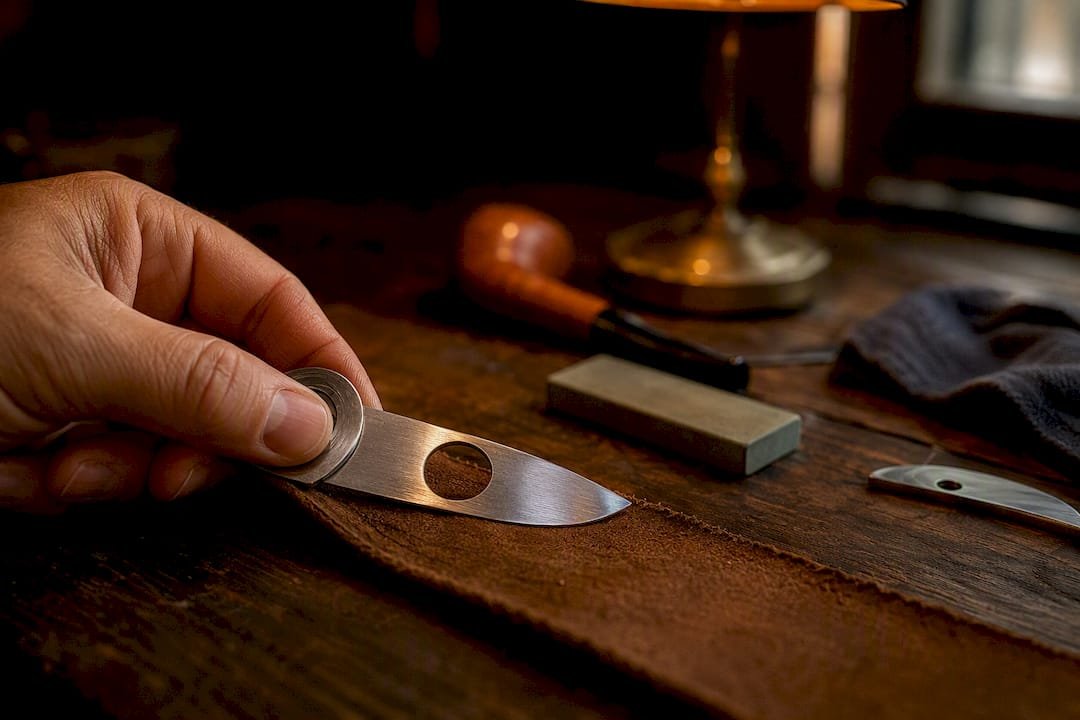
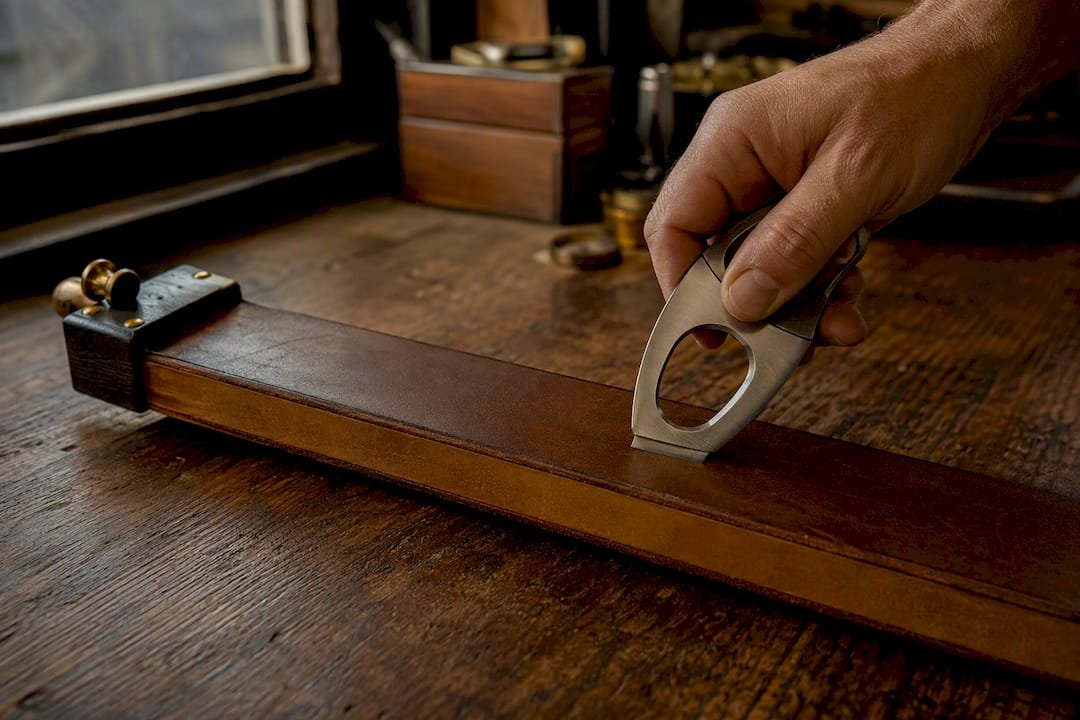
Light touch-up: fold a few layers of aluminum foil and draw the blade edge across it at the same angle as the factory bevel, ten to fifteen strokes per side. A leather strop works the same way and does less risk to the edge. This removes microscopic burrs without changing the blade’s geometry.
Real sharpening: for a bypass-style cutter with visible dullness, a 400-grit diamond hone laid flat against the existing bevel angle, run in heel-to-tip strokes, is the standard fix. Keep the same angle the factory ground into the blade. Guides on sharpening bypass blades recommend this exact grit for routine restoration, with a lighter pass to clear any burr raised on the flat side.
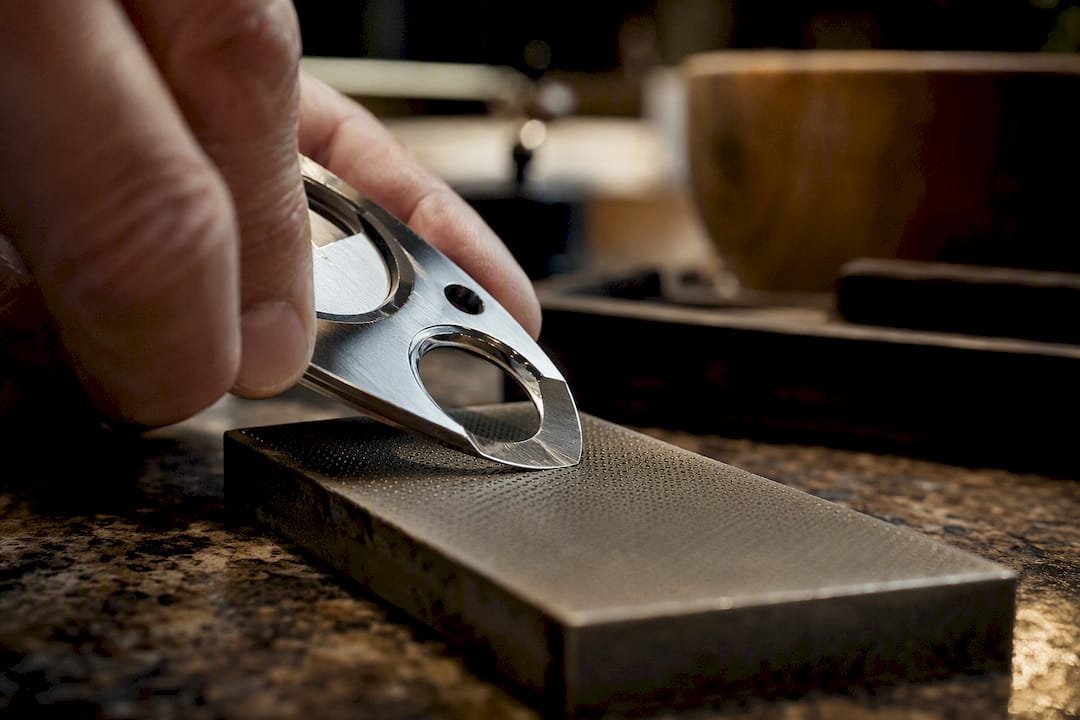
Clamp the blade if you can, or brace it against a stable edge. Consistent pressure matters more than speed. Ten to fifteen strokes per side is usually enough at 400 grit; check the edge after each pass rather than grinding blind.
Pro Tip: Never touch the flat back side of a bypass blade with a hone at an angle. That flat face is what the second blade shears against. Regrinding it, even slightly, ruins the scissor action permanently.
Tools and Materials Worth Buying
You don’t need a full sharpening kit for a cigar cutter. A small diamond plate (400 grit, with a 1000 grit for finishing) runs $15 to $30 and covers nearly every job. Add a leather strop or a scrap of thick leather for touch-ups, rubbing alcohol and Q-tips for cleaning, and a bottle of dry-film lubricant or light sewing-machine oil for the pivot. A honing guide or small clamp helps hold the angle steady if your hands aren’t rock solid. Spend the most on the diamond hone; everything else is cheap and replaceable.
When to Send Your Cutter to Colibri or Xikar Instead
Premium cutters from Colibri and Xikar typically carry a lifetime warranty against manufacturing defects, and both companies offer professional sharpening or full blade replacement rather than leaving owners to DIY it.
A turnaround of several weeks is typical when you mail a cutter back to the manufacturer for service, according to reporting from Cigar Aficionado.
That’s a long wait, so it makes sense mainly for a daily-carry cutter you’d rather fix right than fix fast. Contact the manufacturer directly, or check with the tobacconist where you bought it. Shops that sell Colibri or Xikar often forward warranty service and handle return tracking for you. If a local sharpening shop is your alternative, ask them to grind to a specified angle rather than guessing. Quality varies a lot between shops, and a machine-shop jig with the correct angle specified beats a generic sharpening pass almost every time.
Pro service is the right call for a lifetime-warranty cutter, a cracked or chipped blade, or any cutter you’d be genuinely upset to ruin.
Troubleshooting Loose Pivots, Misalignment, and Wear
A wobbly cutter usually isn’t a sharpening problem. Try these fixes first:
- Loose pivot: snug the pivot screw with a small screwdriver until the wobble disappears, but stop before the blades bind. Over-tightening is as common a mistake as leaving it loose.
- Slight misalignment: a few degrees of gap at one corner often self-corrects after cleaning and a light pivot adjustment. Persistent misalignment across the full blade usually means a bent frame, which isn’t a DIY fix.
- Routine care: wipe the blades after each cigar, and do a full clean with alcohol roughly every 40 cigars, a rhythm regular cutter owners settle into naturally.
- Wear signs: visible chips, a bent blade, or metal that won’t hold an edge after honing means it’s time to replace, not sharpen again.
What Not to Try When Sharpening a Cigar Cutter
Some fixes cause more damage than the dullness ever did.
Don’t run a Dremel or bench grinder across a premium blade without a jig and coolant. The friction generates enough heat to warp the steel or destroy its temper in seconds, and there’s no undoing that.
Skip full re-grinds if you can’t remove the housing, and never attempt one on hardened carbide. Keep aggressive solvents like brake cleaner away from cutters with leather, plastic, or powder-coated parts. Chipped edges, bent frames, or blades that won’t hold an edge after honing mean replacement is the safer call.
A practical default for most cutters
Clean first, strop monthly, and only reach for the diamond hone when stropping stops working. Send anything with a lifetime warranty back to the maker instead of risking the edge yourself. It’s the sequence that costs the least, risks the least, and still keeps most cutters cutting clean for years.
Shop Cutters and Sharpening Accessories at Thor’s Cigar Vault
A dull cutter tears wrapper leaf, and torn wrapper leaf ruins a cigar you paid real money for. That’s the actual cost of skipping cutter maintenance, and it’s why Thor’s Cigar Vault stocks a curated lineup of quality cutters built to hold an edge longer than the disposable kind, alongside leather strops and diamond hones so you can keep them sharp between services.

If you’re pairing a new cutter with something worth protecting, a box like the Arturo Fuente FFOX Opus X Perfecxion deserves a clean cut every time. Browse the full cutter and accessory selection, and reach out to the staff at Thor’s Cigar Vault if you’re not sure which cutter fits your habits. They know the lineup well enough to point you toward the right one the first time.
Sources
- How Can I Sharpen My Cigar Cutter? | Cigar Aficionado
- Rapidrepair
- Maintaining a cutter… — CIGAR.com Forum
- Cleaning a cigar cutter
- Printplanet
FAQ
How do I make a cutter sharp again?
Clean it thoroughly with rubbing alcohol, then strop the edge with aluminum foil or leather to remove small burrs. If it’s still dull, run a 400-grit diamond hone along the existing bevel angle in heel-to-tip strokes.
Can aluminum foil sharpen a cutter?
Foil won’t grind a new edge, but folded foil works as an effective strop for removing microscopic burrs and restoring a crisp feel to an edge that’s only mildly dull.
Which cigar cutter stays sharpest longest?
Premium cutters from brands like Colibri and Xikar hold an edge longer than budget guillotines because of better steel and tighter tolerances, and both back their cutters with sharpening or replacement service.
How do I sharpen a cutter blade at home?
Use a diamond hone at 400 grit for standard dullness, keep the same angle as the factory bevel, and finish with a 1000-grit pass if you want a polished edge. Test on a cheap cigar before trusting it with a premium one.