How to Fix Cigar Canoeing Before It Ruins the Smoke
Most canoeing cigars can be rescued. Rotate the cigar, slow your draw, and give the lagging side a soft-flame touch-up. Cut behind the damage only if the wrapper has split or a whole section has burned down to nothing. Persistent canoeing that keeps reappearing on the same spot usually points to a construction flaw or a humidity problem, not bad luck.
Try these three moves, in order, the moment you notice one side of the foot pulling ahead:
- Rotate and slow down. Turn the cigar a quarter turn every few puffs and stretch out your draws. Many cigars self-correct within the first inch.
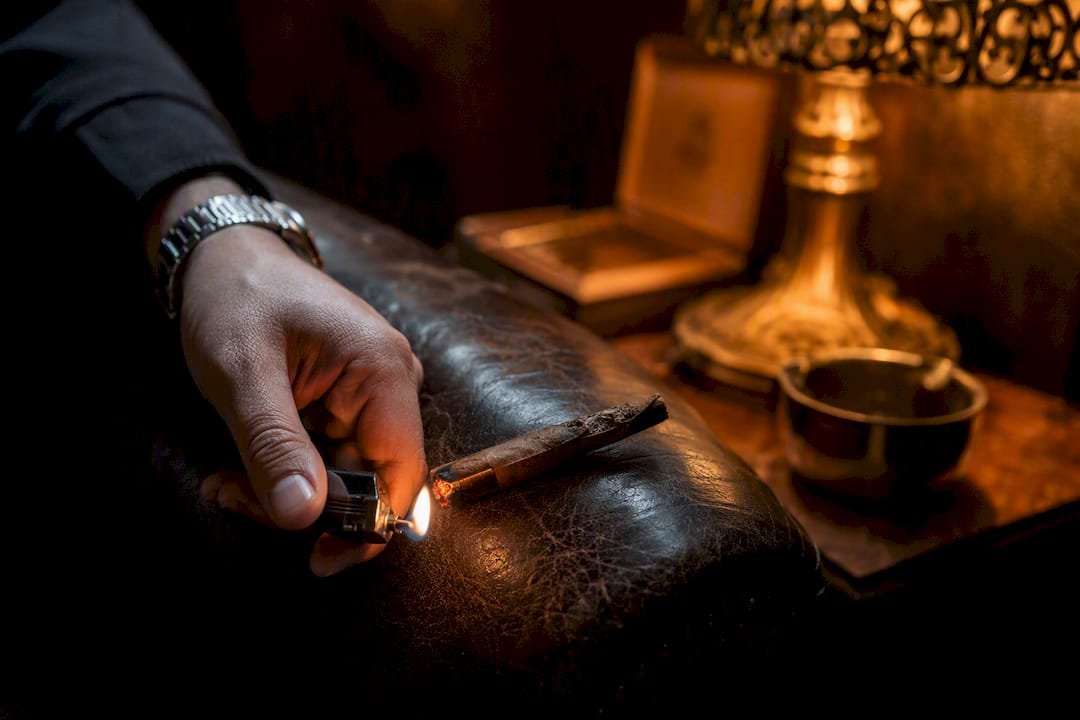
- Touch up with a soft flame. Hold a butane or soft-flame lighter near the slow side, not touching the wrapper, for a few seconds while rotating.
- Cut behind the damage. If the canoe has dug a visible canal or cracked the wrapper, cut about a quarter inch past the deepest point and re-toast the new foot.
The one thing not to do: hold a torch flame directly on the wrapper for more than a couple of seconds trying to “burn it straight.” That just chars the leaf and leaves you with a bitter, acrid smoke on top of the canoeing.
Key Takeaways
Most cigar canoeing is fixable with rotation, a soft-flame touch-up, and a clean cut behind severe damage, while stable humidity and even toasting prevent it from starting.
| Point | Details |
|---|---|
| Try rotation first | Turn the cigar and slow your draws before reaching for a flame; most mild cases self-correct. |
| Use a soft-flame touch-up | Hold the flame near, not on, the slow side for a few seconds, then reassess. |
| Cut behind severe damage | Remove a quarter to half inch past the deepest canal, then re-toast the new foot evenly. |
| Store at a stable relative humidity around the generally recommended range | Stable humidity prevents the uneven moisture that causes many canoeing cases. |
| Match your gear to the fix | A sealed humidor, sharp cutter, and soft-flame lighter from Thor’s Cigar Vault cover all three prevention steps. |
Table of Contents
- What Cigar Canoeing Fix Techniques Address
- What Is the Right Rescue Sequence for a Canoeing Cigar?
- How Do You Prevent Canoeing Before You Light Up?
- Two-Minute Diagnostic Checklist for a Canoeing Cigar
- When Should You Cut, Relight, or Just Give Up?
- Thor’s Cigar Vault Products That Support Good Burn Technique
- Fixing Small Canoes vs. Large Canoes: Different Damage, Different Repairs
- Tools That Make These Fixes Easier
- Correcting a Canoeing Burn While You’re Mid-Smoke
- How Cigar Shape and Size Change Your Repair Approach
- Does Wrapper Type or Blend Affect Canoeing Risk?
- Get the Right Gear for a Cleaner, More Even Burn
- Sources
- FAQ
What Cigar Canoeing Fix Techniques Address
Canoeing is a burn flaw where a narrow strip of the cigar burns faster than the rest, hollowing out one side into a shape that looks like the hull of a canoe. You’ll see it as an angled ash line, a strip of exposed filler racing ahead of the wrapper on one edge, or a lopsided burn cone that never evens out.
The causes are almost always identifiable if you know where to look:
- Uneven lighting or toasting. Lighting one spot on the foot instead of rotating evenly sets the fast side burning before the rest catches up.
- Wind or draft. Outdoor smoking, especially near open windows or fans, feeds oxygen unevenly to one side of the foot.
- A bad or angled cut. A partial or crooked cut restricts draw on one side, so the other side burns faster to compensate.
- Uneven humidity. Cigars that absorbed moisture unevenly, or that sat too dry on one side of a box, burn at different rates across the same foot.
- Construction flaws. Loose filler, a stray vein, or an unevenly rolled bunch creates a physical pocket where air moves too freely.
A quick way to isolate the cause: check for wind first, inspect your cut for symmetry second, and think back on how the cigar was stored before you lit it. Common causes include uneven lighting, drafts, uneven humidity, and construction flaws such as loose filler or heavy veins, and ruling each one out in sequence usually tells you exactly which fix applies.
What Is the Right Rescue Sequence for a Canoeing Cigar?
Treat canoeing the way a nurse treats triage: mild cases first, severe cases last, and never skip a step to save time.
Mild canoeing (a slight lean in the burn line, no exposed tobacco) usually clears up on its own. Rotate the cigar a quarter turn, take slower draws, and give it a minute or two before touching a flame to anything. Many canoeing cases correct themselves once the smoker rotates and slows the draw for the first inch, and correction usually only fails when there’s an underlying construction or moisture issue.
Moderate canoeing (a visible gap, one side clearly behind) calls for a soft-flame touch-up. Hold your lighter about a half inch from the slow side of the foot, never touching the wrapper directly, for three to five seconds while rotating the cigar. Pull the flame away, take a few slow draws, and check again before repeating.
Severe canoeing (a deep canal, cracked wrapper, or a section burned down to bare filler) needs surgery. Cut behind the damaged area, removing enough tobacco to get past the defect entirely, usually a quarter to half inch depending on how deep the canal runs. Re-toast the new foot exactly as you would a fresh cigar: rotate slowly over a flame until the whole rim glows evenly before drawing.
- Never hold a torch flame directly against the wrapper to force a straight burn.
- Avoid prolonged charring; a few seconds of heat per pass is enough.
- Use moisture sparingly. A licked finger on the fast side can help in a pinch, but it’s a last resort, not a routine fix.
Pro Tip: Keep your touch-ups short and repeated rather than one long blast. Three or four brief flame passes, checking the burn between each, beats a single ten-second scorch every time.
If it still won’t behave after cutting once, that’s your signal the cigar has a structural problem no amount of technique will solve. A soft-flame or match touch-up is the preferred method precisely because a hot torch aimed at fixing the wrapper usually creates a second problem: harsh, charred flavor layered on top of the original burn issue.
How Do You Prevent Canoeing Before You Light Up?
Prevention beats rescue every time, and it starts before the flame ever touches the foot.
- Toast the whole foot first. Rotate the cigar over your flame for 30 to 45 seconds, warming the entire circumference evenly before you draw. Gentle, even toasting before the first draw prevents a large share of canoeing cases outright.
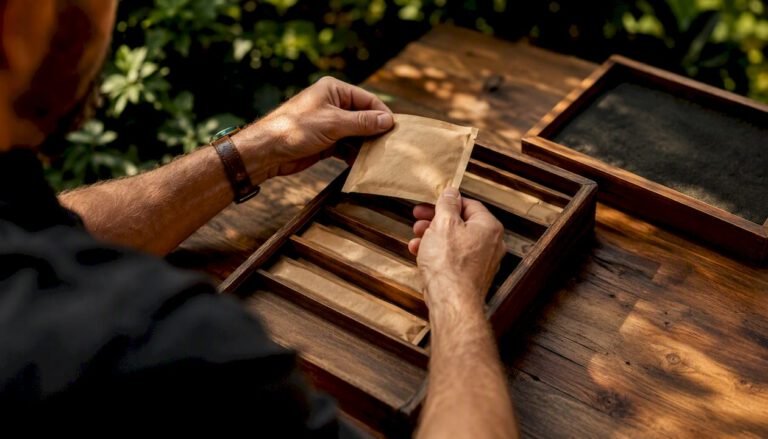
- Store cigars at a stable relative humidity. Aim for 65 to 72% RH in your humidor. Uneven moisture inside the filler leaves is one of the most common hidden causes of differential burning, since drier tobacco ignites faster than damp tobacco sitting right next to it.
- Cut clean and straight. A dull cutter or an angled, partial cut restricts airflow unevenly and sets you up for canoeing before you’ve even lit the match.
- Pace yourself and rotate. Keep your draws slow and consistent, and turn the cigar every few puffs rather than letting it sit at one angle in your hand.
- Shelter from wind outdoors. A gust across the foot feeds one side more oxygen than the other, so smoking near a wall or windbreak helps more than most people expect.
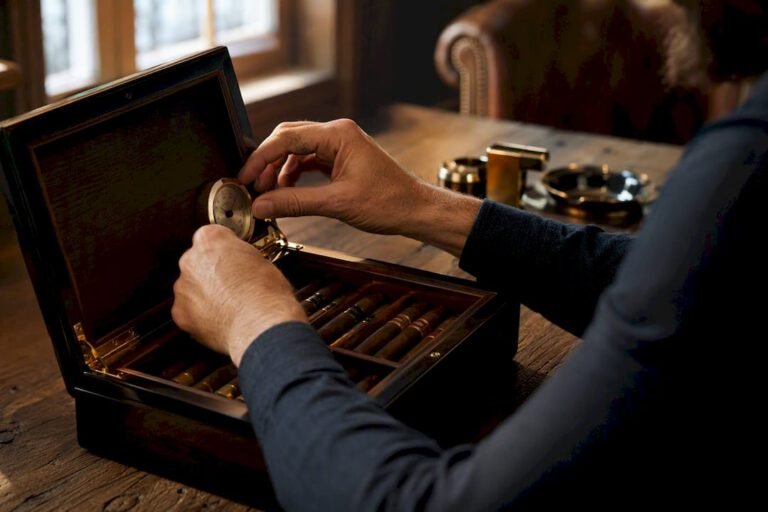
Stable humidor practice, meaning checking your hygrometer regularly and rotating stock so cigars age evenly, reduces differential moisture across a batch and heads off a lot of burn problems before they start.
Two-Minute Diagnostic Checklist for a Canoeing Cigar
Work through this in order, and you’ll almost always land on the right fix within a minute or two.
- Check for wind or draft. If you’re outside near an open door, window, or fan, move somewhere sheltered before doing anything else.
- Inspect the cut. Look at the cap. Is it clean and symmetrical, or ragged and off-center? A bad cut is often the whole story.
- Think back on storage. Was this cigar sitting at a stable RH, or did it come from a batch you know was too dry or too humid?
- Rotate and touch up. If the first three checks turn up nothing obvious, rotate the cigar and apply a soft-flame touch-up. If the same spot canoes again after that, treat it as a construction defect and cut behind it or set the cigar aside.
When Should You Cut, Relight, or Just Give Up?
Not every canoeing cigar is worth saving, and knowing when to stop trying saves you from smoking something that tastes worse than it looks.
- Cut when the wrapper has cracked, a deep canal has formed, or the same spot keeps canoeing after two touch-up attempts.
- How much to remove: go a quarter to half inch past the deepest point of the damage, then re-toast the new foot the same way you toasted the original, rotating slowly until it glows evenly.
- Discard when the cigar keeps failing after a cut and a relight, or when the smoke starts tasting bitter or acrid from repeated touch-ups. At that point you’re just burning tobacco, not smoking it.
Thor’s Cigar Vault Products That Support Good Burn Technique
Good technique only goes so far if your gear works against you. Thor’s Cigar Vault’s curated cigar selection and accessory lineup line up directly with the prevention habits above:
- A quality humidor with an accurate hygrometer keeps your stock at a stable 65 to 72% RH, which is the single biggest defense against humidity-driven canoeing.
- A sharp, straight cutter gives you a clean, symmetrical cut every time, no ragged edges pulling draw to one side.
- A soft-flame lighter lets you toast evenly and touch up precisely, without the risk of torching the wrapper.
When you’re shopping for a humidor or cutter, look for a tight seal, a hygrometer you trust, and a blade sharp enough to cut in one clean motion rather than sawing through the cap.
Fixing Small Canoes vs. Large Canoes: Different Damage, Different Repairs
A small canoe, a thin strip burning slightly ahead of the rest, responds well to the light touch. Rotate the cigar, slow your draw, and let the surrounding tobacco catch up naturally over the next inch of smoking. You rarely need a flame at all for this level of damage.
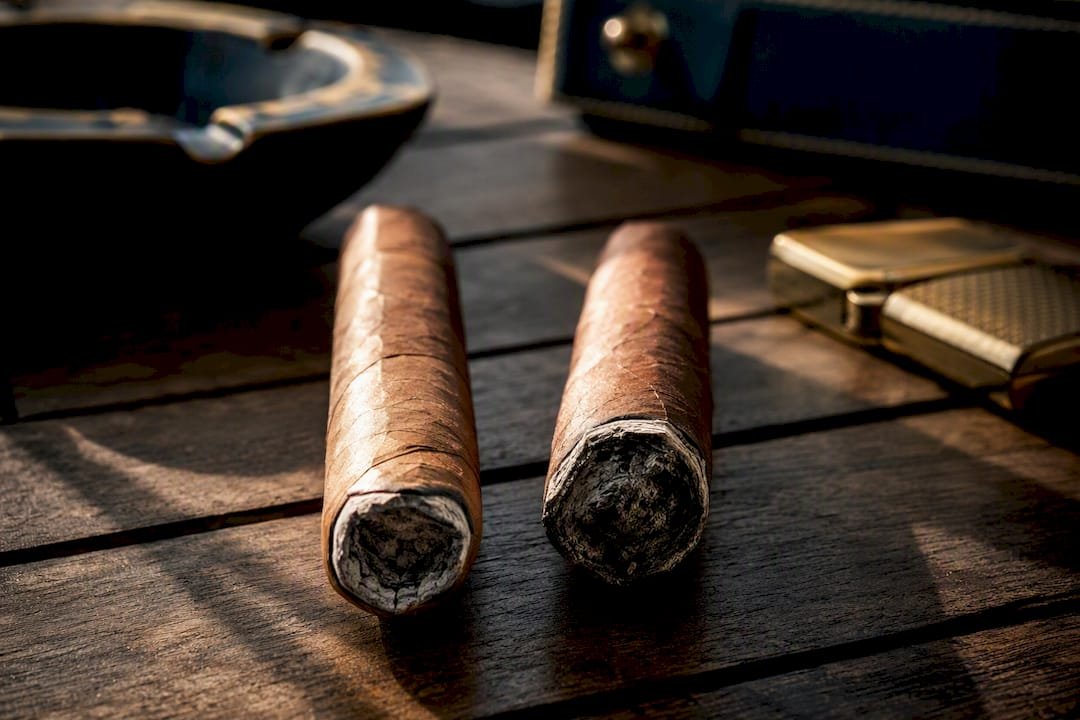
A large canoe is a different animal. Once you’ve got a visible canal running a quarter inch deep or more, self-correction won’t happen. The wrapper has usually separated from the binder in that section, and the exposed filler burns hot and fast, which widens the gap the longer you smoke through it. At that point, a touch-up buys you a few more minutes at best.
For a large canoe, cutting behind the damage is the more reliable move. Removing the compromised section entirely, rather than trying to nurse it along, gives you a clean foot to re-toast and a burn line that isn’t fighting itself. The tradeoff is length: you’re sacrificing an inch or more of cigar to save the rest of the smoke.
One distinction worth knowing: a canoe near the foot is far more fixable than one that develops mid-stogie. Early canoeing gives you room to cut behind it without losing much. A canoe that shows up two-thirds of the way through the smoke leaves you choosing between finishing a lopsided burn or cutting away most of what’s left. That’s a strong argument for catching canoeing early, in the first inch, rather than waiting to see if it fixes itself.
Tools That Make These Fixes Easier
You don’t need much to handle canoeing in the field, but the few tools you carry matter more than people think.
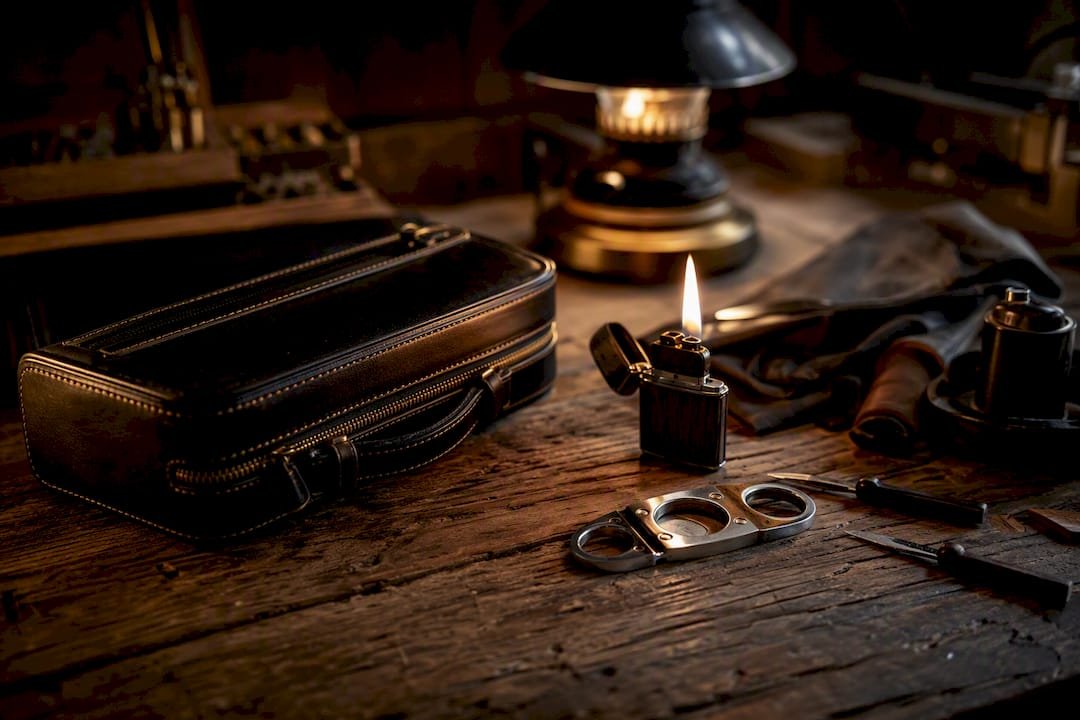
A soft-flame or torch lighter is non-negotiable. Soft flame gives you more control for gentle touch-ups, while a torch works better in windy conditions but demands a lighter hand to avoid over-charring. Something like a novelty soft-flame lighter works fine for touch-up duty as long as you can control the flame’s proximity to the wrapper.
A sharp cutter, whether a straight guillotine, a punch, or a V-cutter, is your main defense and your main rescue tool. For rescue cuts specifically, a straight guillotine gives you the cleanest cross-section to re-toast, since punches and V-cuts only open a small channel rather than removing the damaged ring entirely.
A travel humidor case matters more than most smokers realize, especially for canoeing prevention on the go. Cigars that dry out slightly in transit, then get smoked cold from a bag or pocket, are prime canoeing candidates. Keeping a stable microclimate in a small case, even for a single stick heading to a round of golf or a night out, closes off one of the more common causes.
Beyond that, a simple butane refill canister and a backup lighter round out the kit. Running out of fuel mid-touch-up, forcing you to switch to matches or a weaker flame source, is a small but real reason some rescues fail halfway through.
Correcting a Canoeing Burn While You’re Mid-Smoke
Catching canoeing early changes everything about how easy the fix is, so the first step is simply paying attention to your ash line every few puffs rather than after it’s already lopsided.
Step 1: Confirm it’s canoeing, not just an uneven ash. Look for a clear angle in the burn line and a visible gap where one side of the wrapper has pulled back further than the other.
Step 2: Rotate immediately. Turn the cigar a quarter turn and take two or three slow, deliberate draws. This alone resolves a surprising number of mild cases within a minute.
Step 3: Check your environment. If you’re outdoors, step away from any breeze. A draft feeding one side of the foot will undo any correction you attempt.
Step 4: Apply the touch-up if rotation alone doesn’t work. Hold your flame near, not on, the slow side for three to five seconds, rotating as you go. Let the cigar rest a moment, then draw again.
Step 5: Reassess. If the burn has evened out, keep smoking and stay alert for the next few inches. If it hasn’t, repeat the touch-up once more before deciding whether to cut.
Step 6: Cut only if necessary. Once you’ve tried rotation and two touch-ups without success, cut behind the damage and re-toast. Trying a third or fourth touch-up on a cigar that isn’t responding usually just adds char without fixing anything.
How Cigar Shape and Size Change Your Repair Approach
A thin ring gauge cigar, something in the 38 to 42 range, canoeings differently than a fat gordo pushing 60-plus. Thinner cigars have less tobacco mass around the burn line, so a small construction flaw or humidity pocket has an outsized effect. The good news is thin cigars also respond faster to a touch-up, since there’s less material to reheat evenly.
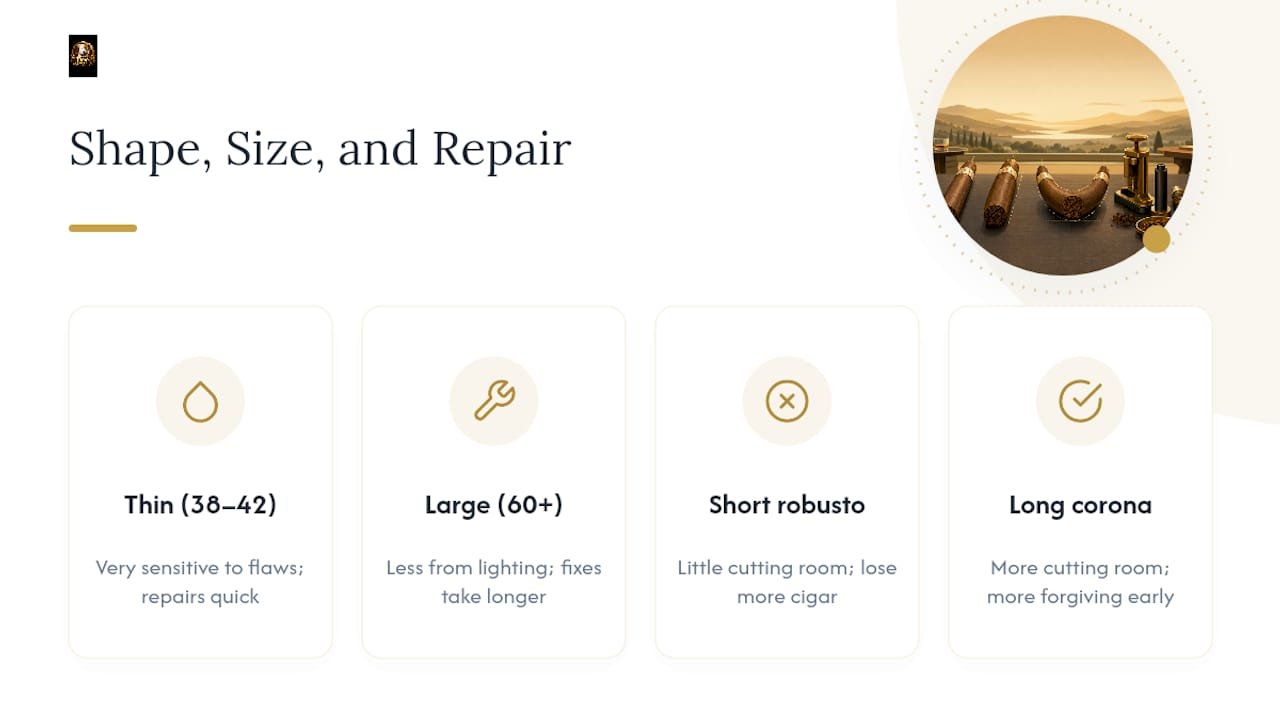
Larger ring gauges, especially gordos and other thick vitolas, canoe less often from lighting technique alone but more often from construction. More tobacco packed into a wide bunch means more opportunity for a loose spot or a stray vein to throw off the burn. When a big ring gauge cigar canoes, the fix usually takes longer, since you’re touching up a much larger circumference.
Cigar length matters too, mostly for how much room you have to cut behind damage. A short robusto that canoes near the midpoint leaves you cutting away a meaningful fraction of the smoke. A long Churchill or double corona gives you far more room to sacrifice an inch without feeling like you’ve lost the cigar. That’s part of why longer formats, like the Warped Sarto Double Corona, tend to be more forgiving when something goes wrong early in the smoke.
Box-pressed cigars deserve a specific mention. The flattened sides can create slightly uneven density across the bunch, which sometimes shows up as a mild lean in the burn line that isn’t true canoeing at all, just the shape of the press. Don’t rush to touch up a box-pressed cigar the moment you see a slight angle; give it a few draws first.
Does Wrapper Type or Blend Affect Canoeing Risk?
Wrapper leaf burns at different rates depending on its type, and that difference shows up directly in how often a cigar canoes.
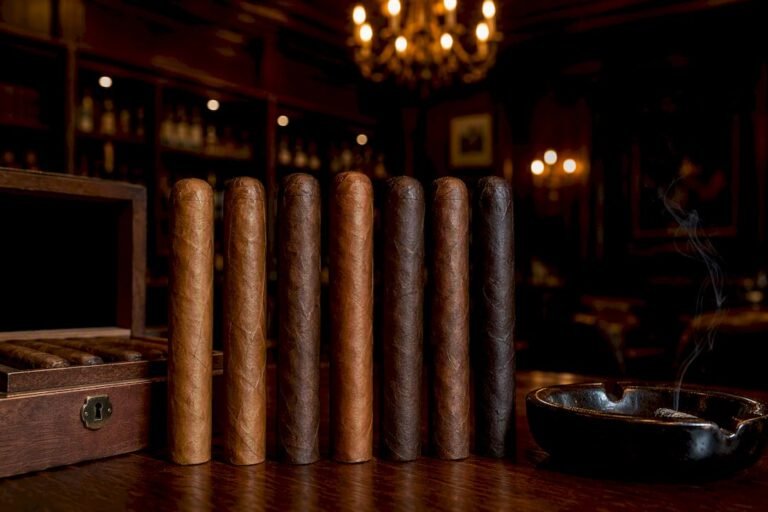
Maduro wrappers, being darker and often thicker from extra fermentation, tend to burn slightly slower and can lag behind a filler blend that wants to burn faster. That mismatch is a common, underappreciated source of canoeing in maduro-wrapped cigars specifically. Connecticut shade and other lighter wrappers burn faster and thinner, which usually means fewer canoeing issues from the wrapper side but more sensitivity to humidity swings, since thinner leaf dries out and rehydrates faster than a thick maduro leaf.
Blend construction plays a role too. A cigar with a heavily fermented, oily filler blend can burn hotter and faster than its wrapper wants to keep pace with, especially in full-bodied cigars built for strength over balance. This is one reason strong, complex blends sometimes canoe more than milder, more uniformly processed tobaccos, even when both are rolled with equal skill.
None of this means you need to avoid maduro or full-bodied cigars. It means you should toast maduro wrappers a touch longer and more evenly before the first draw, since that extra 10 to 15 seconds of rotation gives the slower-burning leaf a chance to catch up before you start smoking. Long-filler, well-constructed cigars, like the Warped Corto X46, tend to burn more evenly across wrapper types simply because tighter, more consistent rolling reduces the internal air pockets that cause canoeing in the first place.
A quick note on getting comfortable with the fix
Cigar canoeing looks alarming the first time it happens, but it’s rarely a reason to write off the stick. Try this small routine: toast the full foot slowly, cut clean and straight, and store your cigars at a steady RH. Keep a mental note of which cigars give you trouble, and you’ll start spotting patterns fast.
— Kevin
Get the Right Gear for a Cleaner, More Even Burn
Half of fixing canoeing for good comes down to what’s in your hand before you ever strike a flame. Thor’s Cigar Vault stocks the humidors, cutters, and lighters that map directly to the prevention habits covered above, plus a curated selection of well-constructed cigars that are simply less prone to canoeing in the first place.

A properly sealed humidor holds your collection at that 65 to 72% RH sweet spot, so you’re not lighting up a cigar that dried unevenly on one side of the box. A sharp, well-balanced cutter gives you a clean, symmetrical cut every time, which removes one of the most common canoeing triggers before you even light up. And a reliable soft-flame lighter lets you toast the full foot evenly and handle any touch-up without scorching the wrapper.
If you’re building out your kit or restocking your humidor, browse the full lineup at Thor’s Cigar Vault, where new customers get 10% off their first order. Start with the shop page to compare humidors and cutters side by side, or go straight to a well-constructed stick like the Artesano Del Tobacco El Pulpo Belicoso Grande if you’re ready to put your new technique to work.
Sources
- Tobacconist University | FAQs | Canoeing
- How to Fix a Canoeing Cigar While Smoking – Vdg-cigars
- Is There A Method To Fix A Canoeing Cigar? | Cigar Aficionado
FAQ
Why does my cigar keep canoeing?
Repeated canoeing on the same cigar usually means either a construction flaw, like loose filler or a stray vein, or a humidity mismatch from uneven storage. If rotation and touch-ups don’t fix it after two attempts, treat it as a defect and cut behind the damage or set the cigar aside.
What does it mean when a cigar is canoeing?
Canoeing means one side of the cigar’s foot is burning faster than the rest, hollowing out a canoe-shaped strip along one edge instead of burning flat across the whole circumference.
What is the 135 rule for cigars?
There’s no widely recognized rule tied to cigar burning or canoeing; if you’ve seen such a term elsewhere, it likely refers to a different topic or a misremembered guideline, and it isn’t part of standard cigar care advice.
How do I fix an over-humidified cigar?
An over-humidified cigar burns slowly, unevenly, and can canoe from excess moisture pooling in one section of the filler. Let it rest outside the humidor for a few hours to shed excess moisture, and if it’s already lit, use slower draws and a slightly longer touch-up flame to compensate for the damp tobacco.