Fix Tight Draws in 12–48 Hours: Dry Boxing Cigars by Vitola
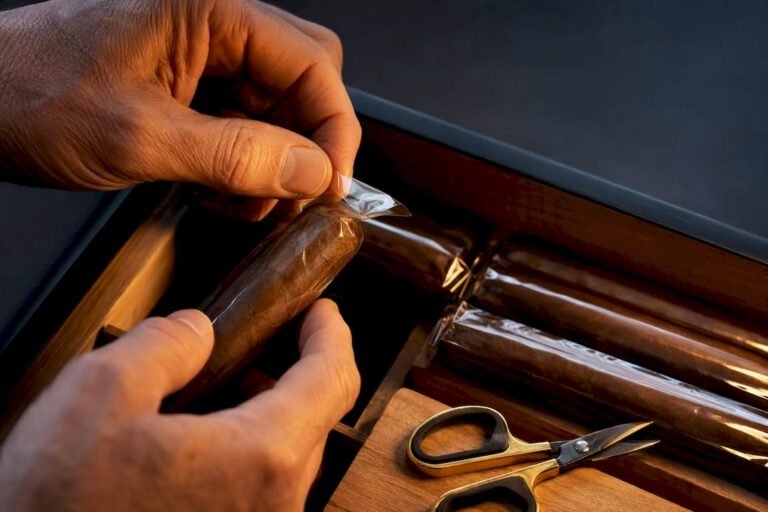
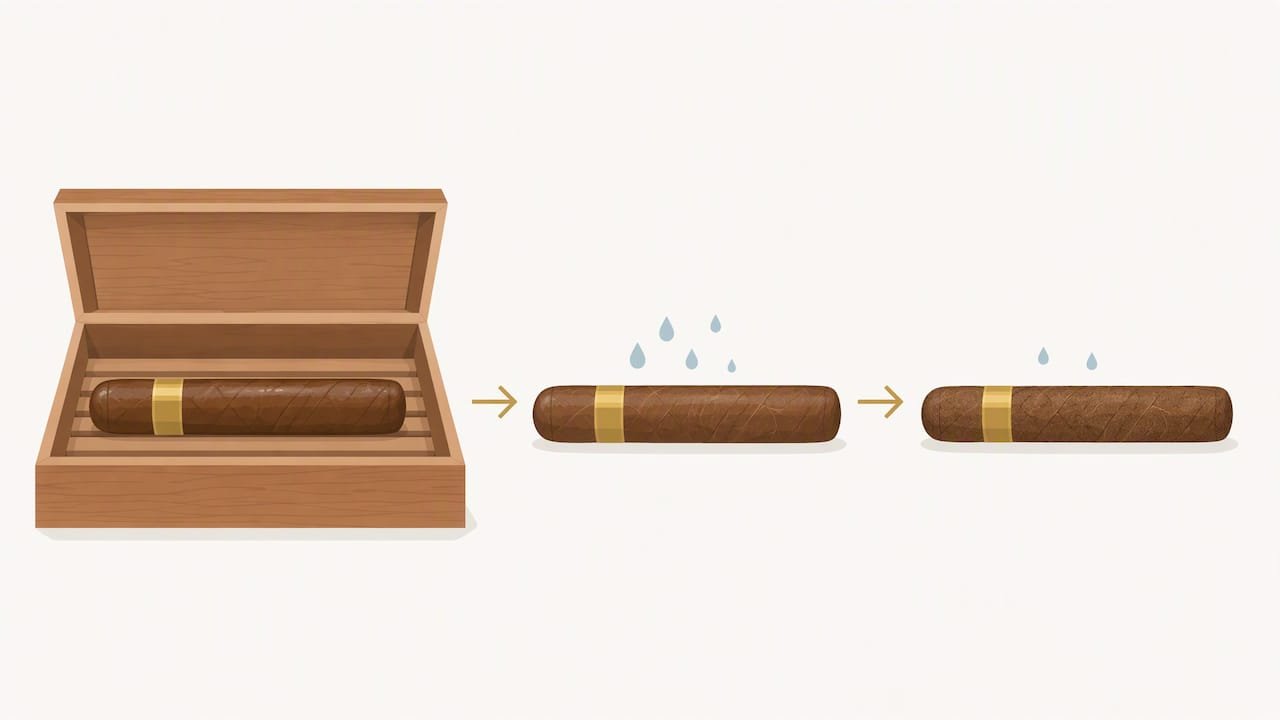
Dry boxing briefly removes a cigar from humidified storage so it can shed a few points of moisture and burn more evenly. We recommend it for over-humidified sticks, dense or full-bodied blends, and anything drawing tight, typically for 12 to 48 hours before you light up. It fixes draw and burn issues fast without permanently changing how you store the rest of your collection.
TL;DR:
- Look for humidity above 68%, a spongy feel, or a tight unlit draw; slim parejos and mild blends rarely need dry boxing.
- Allow 8–16 hours for slim cigars, 12–24 for robustos, 24–36 for toros, and 36–48 for large or box pressed cigars.
- Use an empty cedar box at room temperature, away from vents and sunlight, with space around the cigar to moderate moisture loss.
- Check every 8 to 12 hours in extreme climates, and add about 12 hours for blends rich in ligero; stop if the wrapper turns brittle.
- Correct persistently high humidor humidity instead of repeatedly drying cigars, because repeated cycles can split wrappers and cracked leaf will not recover.
Table of Contents
- What dry boxing does and why it helps cigars
- When to dry box: indicators and which cigars benefit
- How to dry box cigars step by step
- Expert tweaks and troubleshooting
- Precautions, health context, and responsible notes
- Author perspective: when I reach for dry boxing
- Where to buy cedar boxes, humidors, and cigars
- FAQ
- Sources
What dry boxing does and why it helps cigars
The leaf swells, air channels narrow, and the draw gets harder to pull. Dropping the relative humidity by roughly 5 to 10 percentage points loosens that packing just enough to open the draw back up, according to Stick Picks’ dry boxing guide.
That small shift changes more than draw resistance. It affects how cleanly the cigar burns and how clearly you taste it.
- Tight draw: excess moisture swells filler leaf and restricts airflow through the bunch.
- Uneven burn: overly damp wrappers burn slower on one side, causing canoeing or tunneling.
- Muted flavor: trapped moisture dulls the volatile compounds that carry aroma and taste.
Results vary by blend density and by how your humidor is calibrated.
When to dry box: indicators and which cigars benefit
You do not need to dry box every cigar before every smoke. The technique solves specific, identifiable problems, so check for these signs first.
- Hygrometer reading: your humidor consistently sits above 68% relative humidity.
- Pinch test: the cigar feels spongy or squishes rather than yielding slightly.
- Tight draw on a test puff: air barely moves through an unlit cigar.
- Recent over-humidification: you just added a fresh Boveda pack or the cigar sat near a humidifying element.
Cigars with big ring gauges, box-pressed shapes, and ligero-heavy, full-bodied blends tend to benefit most because their dense filler holds moisture longer. Slimmer parejos and milder blends usually need little or no dry boxing.
Dry boxing a cigar that is already well-conditioned only risks drying it out past the point of good burn.
How to dry box cigars step by step
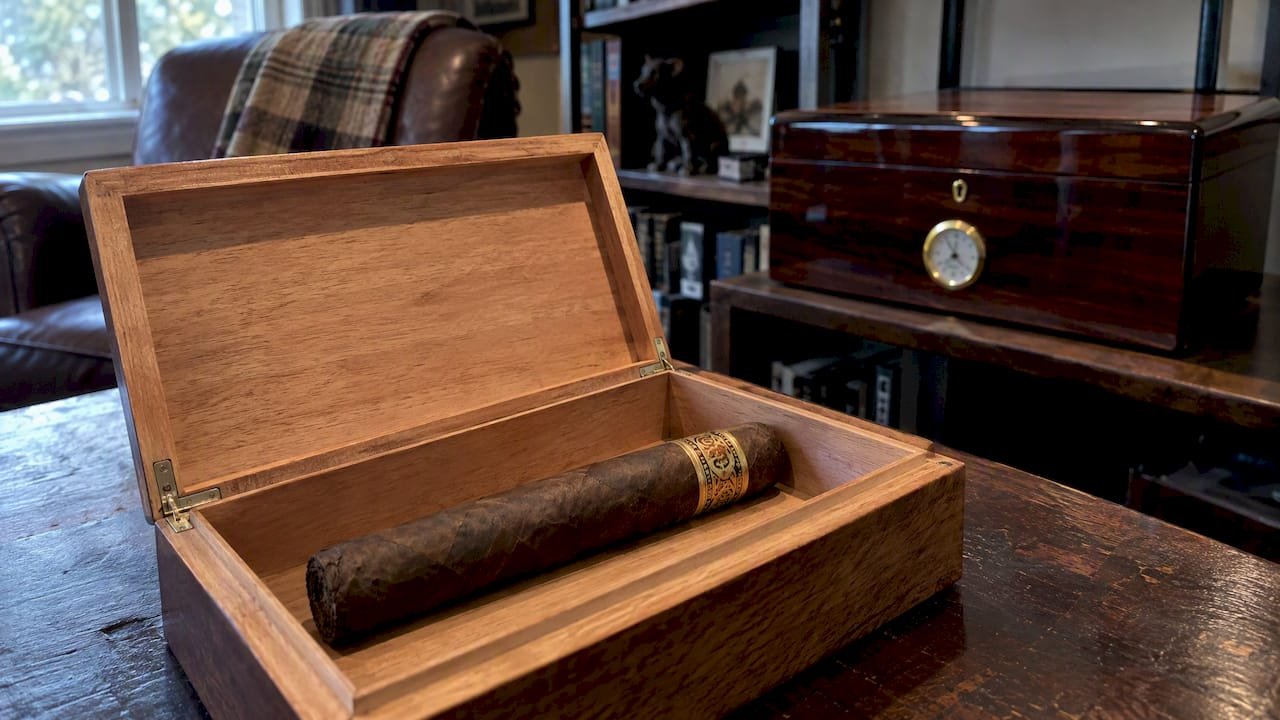
Cedar is the material of choice for this process. An empty cedar cigar box buffers the drying process instead of shocking the wrapper the way an open countertop or a sealed plastic container with no cedar lining would, per Stick Picks. Cedar also absorbs some of the released moisture rather than trapping it against the cigar.
- Pull the cigar from your humidor and set it on a flat cedar surface with a little air space around it.
- Place it in an empty cedar box, lid closed if your room runs humid, slightly ajar if your room runs dry.
- Leave it at room temperature, away from HVAC vents, radiators, and direct sunlight.
- Check it at the intervals below, then run a pinch test before lighting.
Pro Tip: Check progress with a gentle pinch, not a hard squeeze. You want firm with a slight give, never rock-hard or crackly.
| Vitola / ring gauge | Typical dry box window |
|---|---|
| Slim parejos (under 42 ring gauge) | 8 to 16 hours |
| Robusto / 48 to 52 ring gauge | 12 to 24 hours |
| Toro / double corona | 24 to 36 hours |
| 58+ ring gauge or box-pressed | 36 to 48 hours |
These windows come from practiced ring-gauge timing adjustments documented by Stick Picks, and they assume a room near normal indoor temperature with no extreme ambient humidity. If the wrapper starts to look dull or feels brittle at the foot, you have gone too far. Pull it, smoke it soon, and shorten the window next time.
Expert tweaks and troubleshooting
Once you have the basic windows down, a few adjustments make the process more precise.
- Full-bodied, ligero-forward blends hold moisture deeper in the bunch, so add roughly 12 hours to whatever window the ring gauge suggests.
- In very dry or very humid climates, check the cigar every 8 to 12 hours instead of waiting for the full window, since ambient conditions shift the pace of moisture loss.
- If a cigar comes out over-dry, a brief return to the humidor, an hour or two at most, can bring back some elasticity, but a cracked or split wrapper will not recover.
- Stop reconditioning attempts once the wrapper shows visible cracking. At that point, smoke it rather than risk it’s falling apart in your hand.
Precautions, health context, and responsible notes
Dry boxing is a storage technique, not a health intervention. Cigar smoke contains toxic compounds linked to cancer, and the CDC notes there is no safe level of tobacco use, with risk rising alongside frequency and how deeply smoke is inhaled. A Surgeon General review of cigar smoking similarly found that cancer risk climbs with more cigars smoked per day and deeper inhalation.
- Fix a chronically over-humidified humidor instead of dry boxing every cigar you pull, since repeated drying just masks the underlying storage problem.
- Watch for wrapper splitting if you dry box the same cigars repeatedly.
- Avoid storing or drying cigars near sudden temperature or humidity swings, which stress the wrapper regardless of technique.
Author perspective: when I reach for dry boxing
I dry box when three things line up: my hygrometer shows high humidity, the pinch test feels spongy, and I plan to smoke within the day. Last time, a 56 ring gauge toro sat in a cedar box for about 30 hours and came out drawing noticeably easier with a cleaner burn. Before trusting any of this, calibrate your hygrometer so the reading you’re acting on is accurate.
— Kevin
Where to buy cedar boxes, humidors, and cigars
Getting consistent dry box results starts with the right hardware, and that’s where we come in. Our Humidors collection includes cedar boxes and calibrated units built for the kind of controlled drying this technique depends on, while our Accessories range covers hygrometers and cutters that round out the setup.

If you want to practice dry boxing across different vitolas and blend profiles before committing to full boxes, our Samplers give you variety in one order. We also curate rare and limited-edition cigars that are hard to find elsewhere, backed by staff who can walk you through storage questions specific to your collection. Browse our cigars and check out current promotions on our exclusive discounts page for savings on your first order.
FAQ
What is the 135 rule for cigars?
There is no standard rule documented in cigar storage guidance with that number, so treat such claims cautiously rather than as established standards.
How long should you dry box cigars?
Most cigars need 12 to 48 hours depending on vitola, with slim parejos on the short end and 58+ ring gauge or box-pressed shapes on the long end, according to Stick Picks. Full-bodied, ligero-heavy blends typically need about 12 hours longer than the base window.
What is the Rolls Royce of cigars?
There is no single agreed-upon “Rolls Royce” of cigars since preference varies widely by palate and blend style. We carry a curated selection of rare and limited-edition cigars from renowned brands for readers looking to explore top-tier options.
Is 2 cigars a week bad?
Cigar smoking carries cancer risk at any frequency, and that risk rises with how many cigars you smoke and how deeply you inhale, per the CDC. There is no frequency considered free of risk, so any smoking decision should weigh that against personal health context.
Sources
- Cigars | Smoking and Tobacco Use | CDC
- Disease consequences of cigar smoking (Surgeon General review excerpt)
- How to Dry Box Cigars: When, Why & How Long | Stick Picks