Cigar Ashtrays by Setting: One Rest Solo, Four to Six for Hosts
Solo smokers do best with a single-rest, deep-bowl ceramic ashtray, while social sessions call for a heavier multi-rest piece in ceramic or stone. Outdoor settings need weight and wind resistance, so metal or weighted stone wins there, and travel calls for a covered or lidded design. Accessories built around each of these scenarios make matching style to setting straightforward.
TL;DR:
- Match capacity to company: one rest for solo sessions, two to three for a couple or friends, and four to six for regular hosting.
- If you smoke ring gauges of 60 or larger, test your thickest cigar in the groove; a narrow rest can destabilize it.
- Outdoor ashtrays need enough mass and a base that resists sliding; the retailer favors designs weighing 2 to 5 pounds, depending on size.
- Empty ash after each session, wipe ceramic or stone with a damp cloth, dry metal inserts fully, and let cigars self extinguish rather than crushing them.
Table of Contents
- Types and materials of cigar ashtrays
- How to choose: features, sizing, and capacity
- Recommended options by use case
- Use, etiquette, and maintenance
- History and cultural significance of cigar ashtrays
- Design and aesthetic considerations for matching decor
- Kevin’s perspective and Thor’s Cigar Vault expertise
- Shop matching ashtrays and accessories at Thor’s Cigar Vault
- FAQ
- Sources
Types and materials of cigar ashtrays
Cigar ashtrays are built differently from cigarette ashtrays because they handle larger ring gauges and a much higher ash volume, with deeper bowls and wider grooves to keep the lit end from touching the basin, as explained in this cigar ashtray types guide. The number of rests tells you the intended use. A single-rest ashtray suits one smoker at a desk or patio chair. Double-rest versions work for a couple sharing a porch. Four-finger ashtrays handle small groups, and lounge or communal pieces with six or more grooves are made for hosting.
Material changes how an ashtray performs and how it looks on a shelf or table.
- Ceramic or porcelain: elegant finish, resists heat well, but can chip if dropped.
- Glass or crystal: heavy and attractive, though prone to scratching and showing ash residue over time.
- Metal: highly durable and a strong choice outdoors, since wind and rough handling matter less.
- Marble or stone: stable and decorative, with enough mass to resist tipping.
- Silicone or resin: lightweight, inexpensive, and easy to pack for travel.
- Wood with heat inserts: attractive for indoor display but needs careful upkeep since the wood itself cannot touch hot ash.
Rest shape and bowl depth matter more as cigars get thicker. A shallow groove designed for a slim corona will let a 60 ring gauge robusto wobble or roll, while a bowl that’s too shallow lets the lit end scorch the basin instead of resting safely above it.
How to choose: features, sizing, and capacity
Picking the right ashtray comes down to four things: how many people usually smoke with you, how stable the base needs to be, whether the grooves fit your cigars, and how easy the piece is to clean.
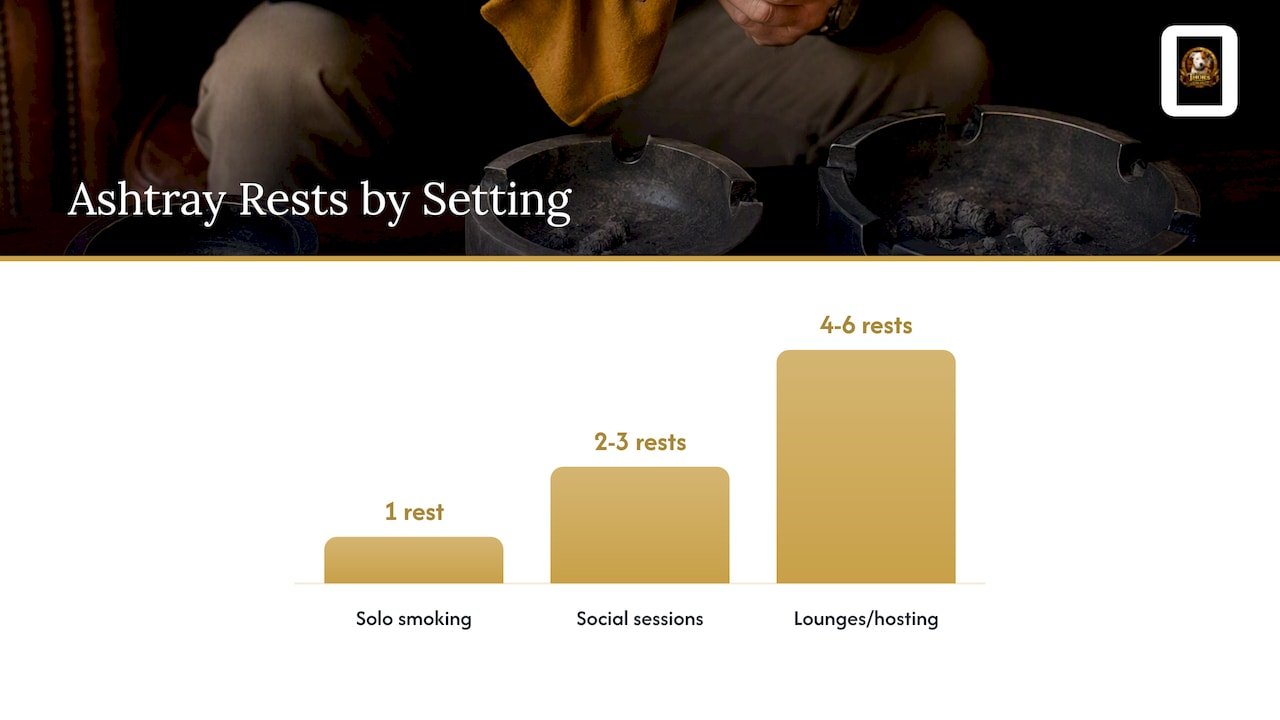
Capacity should match your typical session. One rest covers solo smoking. Two to three rests handle a couple of friends. Four to six rests make sense for lounges or anyone who hosts regularly, since a single-rest ashtray in a group setting creates crowding and can damage cigars set on the wrong surface.
Weight matters most outdoors. A lightweight ashtray may tip in a breeze and scatter ash across a table or deck, so look for a stable design with a non-slip base to keep it anchored even in windy conditions.
Groove width and bowl depth protect the wrapper. A groove that’s too narrow forces a thick cigar to balance awkwardly, and a bowl that’s too shallow lets the foot touch down and smudge soot onto the wrapper, undermining the even burn that comes from proper lighting technique.
Before buying, run through this checklist:
- How many rests do I actually need based on how often I host?
- Will this ashtray sit outdoors, and if so, is it heavy enough to resist wind?
- Do the grooves comfortably fit my usual ring gauge, including thicker cigars?
- Is the bowl deep enough to keep the lit end clear of the basin?
- Can I clean it easily, and does it have removable or rust-resistant inserts?
Pro Tip: If you regularly smoke ring gauges of 60 or larger, test a groove with your thickest cigar before buying, since narrow rests are the most common fit complaint.
Recommended options by use case
Matching an ashtray to your habits starts with three questions: how often you smoke, whether you’re usually alone or with others, and whether you’re mostly indoors or out. From there, the right style becomes obvious.
- Solo smokers: a single-rest ceramic ashtray with a deep bowl keeps things simple and looks good on a desk or side table.
- Social sessions: a 2 to 4 rest piece in heavy ceramic or stone handles multiple cigars without crowding and resists tipping when drinks and hands are moving around it.
- Outdoor settings: a weighted metal or stone ashtray stands up to wind and rough patio surfaces better than lighter materials.
- Travel: a covered or lidded design keeps ash contained in a car, boat, or bag, which matters more than capacity when you’re moving around.
Our accessories category covers a variety of options, from compact single-rest pieces for home use to sturdier designs suited for patios and travel. If you’re not sure which fits your habits, our team can help you select options based on your typical smoking environments.
Use, etiquette, and maintenance
Good ashtray habits protect both the cigar and the surface it sits on. Columbia University’s cigar etiquette guidance notes that a cigar should not be treated like a cigarette: let the ash build and fall naturally rather than tapping constantly, and never crush a cigar to put it out, since crushing causes concentrated odor and wrapper damage. Instead, rest it in the groove and let it self-extinguish.
Maintenance is straightforward but easy to skip. Empty ash after each session, wipe ceramic and stone with a damp cloth, and dry metal inserts completely to prevent rust, following the care steps in this ashtray buying guide.
Common mistakes include using an ashtray that’s too small for the group, mixing cigarette ash into the same bowl, and letting stubs sit for days instead of clearing them promptly.
A simple rule of thumb: one rest for solo smoking, two to three for social sessions, and four to six for lounges or group hosting, a sizing guide worth keeping in mind whenever you shop for a new piece.
History and cultural significance of cigar ashtrays
Ashtrays made specifically for cigars grew out of the broader rise of cigar culture in private clubs, parlors, and lounges, where a dedicated resting piece signaled that cigars, not cigarettes, were the focus of the room. Heavier materials like marble and crystal became common in these spaces partly for durability and partly as a visual cue: a substantial ashtray suggested a slower, more deliberate smoking ritual rather than a quick break.
As home humidors and personal cigar collections became more common, the ashtray moved from club furniture to a personal accessory, often chosen to match a den, bar cart, or outdoor patio set. Many smokers now treat their ashtray as part of the ritual itself, something to be selected with the same care as a cutter or lighter rather than an afterthought. That shift reflects how cigar smoking has settled into both social and solitary routines, with the ashtray serving as a small but consistent fixture across both.
Design and aesthetic considerations for matching decor
An ashtray sits in plain view for the length of a smoking session, so its look matters as much as its function. Ceramic and porcelain pieces tend to suit indoor settings with a classic or formal feel, while brushed metal reads more modern and holds up better against outdoor furniture and grill stations. Marble and stone pieces lean decorative and work well on a bar cart or coffee table where they double as a conversation piece even when not in use.
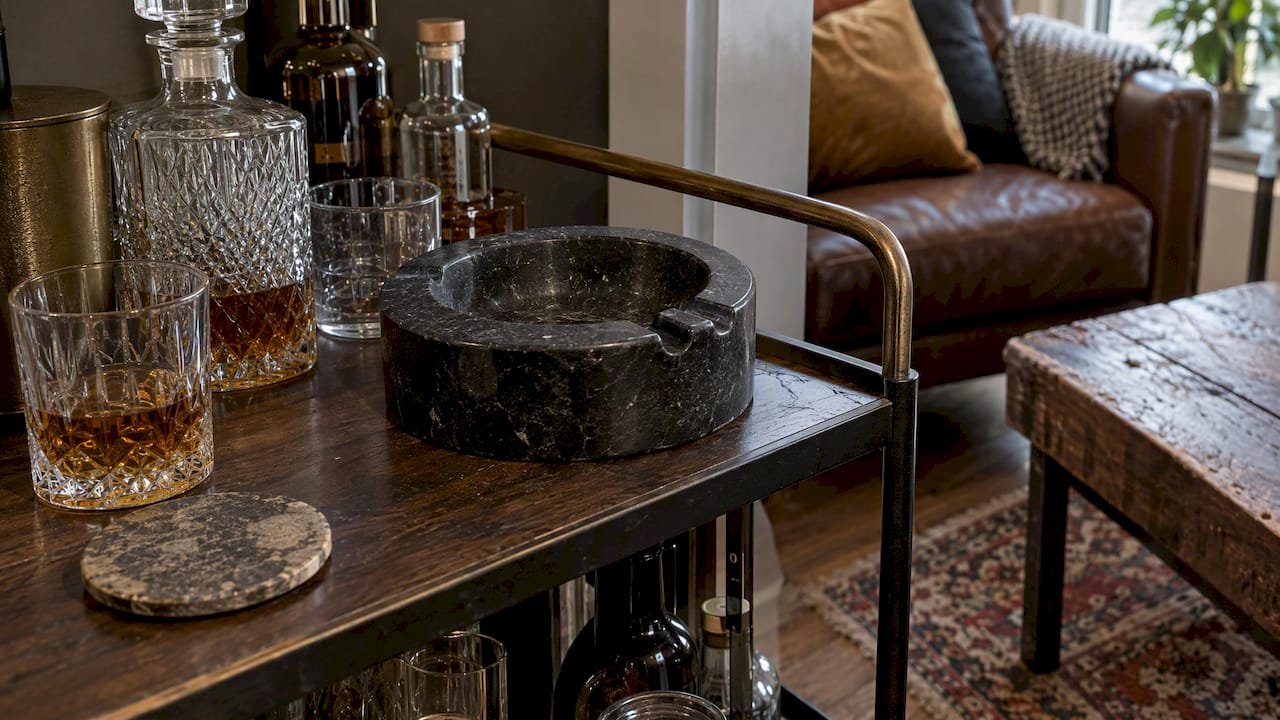
Color and finish matter too. A dark matte stone blends into a traditional den, while a lighter ceramic glaze can brighten a patio table. For lounges or shared spaces, a larger communal ashtray in a neutral stone or metal finish tends to fit more decor styles than a brightly patterned piece, since it needs to work across different seating arrangements and lighting. Matching the ashtray to the room, rather than treating it as a purely functional item, is part of why collectors often own more than one, swapping pieces between indoor gatherings and outdoor sessions depending on the setting.
Kevin’s perspective and Thor’s Cigar Vault expertise
Writing about lighting technique taught me how much ashtray choice depends on conditions you don’t always plan for. My post on lighting a cigar in wind covers the 10 to 15 second toast and rotation technique, and that same wind problem is exactly why a light ashtray fails outdoors: it tips before the cigar even gets lit properly.
That’s shaped how we think about curating accessories. We favor pieces with enough mass for patio use, generally in the 2 to 5 pound range depending on size, and grooves wide enough for ring gauges of 60 and above without forcing the cigar to balance on its edge. Readers who pair an ashtray with proper storage habits tend to get more consistent results session to session.
— Kevin
Shop matching ashtrays and accessories at Thor’s Cigar Vault

Once you know your use case, the next step is simple: match it to a real product. Our accessories page covers single-rest, social, outdoor, and travel-friendly options, and our team can help you pick a groove width and weight that fit the cigars you actually smoke.
FAQ
How does an ashtray work?
A cigar ashtray holds ash and rests the cigar in a groove that keeps the lit end above the bowl instead of touching it. This prevents the foot from scorching the surface and lets ash build naturally until it’s emptied, as outlined in this cigar ashtray guide.
How do I know which side of a cigar to light?
Light the end you cut, known as the foot, while keeping the cap, the rounded end you draw from, intact. Toasting the foot evenly and rotating it during lighting, as described in this lighting technique guide, helps avoid an uneven burn later in the session.
What is the best ashtray?
The best ashtray depends on your setting: a single-rest deep bowl ceramic piece suits solo smoking, a heavier 2 to 4 rest ceramic or stone piece fits social sessions, and a weighted metal or stone design holds up best outdoors. Our accessories category organizes options by these use cases.
Why do you wet a cigar before smoking?
Some smokers lightly moisten the cap before cutting or lighting to make the wrapper easier to cut cleanly and to reduce the chance of the wrapper unraveling. This isn’t universal practice, and a well-humidified cigar often doesn’t need extra moisture at all.