

Don’t Inhale Cigars: Beginners’ Flavor Technique and Health Risks
Do not inhale cigar smoke. Draw the smoke into your mouth, let it sit for the flavor, and exhale without pulling it into your lungs. Inhaling pushes your risk toward cigarette-level territory, while even the mouth-only method still exposes you to cancer risk and nicotine absorption through the oral mucosa. Below, you’ll find the medical reasoning from the Mayo Clinic and National Cancer Institute, plus the technique that actually makes cigars enjoyable without the harsh, gagging burn beginners associate with inhaling.
TL;DR:
- Inhaling cigar smoke increases risks for lung disease and cancer, with a large cigar containing as much tobacco as an entire pack of cigarettes.
- Skipping inhalation shifts the health risks to mouth, throat, and esophageal cancers, while nicotine absorption still occurs through the mouth lining.
- Proper technique involves slow pacing, careful lighting, and matching the cigar to your experience level to avoid harshness and over-puffing.
- Retrohaling enhances flavor without lung exposure, but beginners should master mouth draws first to prevent irritation and coughing.
- Even smoking one or two cigars weekly does not eliminate health risks, as nicotine dependence and cancer hazards persist regardless of frequency.
Table of Contents
- What Medical Authorities Say About Inhaling Cigars and Health Risks
- Why You Shouldn’t Inhale, and How to Smoke a Cigar the Right Way
- Retrohaling: How to Taste More Without Inhaling
- Does Smoking One or Two Cigars a Week Make It Safe?
- How Cigars Compare With Cigarettes: Overlap and Differences
- Where Beginners Can Learn More and Shop With Confidence
- The Editorial Take: Why “Don’t Inhale” Isn’t the Whole Story
- Ready to Start? Try a Beginner Sampler Built for Flavor, Not Strength
- Sources
- FAQ
What Medical Authorities Say About Inhaling Cigars and Health Risks
Cigars aren’t a gentler cousin of cigarettes, no matter what the cigar lounge conversation might suggest. The National Cancer Institute states plainly that no level of cigar smoking is safe, and that a single large cigar can pack the tobacco equivalent of an entire pack of cigarettes. That matters most if you inhale, since you’re pulling a concentrated dose of tar, carbon monoxide, and nicotine straight into lung tissue built to absorb it fast.
The Mayo Clinic puts a finer point on it: inhale cigar smoke and your risk profile starts resembling a cigarette smoker’s, with elevated odds of lung cancer, heart disease, and COPD. Cigar smoke can actually carry more tar per puff than cigarette smoke, so inhaling isn’t a lighter version of the same habit. It’s arguably a rougher one.
Here’s what surprises a lot of new smokers: skipping the inhale doesn’t make cigars safe. It just changes where the damage lands.
Cancer and nicotine risks that persist even without inhaling:
- Cancers of the mouth, throat, and esophagus rise with regular cigar use, since smoke and saliva bathe those tissues directly.
- Nicotine absorbs through the mouth lining regardless of whether smoke ever reaches your lungs, which is how mouth-only smokers still develop dependence.
- Swallowed saliva carries carcinogens down the esophagus, a pathway public-health researchers flag as a distinct cancer risk separate from inhalation.
- Secondhand cigar smoke contains the same toxic chemical load as secondhand cigarette smoke, putting bystanders, kids, and pregnant partners at risk in shared rooms.
A single large cigar can equal a full pack of cigarettes in tobacco content — which is the statistic worth sitting with before you light up your next Churchill. That’s not a reason to panic over the occasional cigar, but it’s a reason to stop thinking of cigars as the “safe” alternative to cigarettes.
Why You Shouldn’t Inhale, and How to Smoke a Cigar the Right Way
Cigarette smoke is engineered to be inhaled: lower pH, milder tobacco curing, filters designed for lung delivery. Cigar smoke is neither. It runs hotter, denser, and more alkaline, which is exactly why pulling it into your lungs triggers immediate coughing for most people. That gag reflex isn’t a beginner failure. It’s your airway correctly rejecting something it wasn’t built to process.
Here’s the technique that sidesteps the problem entirely:
- Cut the cap cleanly with a sharp guillotine or V-cutter, removing just enough to open the draw without unraveling the wrapper.
- Toast before you light, rotating the foot over a flame until it glows evenly, then draw gently while lighting the rest.
- Draw into your mouth only, holding smoke there for a second or two to taste it, then release it without ever pulling toward your throat.
- Pace yourself at one puff every 30 to 60 seconds, letting the cigar rest between draws so it doesn’t overheat and turn bitter.
- Let the ash build naturally rather than tapping it off early, since a longer ash column helps regulate burn temperature.
- Rest the cigar in an ashtray notch between puffs instead of holding it constantly, which also cools the smoke before your next draw.
The most common beginner mistake is over-puffing, treating a cigar like a cigarette you’re trying to finish in five minutes. Overheat a cigar and every note turns acrid and harsh, which then tempts people to inhale just to get something enjoyable out of it. Slow down instead.
On etiquette: never relight a cigar someone else started without asking, don’t blow smoke toward another guest’s face, and if you’re in a shared lounge, angle your exhale away from the table.
Pro Tip: If a cigar tastes harsh or bitter, the fix usually isn’t a different cigar. Slow your pace by 15 to 20 seconds between puffs and let it cool before you write it off.
Retrohaling: How to Taste More Without Inhaling
Retrohaling is how experienced smokers pull deep flavor out of a cigar without touching their lungs at all. You draw smoke into your mouth, close your lips, then gently push it back out through your nose. That routes the aroma across your olfactory receptors, the same ones responsible for most of what you perceive as “taste,” without sending any smoke toward the lungs. It’s a distinct skill from inhaling, and confusing the two is a common beginner mix-up.
A basic drill to try:
- Take a small mouth draw, smaller than you would for a normal puff.
- Close your lips and exhale slowly through your nose, keeping the amount light.
- Notice the aroma shift. Spice, pepper, and earth notes often show up here that you missed on the mouth alone.
- Stop immediately if you feel burning, coughing, or nasal irritation. That’s your cue you pushed too much volume.
Master the plain mouth draw first. Retrohaling on top of a technique you haven’t settled into yet just multiplies the chance of an unpleasant coughing fit in front of other people.
Does Smoking One or Two Cigars a Week Make It Safe?
No. Lower frequency reduces your total exposure over time, but it doesn’t create a safe threshold. There’s no dose of tobacco smoke that clears you of risk, occasional or otherwise, and nicotine absorbs through the mouth lining regardless of how often you light up.
What “occasional” actually changes, and what it doesn’t:
- Fewer cigars per week means less cumulative tar and carcinogen exposure over a lifetime, which likely does lower your absolute risk compared to daily smoking.
- It does not eliminate the oral and esophageal cancer risk tied to smoke and saliva exposure, even at low frequency.
- Nicotine dependence can still develop from occasional use, since the mouth lining absorbs it every time regardless of how many cigars you’ve smoked that month.
- A single large cigar containing tobacco equivalent to a full pack of cigarettes means “just one” is doing more than it sounds like.
You may have heard of the “135 rule” among cigar enthusiasts. That’s a casual pacing guideline, roughly a puff a minute, meant to stretch out a smoking session and keep flavor from turning bitter. It has nothing to do with health safety, and treating it as a dosage limit misreads what it was designed for.
How Cigars Compare With Cigarettes: Overlap and Differences
Cigars and cigarettes share the same core hazard: burned tobacco. Where they differ is size, curing process, and how people typically consume them. A cigarette is small, inhaled by default, and smoked in a few minutes. A cigar is larger, traditionally kept in the mouth, and can take an hour or more to finish.
- When inhaled, cigar risk converges with cigarette risk for lung cancer, heart disease, and COPD, sometimes exceeding it given the larger tobacco mass in a single cigar.
- When not inhaled, cigars still carry distinct oral and esophageal cancer risk that cigarettes carry too, just distributed differently across the mouth, throat, and lungs.
- Secondhand smoke from both products contains comparable toxic chemicals, so “cigar smoke is milder for bystanders” doesn’t hold up.
The safest option by far is not smoking tobacco at all. If you’re going to smoke cigars anyway, mouth-only technique and infrequent use are the harm-reduction moves available to you, not a guarantee of safety.
Where Beginners Can Learn More and Shop With Confidence
Getting comfortable with cigars is easier when you start with the right cigar, not just the right technique. Milder, well-balanced blends give first-timers room to practice mouth draws and retrohaling without the intensity that pushes people toward accidental inhaling.
- Sampler packs let you compare several profiles in one purchase instead of guessing blind on a single stick.
- Mild-to-moderate blends, like those in the Illusione sampler, suit new smokers better than full-bodied cigars.
- A proper cutter and a stable humidor protect your investment and keep draw quality consistent.
- Thor’s Cigar Vault’s blog covers technique and etiquette in more depth for readers who want to go further.
The Editorial Take: Why “Don’t Inhale” Isn’t the Whole Story
Most beginner advice stops at “don’t inhale,” as if that single instruction resolves the health question. It doesn’t, and treating it that way sets people up for a false sense of security. The mouth lining absorbs nicotine just fine, and the oral cavity carries its own distinct cancer risk that has nothing to do with your lungs. That’s the piece conventional advice glosses over.
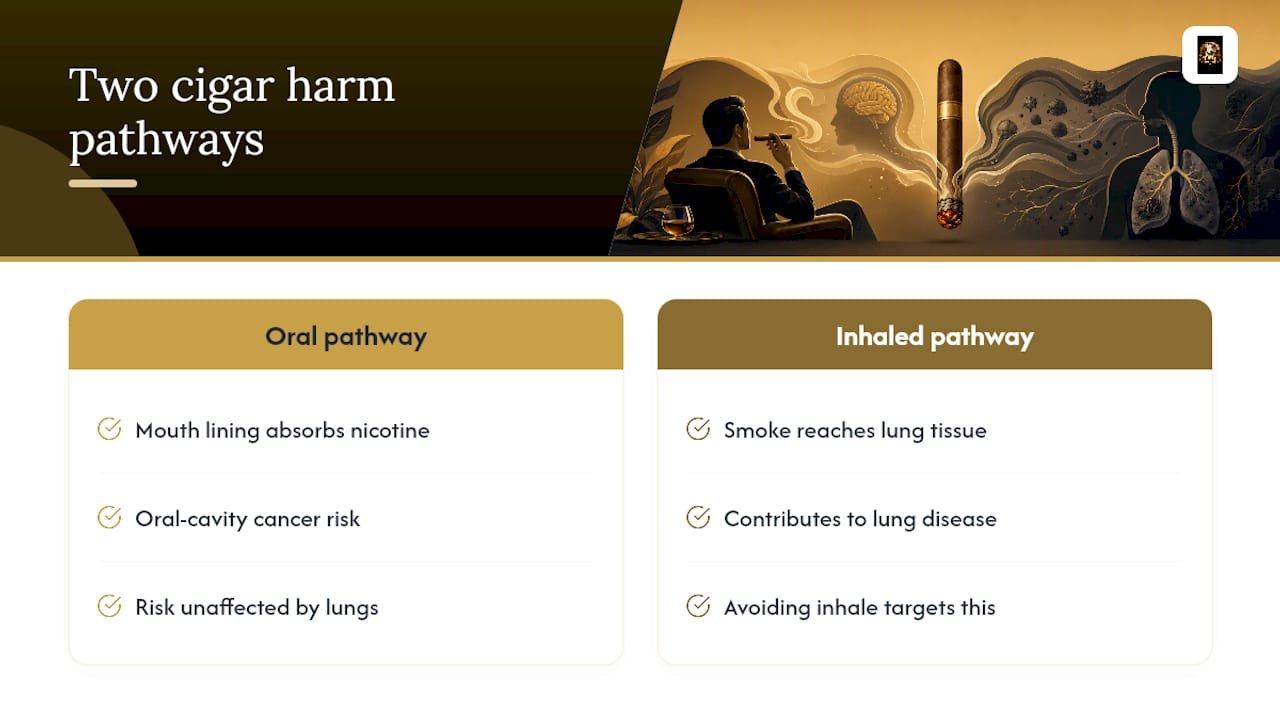
What actually deserves your attention, in order: technique first, because a rushed, over-puffed cigar is what tempts people to inhale in frustration. Pacing second, since slowing down solves more flavor problems than switching cigars ever does. And retrohaling third, once mouth draws feel automatic, not before.
If you’re going to smoke cigars at all, do it slowly, occasionally, and with a cigar suited to your experience level. That’s not a health guarantee. It’s the most honest version of harm reduction this category has to offer.
— Kevin
Ready to Start? Try a Beginner Sampler Built for Flavor, Not Strength
Picking your first cigar blind is how a lot of beginners end up over-puffing, chasing flavor by smoking too fast, and accidentally inhaling out of frustration. Thor’s Cigar Vault built its sampler collections specifically to solve that problem: curated, mild-to-moderate blends chosen so you can practice mouth draws and retrohaling without wrestling a cigar that’s too intense for where you are.

The Illusione sampler and the Artesano Del Tobacco El Pulpo sampler both give new smokers a range of profiles to compare in one order, rather than betting on a single unfamiliar stick. Pair either one with a reliable humidor to keep your cigars at the right humidity between sessions. None of this replaces medical guidance on tobacco use. It’s simply the easiest way to start smoking the right way from your very first cigar. Browse the full shop or grab your exclusive discount to get started.
This article is general information, not a substitute for advice from a qualified doctor. Consult a qualified healthcare professional about your own circumstances before acting on anything here.
Sources
- Cigar Smoking and Cancer – National Cancer Institute
- Cigar smoking: Safer than cigarette smoking? – Mayo Clinic
- Cigars – The Real Cost (U.S. Department of Health & Human Services)
- Do you inhale cigars? No, never, and here’s why – The Manual
FAQ
What is the 135 rule for cigars?
The 135 rule is a casual pacing guideline among cigar enthusiasts, roughly one puff per minute, used to stretch a session and avoid overheating the tobacco. It’s a flavor and timing tip, not a medical safety threshold.
Is smoking one or two cigars a week okay?
Lower frequency reduces your cumulative tobacco exposure compared to daily smoking, but no amount of cigar smoking is considered safe by health authorities. Nicotine still absorbs through the mouth lining and oral cancer risk remains present even at low frequency.
Are cigars okay if you don’t inhale?
No. Even without inhaling, cigar smoke raises the risk of cancers of the mouth, throat, and esophagus, and nicotine absorbs through the mouth lining regardless of whether smoke reaches your lungs.
Are cigars worse for your lungs than cigarettes?
If you inhale, cigar smoke can be comparably or more harmful than cigarette smoke since a single large cigar may contain the tobacco equivalent of an entire pack of cigarettes. If you don’t inhale, lung-specific risk drops, but oral and esophageal cancer risk remains.
What’s the safest way to enjoy a cigar as a beginner?
Draw smoke into your mouth only, pace your puffs every 30 to 60 seconds, and start with a mild sampler rather than a full-bodied cigar. Mastering the mouth draw before attempting retrohaling helps you avoid the coughing that tempts beginners to inhale.