Buy 3–5 Mild Cigars, Not a Box: Choose Cigars for Beginners
For a first cigar, go mild-to-medium, pick a robusto or corona, and choose a soft, sweet wrapper like Connecticut Shade. Budget a moderate amount per stick rather than gambling on a special edition or a full box of something you’ve never tried. Check the wrapper for cracks and dry patches before you buy, and grab a small sampler instead of committing to one cigar.
TL;DR:
- Starting with mild to medium cigars in robusto or corona sizes and a Connecticut Shade wrapper helps beginners minimize risk and better understand their preferences.
- Buying several small cigars with different wrappers and sizes provides more learning than purchasing a single cigar, allowing better taste comparison and insight.
- Cigar strength is mainly about nicotine and flavor intensity, with mild cigars suitable for beginners, and full-bodied blends fitting more experienced smokers after building tolerance.
- Proper cigar inspection—checking wrapper color, texture, and aroma—ensures better quality and burn, regardless of brand or price.
- A small, well-curated sampler costing $7 to $14, paired with basic accessories, is the best starting point for beginners aiming to explore without overspending.
Table of Contents
- How to Choose Cigars: A Quick Checklist for Shopping
- How Does Cigar Strength Work, and Which Level Should You Start With?
- Does Cigar Size Really Change the Flavor?
- What Do Cigar Wrappers Actually Tell You About Flavor?
- How Do You Inspect a Cigar Before Buying It?
- How Many Cigars Should a Beginner Buy, and What Should They Cost?
- When Should You Pair a Cigar With a Drink, and What Should You Pair It With?
- What Storage and Accessories Does a Beginner Actually Need?
- How Do You Cut, Light, and Smoke a Cigar the Right Way?
- How Can Thor’s Cigar Vault Help You Pick the Right Cigar?
- A Beginner’s Honest Note on Learning to Choose Cigars
- Ready to Build Your First Sampler?
- Sources
- FAQ
How to Choose Cigars: A Quick Checklist for Shopping
Before you touch a single cigar, decide three things: how strong you want it, how long you have to smoke, and what you’re willing to spend. That framework turns a wall of cigars into three or four real options instead of forty confusing ones.
Once you know those three answers, run through this list at the counter or on a product page:
- Set your ceiling first. Mild-to-medium strength, 45 to 60 minutes of smoking time, and a price cap around $10 to $12 keeps your first pick low-risk.
- Default to robusto or corona. These sizes are forgiving, widely available, and easy to compare across brands.
- Look for Connecticut Shade or another light-colored wrapper. It signals a creamier, milder smoke before you even light up.
- Check the wrapper by eye and touch. Even color, slight sheen, and a gentle spring to the squeeze mean it was stored well.
- Skip anything dry, cracked, or brittle. A wrapper that flakes or feels like paper has been sitting too long or in the wrong humidity.
- Buy several, not one. Three to five different mild-to-medium sticks teach you more in one sitting than a single cigar ever could.
That last point matters more than people expect. A one-off purchase tells you whether you liked that cigar. A small spread tells you what you actually like.
How Does Cigar Strength Work, and Which Level Should You Start With?
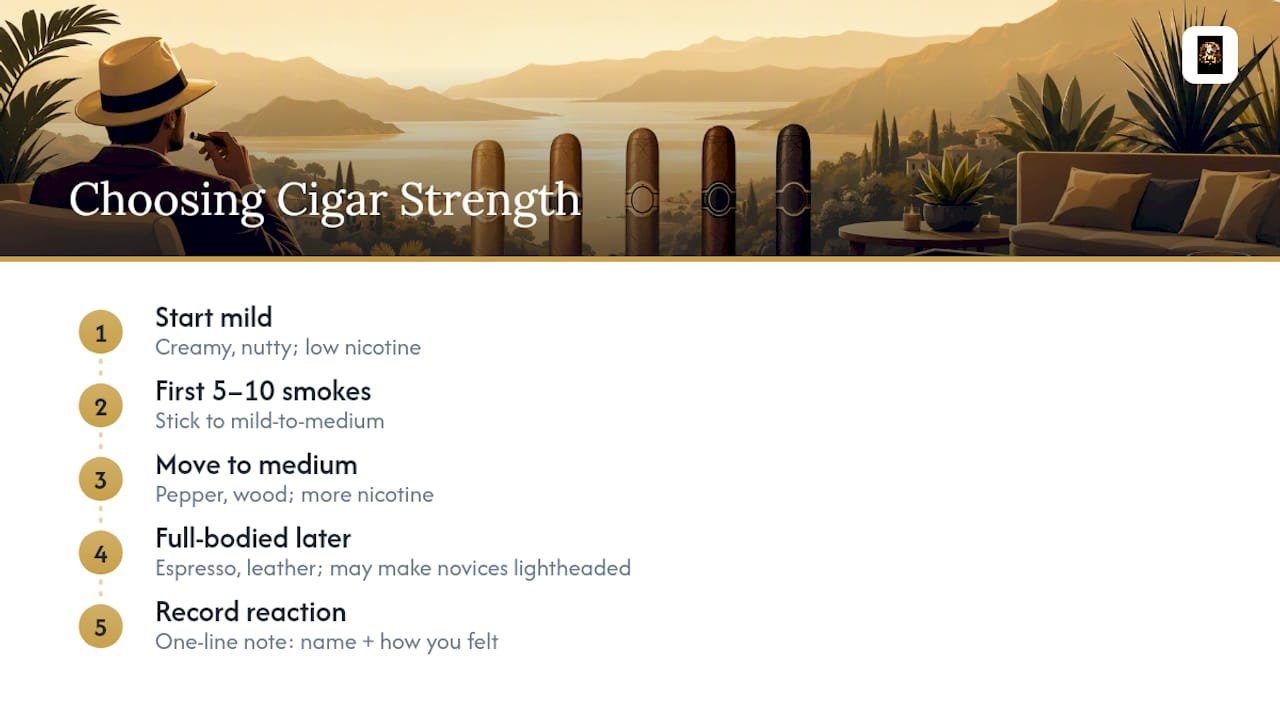
Cigar “body” or strength describes how much nicotine and flavor intensity hits you, not how good the cigar is. Mild cigars taste creamy, nutty, or lightly sweet and rarely cause any physical reaction. Medium cigars add pepper, wood, or coffee notes and a bit more nicotine punch. Full-bodied cigars bring espresso, leather, and dark spice, often paired with a nicotine hit strong enough to make an inexperienced smoker lightheaded.
Your tolerance depends on how often you smoke and how sensitive you are to nicotine, which varies a lot from person to person. Someone who vapes or smokes cigarettes regularly may handle a medium cigar on day one. Someone with zero nicotine exposure might feel it after a mild robusto.
The safest path is sequential: start mild, and stick with mild-to-medium sticks like a Connecticut Shade wrapped cigar for your first five to ten smokes. Only move into medium territory once you’ve smoked enough mild cigars to recognize your own baseline. Full-bodied cigars can wait until you’ve built up real comfort with medium blends. There’s no prize for jumping straight to the strongest thing on the shelf.
Pro Tip: Keep a one-line note after each cigar. Just write the name and how you felt. Lightheadedness, a racing heart, or mild nausea are your body telling you to dial the strength back, not push forward.
Does Cigar Size Really Change the Flavor?
Yes, and it changes more than flavor. Ring gauge, measured in 64ths of an inch, determines how thick the cigar is, and thicker cigars burn cooler and slower, often supporting more complex flavor development, while thinner ones burn hot and fast, concentrating flavor into a shorter, more intense smoke.
Length works alongside ring gauge to set your smoking time. A short, thick cigar and a long, thin one can weigh roughly the same in tobacco but smoke completely differently.
For a first cigar, two sizes cover almost every situation:
- Robusto (about 5 inches by 50 ring gauge): roughly 45 to 60 minutes, thick enough to stay cool, short enough to finish without your attention wandering.
- Corona (about 5.5 inches by 42 ring gauge): slightly longer and thinner, a classic proportion that burns evenly and reads as the traditional cigar shape most smokers picture.
Figurados, the tapered, torpedo-shaped, or oddly bulging cigars, look striking and often smoke beautifully once you know what you like. They’re just not the place to start, since their tapered burn takes more attention than a beginner needs to manage on cigar number one.
What Do Cigar Wrappers Actually Tell You About Flavor?
The wrapper is your best flavor predictor before you ever light up, more useful than brand names or country of origin alone. Wrapper leaf shapes a large share of what you taste in the first third of the smoke, though the filler and binder blend underneath still steers the overall character.
Here’s what the five wrapper families you’ll see most often actually deliver:
| Wrapper | Typical Strength | Flavor Cues |
|---|---|---|
| Connecticut Shade | Mild | Creamy, nutty, light sweetness |
| Cameroon | Mild to medium | Cocoa, subtle fruit, light spice |
| Habano | Medium to full | Spicy, earthy, peppery kick |
| Broadleaf | Medium to full | Sweet, robust, dark chocolate notes |
| Maduro | Medium to full | Sweet, dark, molasses or coffee depth |
A sensible progression looks like Connecticut Shade first, then Cameroon or a natural-leaf blend as your palate adjusts, then Habano or Broadleaf once you’re ready for more punch. Your existing taste in coffee, beer, or bourbon is actually a decent guide here: if you gravitate toward dark roast and stout beer, a Maduro will likely appeal faster than it would to someone who prefers a light lager. A cigar like the Foundation The Tabernacle Havana Seed Toro shows how origin and wrapper combine to build a specific flavor signature worth tasting once you’ve got a baseline.
How Do You Inspect a Cigar Before Buying It?
A cheap cigar in great condition beats an expensive one that’s been sitting in dry air for months. Run through this sequence before any purchase:
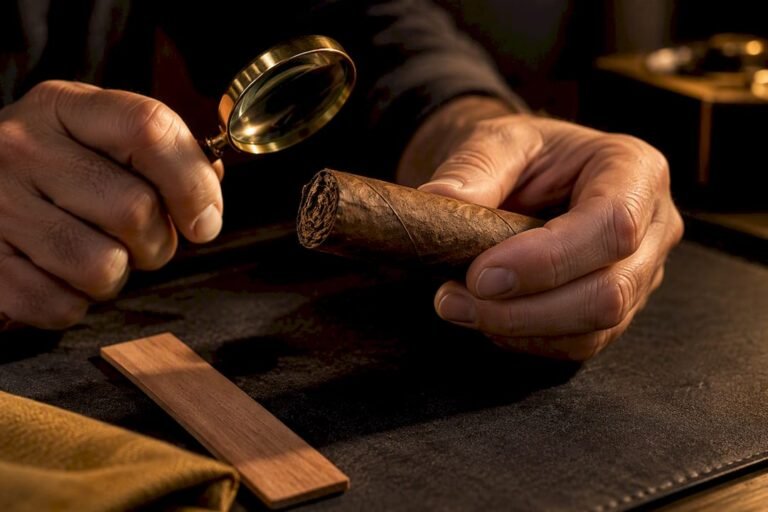
- Check the wrapper color. It should be even from foot to cap, with no blotchy patches or discoloration.
- Look for cracks or splits. Any visible crack means the wrapper dried out and the cigar likely won’t draw or burn evenly.
- Watch for white fuzz versus plume. A dusty white bloom (plume) is harmless oil crystallization; a fuzzy, cotton-like patch is mold, and that cigar goes back on the shelf.
- Give it a gentle squeeze. It should feel firm with a slight give, never rock hard or squishy with soft spots, since soft spots usually mean an air pocket or an uneven roll.
- Smell the foot. A rich, sweet, tobacco aroma is a good sign; anything musty, vinegary, or sour usually means poor storage.
These five checks matter more than brand recognition. A well-stored $9 cigar from a smaller maker will out-smoke a famous name that’s dried out on a bad shelf.
How Many Cigars Should a Beginner Buy, and What Should They Cost?
Skip the temptation to buy a box on your first trip. A $7 to $14 price band covers most well-made, mild-to-medium cigars from established makers, and that range gives you genuine quality without paying for rarity or hype you’re not yet equipped to appreciate.
Use this approach for your first purchase:
- Buy 3 to 5 different singles, or ask for a small curated sampler, instead of five of the same cigar.
- Keep one variable controlled. Try the same size across different wrappers, or the same wrapper across different sizes, so you can actually tell what changed the flavor.
- Hold off on boxes until you’ve found one specific cigar you’d happily smoke twenty more times.
- Ask directly for beginner picks. Tell staff your budget and that you’re new, and a decent tobacconist will steer you toward proven mild-to-medium options rather than whatever’s expensive.
A sampler pack like the Artesano Del Tobacco El Pulpo Sampler is built exactly around this logic: several distinct profiles in one box so you’re comparing, not guessing.
When Should You Pair a Cigar With a Drink, and What Should You Pair It With?
Time of day is your simplest guide. Morning favors milder cigars, afternoon suits medium blends, and evening is when fuller-bodied sticks make sense, mostly because your palate and your schedule both have more room for intensity later in the day.
Pairings work best kept simple:
- Connecticut Shade with a light coffee or a crisp lager, nothing that competes with its softness.
- Maduro or Broadleaf with dark roast coffee or a bourbon that can stand up to the sweetness without getting lost.
- Medium Habano blends with a mid-range whiskey or a session beer with some body.
As a beginner, resist pairing two intense things together. A full-bodied Maduro with a heavy, smoky scotch can overpower both, and you’ll end up tasting neither one clearly.
What Storage and Accessories Does a Beginner Actually Need?
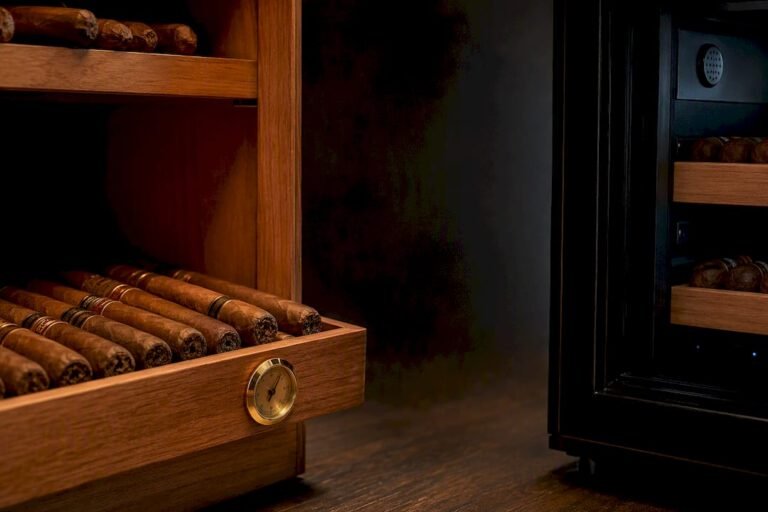
You don’t need a $400 cabinet to keep three cigars fresh for a weekend. A resealable travel case or a small zip-top humidor with a couple of Boveda packs will hold humidity steady for days, which is all a beginner’s rotation needs.
Three accessories cover almost everything:
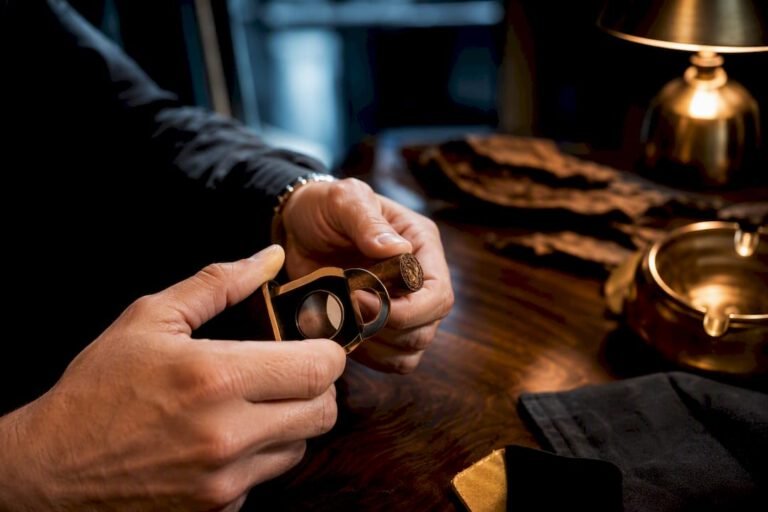
- A cutter. A simple guillotine cutter handles robusto and corona shapes cleanly.
- A torch lighter. Wind resistant and hot enough to toast a foot evenly, unlike a standard flame lighter.
- A hygrometer. Cheap digital hygrometers drift out of accuracy fast, so check yours with a basic salt-test calibration before trusting the reading.
A desktop humidor becomes worth the cost once you’re consistently holding ten or more cigars at a time, aiming for roughly 65% relative humidity. Until then, match your storage spend to how often you’re actually lighting up, not to how good a cabinet looks on a shelf.
How Do You Cut, Light, and Smoke a Cigar the Right Way?
Technique changes flavor as much as the cigar itself does. Rush the cut or the light, and even a great stick will taste harsh.
- Cut the cap. A guillotine cutter removes about 1/16 to 1/8 inch cleanly; a punch cutter works too and leaves more cap intact for a tighter draw.
- Toast before you light. Hold the foot near the flame without touching it, rotating until it glows evenly, then bring it to your mouth and draw while lighting properly.
- Puff slowly. One draw roughly every 45 to 60 seconds keeps the cigar cool and prevents the bitter, overheated taste that ruins a rushed smoke.
- Never inhale. Cigar smoke is meant to sit in your mouth, not your lungs.
- Let it end naturally. When the flavor turns flat or bitter near the last inch or two, set it down in an ashtray and let it go out on its own rather than stubbing it out like a cigarette.
How Can Thor’s Cigar Vault Help You Pick the Right Cigar?
Choosing well gets a lot easier with someone who actually knows the inventory guiding you. Thor’s Cigar Vault built its selection around renowned and boutique brands, curated sampler packs, and staff who can walk a first-time buyer through strength, wrapper, and size in a two-minute conversation instead of a guessing game.
If you tell staff your budget, your rough tolerance, and what you like to drink, they can hand you a short list instead of pointing at the wall. That’s the entire value of shopping somewhere that treats cigars as a specialty rather than a commodity.
Ask specifically for a beginner sampler or a mild-to-medium curated pack when you reach out. Cigars like the Padron 1964 Natural Torpedo show up often in these conversations as a benchmark for construction quality once a customer is ready to step up from their first sampler.
A Beginner’s Honest Note on Learning to Choose Cigars
Most people overthink their first cigar. They read ten guides, worry about picking “wrong,” and end up either too scared to try anything interesting or blowing $40 on something they weren’t ready for. Neither approach teaches you much.
Start mild. Keep a short note after each cigar. Ask the staff wherever you’re buying for a sampler instead of guessing alone, and let your own reactions, not a chart, tell you when you’re ready to move up in strength. The people who develop a real sense of what they like are the ones who tried five modest cigars in a month, not the ones who tried one expensive cigar and called it research.
Preference here is personal and a little unpredictable. Some beginners land on Maduro immediately because they already love dark coffee. Others need six months of Connecticut before anything stronger makes sense. Both are normal, and neither says anything about how “serious” a smoker you are.
— Kevin
Ready to Build Your First Sampler?
You’ve got the checklist. Now the fastest way to put it to use is skipping the trial-and-error entirely and starting with a sampler built for exactly this stage. Thor’s Cigar Vault curates mild-to-medium starter selections and pairs that with staff who’ll actually answer questions about strength, wrapper, and size instead of pointing you toward whatever’s most expensive.

New customers get 10% off their first order, which makes testing a small sampler even lower-risk while you figure out your preferences. Beyond beginner picks, the catalog runs from accessible brands to harder-to-find limited releases for when your palate develops further, plus the cutters, lighters, and hygrometers covered above in the accessories category. Claim the first-order discount and browse the full shop to put together your first sampler today.
Sources
- How to Pick the Best Cigar for You: The Complete Selection Guide | Teach Me Cigars
- How to Choose a Cigar | The Art of Manliness
- Best Cigars for Beginners: What to Smoke First (2026) – Groovy Cigars
- How to Smoke a Cigar: The Complete Beginner’s Guide | Stogie Spot
FAQ
What is the 135 rule for cigars?
There’s no single agreed-upon “135 rule” in mainstream cigar guidance, so treat any version you see online with caution rather than as an industry standard.
Is smoking one or two cigars a week okay?
Cigar smoking still carries health risks tied to tobacco and nicotine exposure, and moderation reduces but doesn’t eliminate that risk, so it’s a personal decision best made with awareness of the tradeoffs rather than a fixed weekly number.
Is a $20 cigar good?
A $20 cigar can absolutely be good, but price alone doesn’t guarantee quality. A well-stored $9 to $14 cigar from the beginner-friendly range often delivers more consistent enjoyment than a pricier stick you’re not yet equipped to appreciate.
Is one cigar equal to one cigarette?
No. A cigar contains far more tobacco than a cigarette and is smoked over a much longer period without inhaling, so the comparison isn’t a direct one-to-one in terms of nicotine intake or health effect.