
Do Cigars Appreciate in Value? What Actually Gains Worth
Most cigars do not appreciate in money terms. Everyday production cigars are made to be smoked within a few years, and steady supply keeps their prices flat. A small group of limited, rare or discontinued releases can climb in value, but only when they are genuinely scarce, well documented and stored perfectly. The other kind of appreciation is more reliable: a good cigar can improve in flavor with careful rest.
This guide separates the two. You will see which cigars have a shot at gaining collector value, what protects that value, and how to age cigars you plan to smoke. We are a cigar shop, so we write this as people who handle humidors and boxes daily, not as investment advisers.
TL;DR
- Regular-production cigars generally don’t gain monetary value. Smoke them and enjoy them.
- Limited, boutique and discontinued releases are the ones that may rise, driven by real scarcity and demand.
- Condition and storage decide everything: a dried-out or moldy box is worth little to anyone.
- Age appreciates flavor more dependably than price. A few years of rest can round a cigar out.
- Buy what you want to smoke first. If a box gains value, treat it as a bonus.
Table of Contents
- The short answer: two kinds of appreciation
- Why most cigars don’t gain value
- Which cigars can gain collector value
- What the wine comparison gets right (and wrong)
- What storing for value costs
- Aging for flavor: the appreciation you can count on
- Aging a cigar versus holding a collectible
- How to tell whether a high price is real
- Perspective
- Where to start at Thor’s Cigar Vault
- FAQ
- Sources
The short answer: two kinds of appreciation
When people ask whether cigars appreciate, they mean one of two things.
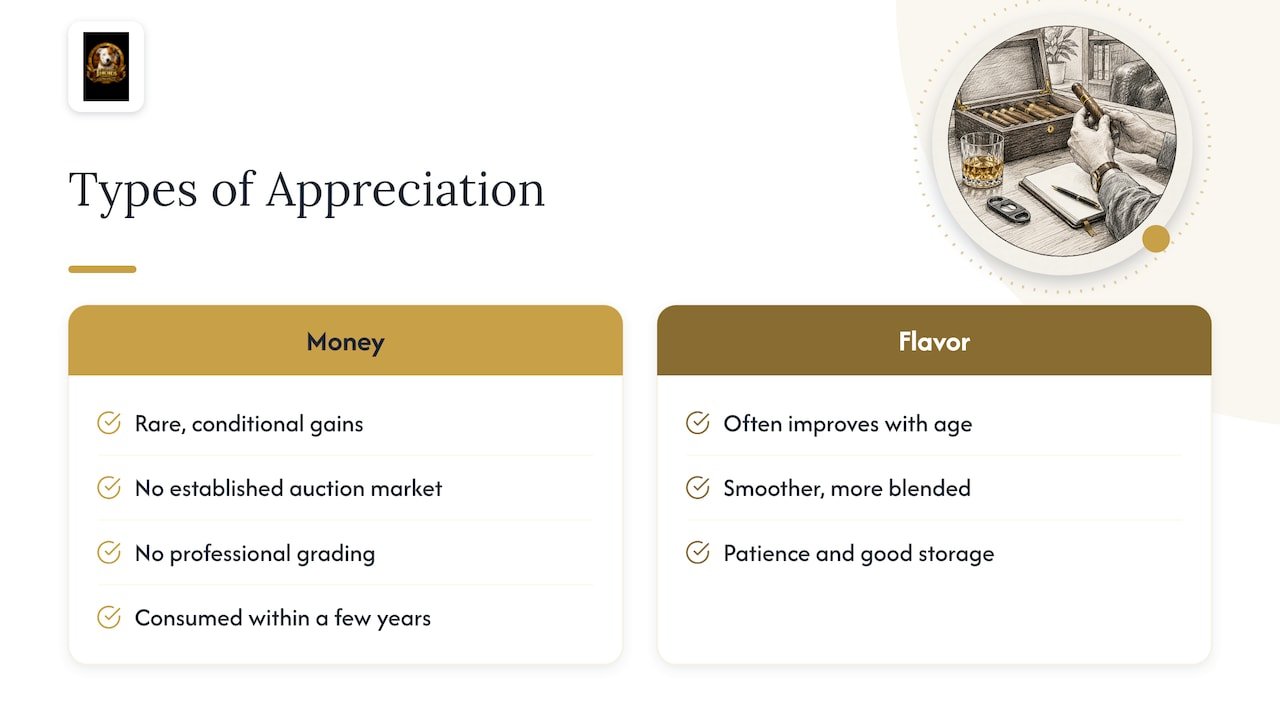
Monetary value. Will the box you buy today sell for more later? For the vast majority, no. The Humidorist puts it plainly: cigars are generally not a reliable investment because most premium cigars are meant to be consumed within a few years of purchase. The same piece notes that cigars lack the established auction market and professional grading found in wine and whiskey, which makes pricing murkier.
Flavor. Will the cigar taste better after time in a humidor? Often, yes, up to a point. Makers and long-time smokers describe aged cigars as smoother and more blended. This kind of appreciation is within your control, and it costs only patience and a good storage setup.
If you remember one thing: money appreciation is rare and conditional, flavor appreciation is common and practical.
Why most cigars don’t gain value
Price rises when demand outruns supply. A standard line like a core-range toro is rolled continuously, so when stock runs low, more arrives. There is no scarcity to bid up.
Three more reasons hold regular cigars back:
- They are consumables. Every cigar smoked reduces the supply, but the maker keeps rolling more of the same blend.
- Condition is fragile. Cigars are agricultural products that react to humidity and temperature. The Humidorist lists storage failure as the main risk: even a short stretch of improper humidity can cause drying, cracking or mold and destroy collector value.
- Selling is hard. Without a standardized grading system, a buyer can’t easily verify what is inside a box, so resale tends to be slow and discounted.
That last point matters if you picture flipping a few boxes. Selling costs, storage costs and a thin market eat into most paper gains.
Which cigars can gain collector value
The cigars with a real chance share a few traits.
Genuine scarcity
Limited-production releases, small-batch runs and discontinued blends are the usual candidates. The Humidorist lists genuine scarcity, brand reputation, verified age and provenance, and physical condition as the factors that shape resale value. Scarcity has to be real: a “limited” label on something produced in large numbers is marketing, not rarity.
Analysis in the trade press points the same way. The Times reported a specialist merchant attributing the high value of vintage cigars mainly to supply constraints and the story built around limited releases. Stories help, but they only hold when the supply is truly small.
A respected name
Brand reputation drives demand. Makers with devoted followings, such as Arturo Fuente with its Opus X line, Liga Privada and A.G. Robaina, tend to keep collectors interested in their special releases. A name alone doesn’t make a standard cigar appreciate, but it widens the pool of buyers when something rare appears.
Sealed, intact boxes
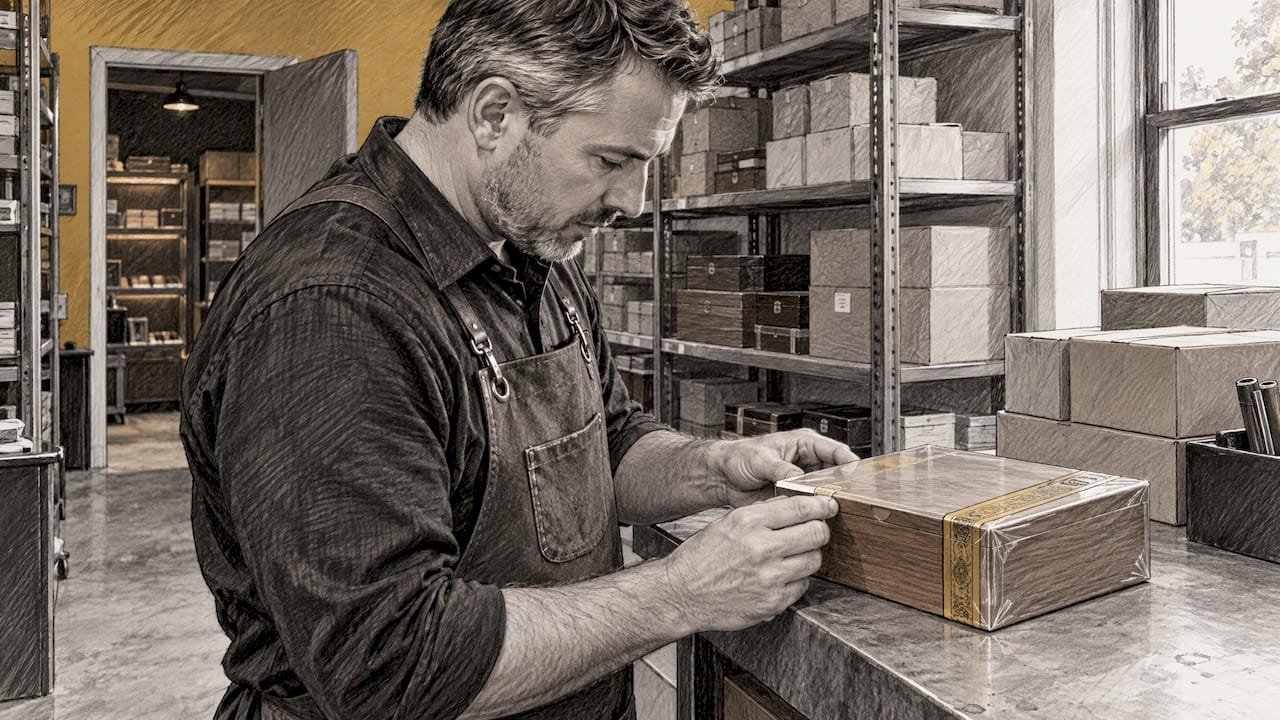
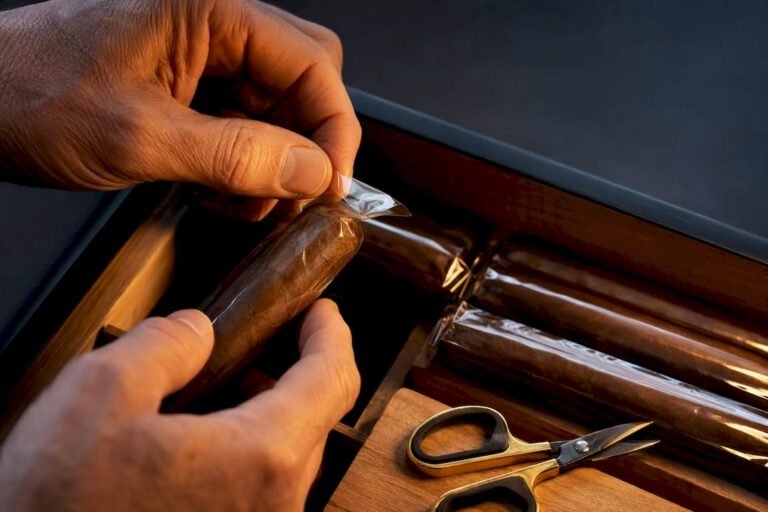
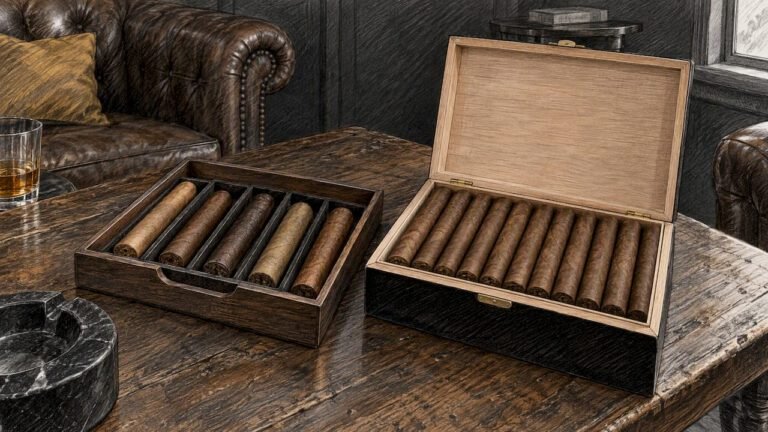
Packaging integrity matters. Stick Picks describes a sealed box in pristine condition as commanding far more than the same cigars stored loose. A complete, unopened box signals that nobody has picked through it.
Documented storage
Collectors pay for confidence. The same source lists continuous humidity and temperature logs, with no outages or pest incidents, among the top provenance factors. A box with a clean history is easier to trust than one that spent years in an unknown closet.
What the wine comparison gets right (and wrong)
The BBC framed the finest cigars as similar to rare wines: they become rarer as collectors smoke them, and when stored correctly the taste can improve. The same article warns that poor storage can make them worthless.
Where the comparison breaks down is the market. Wine has long-standing auction houses, grading and provenance systems. Cigars have far less of that, so you carry more of the verification burden yourself. Treat any claim of guaranteed returns with suspicion. Anything you read about double-digit annual gains describes a narrow slice of the market during a good stretch, not a promise for the cigars on a retailer’s shelf.
What storing for value costs
If you do hold cigars hoping for appreciation, count the cost side.
- Equipment. A reliable humidor with a stable humidity setup is the baseline. Our comparison of electric and wood humidors for a 150-cigar collection walks through the trade-offs.
- Professional storage. The BBC reported that cigar merchant lockers could cost around £350 (about $460) per year, which may also bring insurance benefits and help establish provenance. That was a 2016 figure, so check current rates before you plan around it.
- Time and attention. Humidity has to be monitored, seasoning done properly, and problems caught early.
Add those up and many boxes need a big price jump just to break even. That is why we tell customers to buy for the smoking first.
Aging for flavor: the appreciation you can count on
Here is the part that rewards almost everyone who owns a humidor.
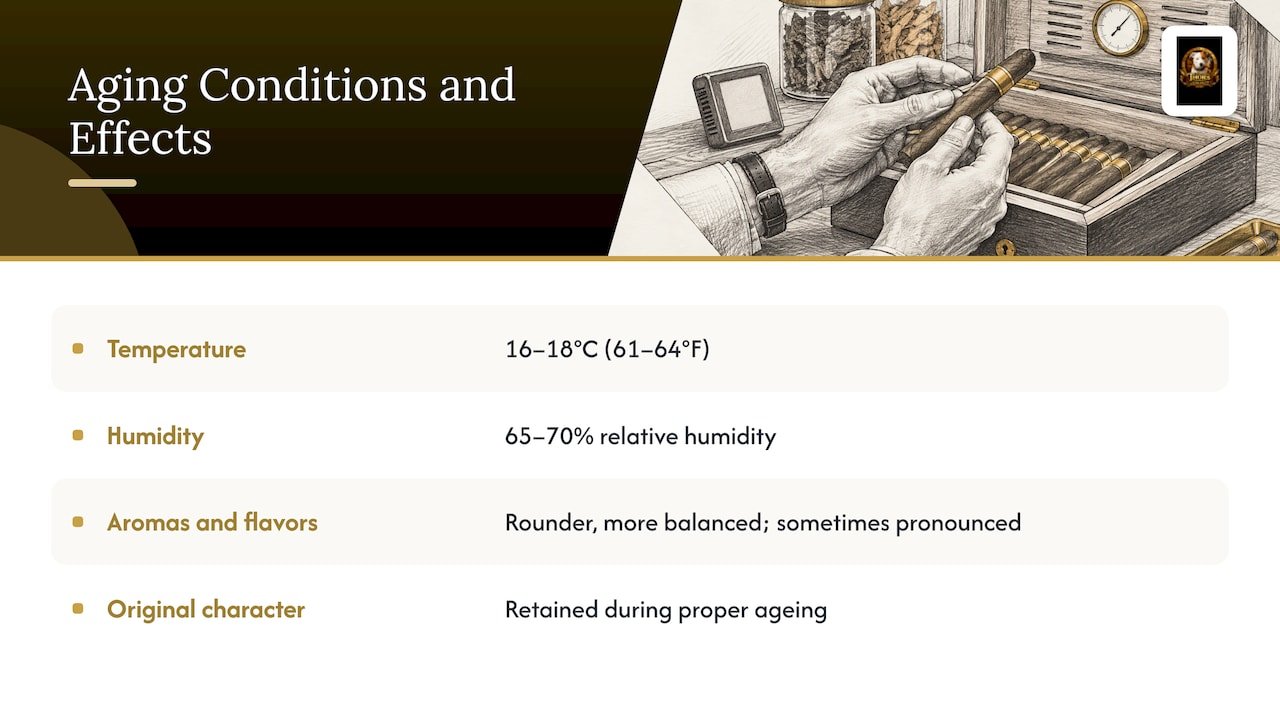
Habanos, S.A. publishes guidance on ageing finished cigars. It recommends a well-ventilated space at 16°C to 18°C (roughly 61°F to 64°F) and 65% to 70% relative humidity. It explains that proper ageing lets cigars keep their original character while developing aromas and flavors that are rounder and more balanced, sometimes more pronounced, than when freshly bought.
A contributor to Cigar Aficionado makes a similar point from the smoker’s side: aged cigars tend to get mellower and more refined, and he enjoys them more after a few years of box age. Taste is personal, though. Some smokers prefer the punch of a fresh cigar.
A simple home aging routine
- Buy a few extra. When you find a cigar you love, pick up a handful rather than one.
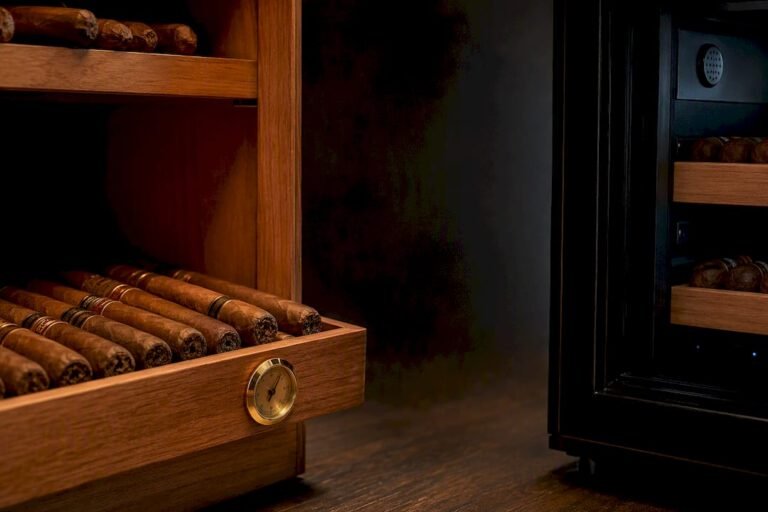
- Stabilize your humidor. Many home smokers keep humidors in the mid-60s percent range for long rests. Our guide to storing cigars at home covers humidors, humidity and common mistakes.
- Keep temperature steady. Avoid warm rooms and sunny windows. Swings do more harm than a slightly imperfect setting.
- Label and log. Write the purchase date on the box or a tag. A short note when you smoke one (what you tasted, how it burned) turns your humidor into a tasting experiment.
- Taste across time. Smoke one at purchase, another at six months, another at a year. You will learn what aging does for the blends you like.
- Fix dryness fast. If cigars dry out, don’t panic. Our rehydration plan shows how to bring them back gradually.
Aging a cigar versus holding a collectible
| Aging for flavor | Holding for value | |
|---|---|---|
| Goal | Better smoke in a few years | Higher resale price |
| Best candidates | Cigars you already enjoy | Limited, discontinued or boutique releases |
| Packaging | Any intact box or loose sticks | Sealed, complete boxes |
| Records | Tasting notes | Purchase proof, storage logs |
| Payoff | Reliable, personal | Uncertain, market-dependent |
| Main risk | Dryness or mold | Dryness, mold, thin resale market |
The two goals overlap. A sealed box of something you love can be smoked on your timeline or sold if the market moves. The point is to pick your primary goal honestly.
How to tell whether a high price is real
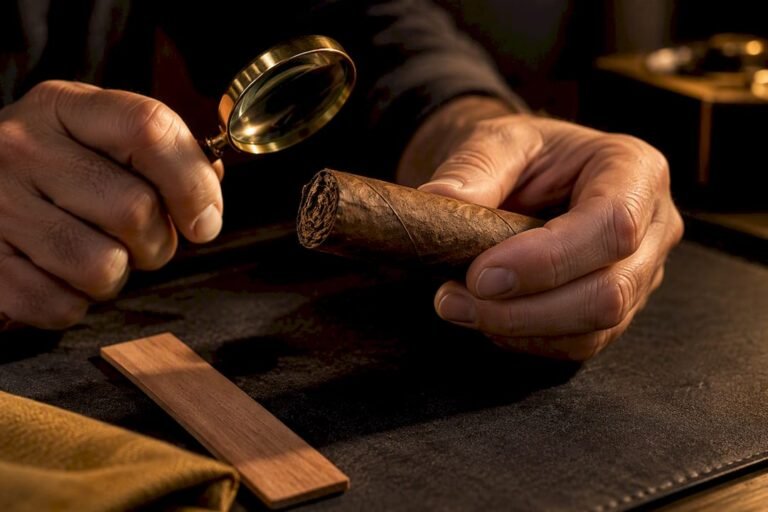
Asking prices aren’t the market. A seller can list a box at any figure. What matters is what buyers actually paid. Valuation guides for collectibles advise using completed sales rather than active listings, since sold prices reflect real buyer behavior. Apply the same habit to cigars: look at what similar boxes sold for, in similar condition, before you decide your collection is worth a certain amount.
Perspective
We run a humidor-heavy shop, so here is how we think about this question.
Almost everyone who asks whether cigars appreciate is really asking whether buying a box is a smart move. Our answer: buy cigars you want to smoke, and let time do its work on flavor. When a limited release like the ones we stock turns out to be scarce and in demand, that is a pleasant extra. It should never be the plan.
What we do control is condition. Customers who age cigars well share the same habits: a stable humidor, patience, and a few extra sticks set aside from a favorite. That is why we carry authorized Raching humidors alongside the cigars. A cigar that arrives in good shape and rests in a good box has a far better future, whether you smoke it in three years or ten.
If you are drawn to collecting, start with a sampler or a single box from a maker you trust, keep notes, and learn how the cigars change before you commit more.
Kevin
Where to start at Thor’s Cigar Vault
We are an online premium cigar shop based in Idaho, and we ship across the U.S. to adults 21+ only. Orders over $125 ship free.
If you want to age cigars and learn what time does to them, a few places make sense:

- Learn what you like first. Our samplers let you try several blends before you set aside a box. The Foundation Elite Sampler and the Sinistro Sampler are two examples.
- Look at scarcer releases. Our limited releases page collects the harder-to-find cigars.
- Try a named favorite. The Arturo Fuente Hemingway Best Seller and the AG Alejandro Robaina Cubana #2 are cigars from makers with loyal followings.
- Build the right home. Browse our humidors before you start any aging project.
Check each product page for current availability and pricing.
FAQ
Do cigars increase in value over time?
Mostly no. Regular-production cigars are made to be smoked and are replenished by their makers, so they rarely gain resale value. A limited set of scarce, well-stored, sealed releases can rise, but that depends on demand and condition and is never guaranteed.
Do cigars get better with age?
Many do, in the view of makers and experienced smokers. Habanos, S.A. says proper aging can produce rounder, more balanced flavors. Results depend on the blend, your storage and your own taste, so smoke a sample at different ages and compare.
Are 30-year-old cigars still good?
It depends almost entirely on storage. A cigar kept at stable humidity and temperature can still be smokable, while one that dried out or molded is not. Inspect for cracks, mold and soft spots, and rest it in a humidor before lighting up. Cigars of that age that arrive without storage history carry more uncertainty.
What makes a cigar valuable to collectors?
Scarcity, brand reputation, verified age and provenance, and physical condition. A sealed box with documented storage usually carries more weight than loose cigars of unknown history.
What humidity should I use to age cigars?
Habanos, S.A. recommends 65% to 70% relative humidity with a temperature of 16°C to 18°C (about 61°F to 64°F). Keep conditions steady, since swings are harder on cigars than small deviations from the target.
Sources
- Are Cigars a Good Investment? | The Humidorist
- Ageing finished cigars | Habanos, S.A.
- Why premium cigars are an investment you won’t want to burn | The Times
- The most coveted cigars will never be smoked | BBC Worklife
- How to Track Your Cigar Collection’s Value | Stick Picks
- Havana Corner: Aged Cigars and Sandinistas | Cigar Aficionado
- How to Use eBay Sold Listings to Price Collectibles
Ready to start your own aging experiment? Browse our cigar samplers and pick a set to taste now and rest for later.


One Comment